User Manual for Danfoss ESMT Outdoor Temperature Sensor
Quick guide for the Danfoss ESMT outdoor temperature sensor. Learn about installation, mounting on the coldest building elevation, and non-polarized electrical wiring.
Table of contents
Manual images
Click an image to enlargeQuick guide from the manual
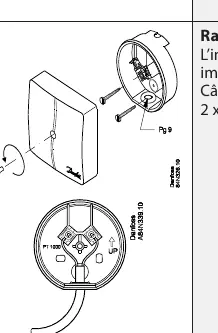
The Danfoss ESMT is a Pt 1000 Ohm outdoor temperature sensor. For optimal performance, it must be installed on the coldest side of the building, typically the north-facing wall. The electrical connection is non-polarized, meaning the two wires can be connected to the terminals in any order.
Mounting
The sensor should be mounted on the coldest elevation of the building or zone. In most cases, this is the north-facing facade. Avoid locations where the sensor might be exposed to direct sunlight or other heat sources that could interfere with accurate temperature readings.
Electrical connection
The sensor uses a two-wire system. The connection is non-polarized, so the wires can be crossed without affecting the sensor's operation. Use a connection cable with a cross-section between 0.4 mm² and 1.5 mm².
Technical specifications
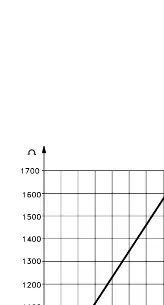
The ESMT is a Pt 1000 sensor, meaning it has a resistance of 1000 Ohms at 0°C. The resistance increases with temperature. The sensor is designed to operate within a wide temperature range, as indicated by the resistance-to-temperature graph provided in the manual.
Manufacturer information
Danfoss A/S
Practical help
Common problems
Ensure the sensor is mounted on the coldest side of the building (usually North) and is not exposed to direct sunlight or heat sources.
The connection is non-polarized; wires can be connected to the terminals in any order.
Before use
- Verify the building elevation is the coldest (typically North).
- Ensure cable cross-section is between 0.4 and 1.5 mm².
- Confirm the controller is compatible with Pt 1000 sensors.

Manual page author
David Miller
Documentation analyst
Organizes user manual content into clear summaries, with attention to model details, product context, and everyday usability.