Installation Guide for Danfoss Regus RA Nut with RA-FN
Quick installation guide for Danfoss Regus RA nut with RA-FN thermostatic sensor and valve, including torque specifications and mounting steps.
Table of contents
Quick guide from the manual
This guide covers the installation of the Danfoss Regus RA nut with RA-FN thermostatic sensor and valve. The process is divided into two main phases: valve installation and sensor installation. It is critical to follow the specified torque settings to ensure proper operation and prevent damage to the components.
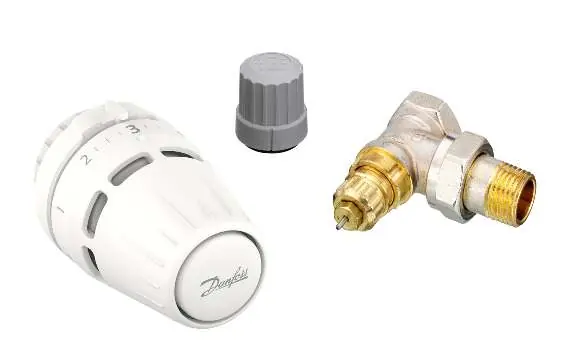
Valve Installation
- Ensure the heating system is depressurized and safe to work on.
- Install the valve onto the pipework. Use a suitable wrench to tighten the connection.
- Refer to the torque specifications table to apply the correct amount of force based on the valve size (DN10, DN15, or DN20).
Sensor Installation
- Align the thermostatic sensor with the valve body.
- Push the sensor onto the valve until it is seated correctly.
- Tighten the sensor connection using a tool to a torque of 6 Nm. Ensure the sensor is securely fastened.
Technical Specifications
The following torque values must be observed during valve installation to ensure a secure and leak-free connection:
- DN10 3/8": 40-60 Nm
- DN15 1/2": 60-90 Nm
- DN20 3/4": 80-120 Nm
The thermostatic sensor requires a tightening torque of 6 Nm.
Manufacturer information
Danfoss A/S
Practical help
Common problems
Ensure the valve or sensor was tightened to the specific torque range required for the pipe size.
Verify the alignment between the sensor and the valve body before pushing and tightening.
Before use
- Verify the valve size (DN10, DN15, or DN20).
- Ensure the heating system is depressurized.
- Have a torque wrench available for installation.
- Check that the sensor is compatible with the RA-FN valve.

Manual page author
Michael Turner
Technical manual editor
Reviews PDF manuals for structure, safety notes, and practical product details so readers can find the right information quickly.