Electronics / Monitors
Stanley HG80 Hydraulic Grinder User Manual
Comprehensive user manual for the Stanley HG80 Hydraulic Grinder, covering safety precautions, hydraulic hose requirements, operation procedures, maintenance, and troubleshooting.
Table of contents
Manual images
Jump to the sectionQuick guide from the manual
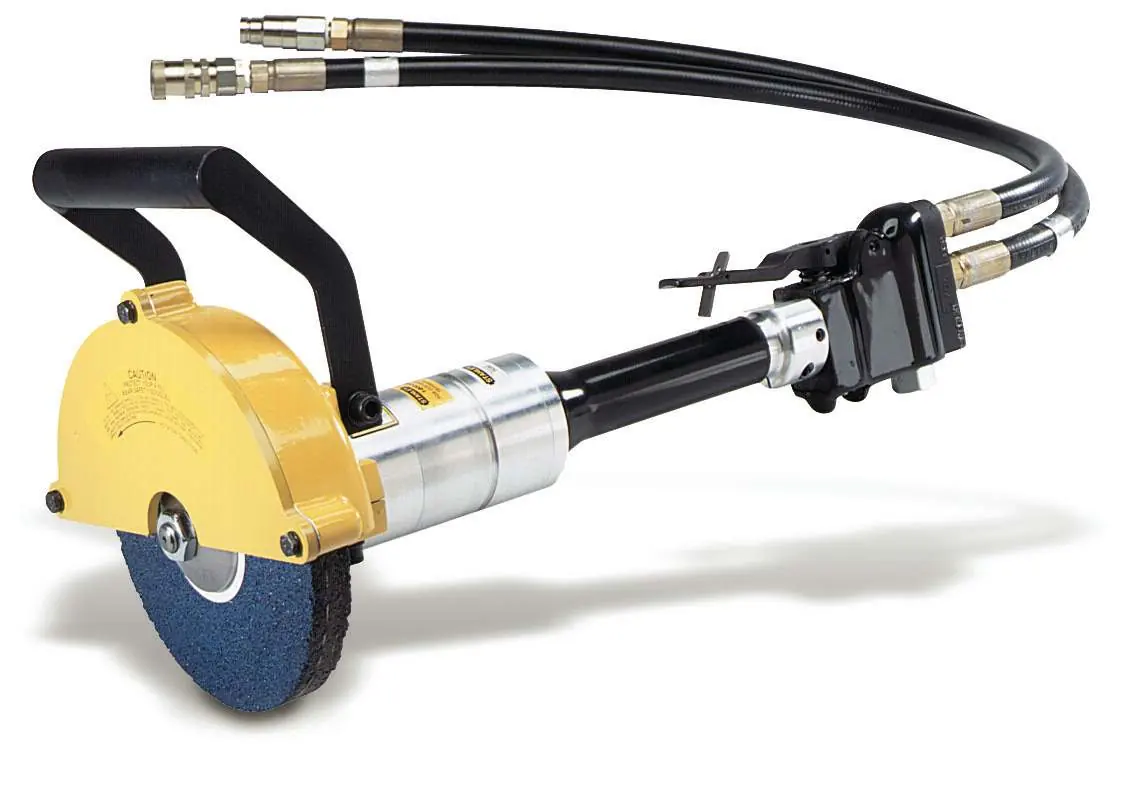
The Stanley HG80 is a hydraulic grinder designed for professional use. Before operation, ensure the hydraulic power source provides a flow of 7–10 gpm (26–38 lpm) at 1500–2000 psi (105–140 bar). Always verify that the hydraulic circuit matches the tool's requirements (open-center or closed-center) and that all hose connections are secure. Never operate the tool without the wheel guard or if the grinding wheel is damaged.
Safety Precautions
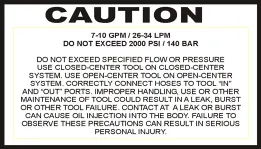
- Always wear personal protective equipment: goggles, ear and head protection, and safety shoes.
- Do not operate the tool with the wheel guard removed.
- Inspect grinding wheels for cracks or chips before installation.
- Never reverse the grinding wheel rotation by changing fluid flow direction.
- Do not operate at oil temperatures above 140 °F (60 °C).
- Use only non-conductive hoses when working near electrical lines.
Installing and Removing Grinding Wheels
- Loosen the three capscrews and remove the guard front plate.
- Depress the push lock to secure the spindle, then unscrew the jam nut and remove the outside flange.
- Install the new 8-inch grinding wheel (with 5/8 arbor hole) onto the spindle.
- Reinstall the outside flange and jam nut, tightening only enough to prevent wheel slippage.
- Replace the guard front plate and secure it with the capscrews and lockwashers.
Operation
Before starting, ensure the hydraulic control valve is in the OFF position. Connect the return hose first to minimize trapped pressure. Start the grinder with the wheel away from the work surface. If the tool fails to operate, check for reversed hose connections. Always grind small amounts of material at a time.
Tool Protection and Care
Keep all couplers clean and free of debris. Always store the tool in a clean, dry area. If the tool is used in cold weather, preheat the hydraulic fluid to at least 50 °F (10 °C) before operation. Repairs and service must only be performed by an authorized and certified dealer.
Troubleshooting
- Grinder does not run: Check hydraulic power source flow/pressure, inspect for blocked hoses, or verify connections.
- Grinder operates too slow: Check for high back-pressure (over 250 psi), incorrect oil temperature, or low relief valve settings.
- Grinder operates too fast: Indicates a flow control malfunction; contact an authorized service center.
Practical help
Common problems
Grinder does not run
Check hydraulic power source for proper flow (7–10 gpm) and pressure (1500–2000 psi), ensure lines are connected, and check for blocked hoses.
Grinder operates too slow
Check for high back-pressure (over 250 psi), ensure oil temperature is between 60 °F and 140 °F, and verify relief valve setting (2100–2250 psi).
Grinder operates too fast
Flow control is malfunctioning; have the unit serviced by an authorized Stanley service center.
Before use
- Inspect the tool and hoses for leaks or damage.
- Verify hydraulic power source flow (7–10 gpm) and pressure (1500–2000 psi).
- Ensure the grinding wheel is correctly mounted and tightened.
- Check that the wheel guard is securely in place.
- Verify that the hydraulic circuit matches the tool (open-center or closed-center).
- Wipe all hose couplers clean before connection.
Specs in practice
- Pressure Range
- 1000–2000 psi (70–140 bar) operating pressure.
- Max Back Pressure
- 250 psi (17 bar) at the return hose; exceeding this can damage the tool.
- Max Fluid Temp
- 140 °F (60 °C); operation above this can cause discomfort and damage seals.
Images and diagrams
- Figure 1 shows the correct connection of pressure and return hoses to the hydraulic circuit.
- The female coupler on the tool is the inlet (pressure) port.
Model compatibility
- Use only 8-inch diameter, 1-inch thick (Type 1) grinding wheels with a 5/8 arbor hole.
- Only use non-conductive hoses when working near electrical conductors.
- All hoses must meet or exceed SAE J517 specifications.

Manual page author
Emily Carter
User documentation editor
Prepares concise manual descriptions and highlights the most useful setup, operation, and maintenance information for readers.