Tamiya Rover Mini Cooper Racing 1/8 Scale Glow-Engine RC Car
Comprehensive assembly and maintenance manual for the Tamiya 1/8th scale Rover Mini Cooper Racing 4WD glow-engine RC car. Includes detailed step-by-step construction, engine setup, and troubleshooting.
Table of contents
Manual images
Jump to the sectionProduct Overview
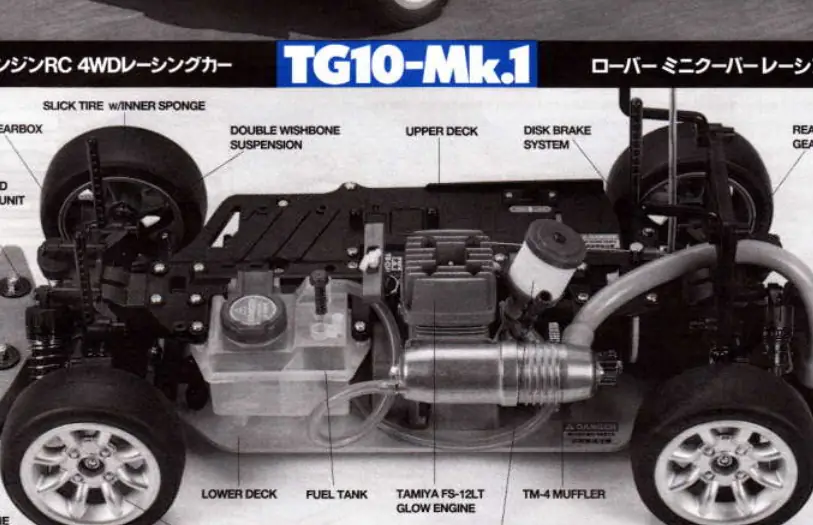
The Tamiya Rover Mini Cooper Racing is a high-performance 1/8th scale 4WD RC car powered by a glow engine. This model features a sophisticated chassis design including a double-wishbone suspension, oil-filled dampers, and a disk brake system for realistic handling and control. It is designed for hobbyists and requires adult supervision during assembly and operation.
Safety Precautions
Important: This is not a toy. Always operate the model in a safe, open area away from people, animals, and traffic. The engine and muffler become extremely hot during operation; avoid touching these parts to prevent burns. Use only recommended glow fuel and ensure the area is well-ventilated. Always store fuel in a cool, dry place away from heat sources or open flames.
Assembly and Setup
The assembly process is detailed in stages, starting with the differential gear and gearbox, followed by the suspension, steering, and drivetrain. Ensure all screws are tightened securely and use the provided grease on moving parts as indicated. The radio control system must be installed and tested for neutral positions before final assembly. Proper gear mesh adjustment is critical for smooth operation and to prevent damage to the drivetrain.
Engine Operation
Before starting, ensure the radio system is on and the throttle is in the neutral position. Use the recommended Tamiya glow fuel. Prime the engine by pressing the fuel tank button until fuel reaches the carburetor. Use an engine starting kit to turn the engine over. If the engine fails to start, check the glow plug, fuel lines, and air filter. Once started, allow the engine to warm up at a low idle before driving.

Maintenance
Regular maintenance is essential for longevity. After each run, allow the engine to cool completely. Clean the air filter and check for any loose screws or damaged parts. If the car will be stored for an extended period, ensure the fuel tank is empty. Keep the chassis clean and lubricated to maintain peak performance.
Practical help
Common problems
Check fuel tank, prime throttle, replace glow plug, or clean fuel lines/air filter.
Check for clogged fuel filter, engine overheating, or incorrect needle valve setting.
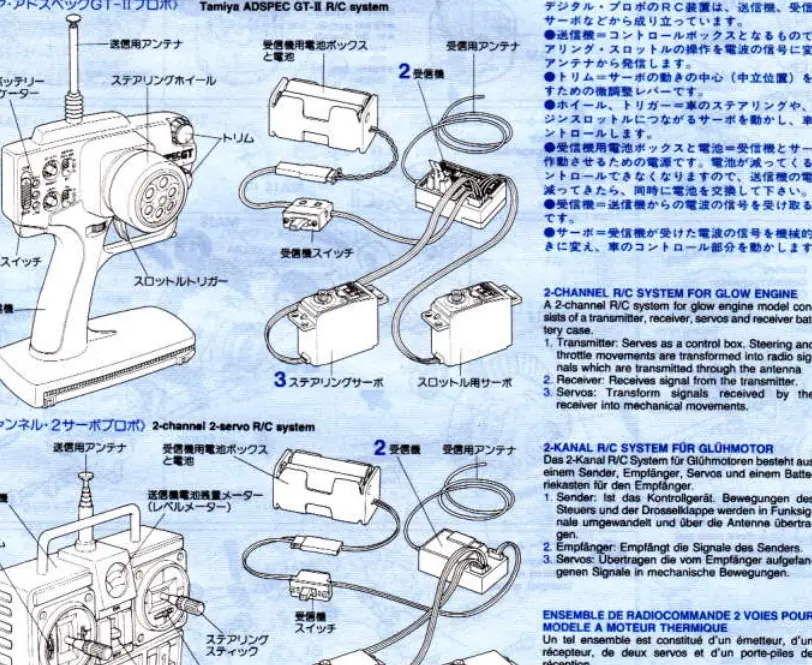
Replace transmitter/receiver batteries, extend antennas, or adjust servo linkage.
Before use
- Ensure all screws and nuts are securely tightened.
- Check that transmitter and receiver batteries are fresh.
- Verify steering servo and throttle are in neutral position.
- Ensure air filter, fuel filter, and muffler are clean.
- Check that fuel lines are not clogged or kinked.
- Ensure the glow plug is functioning correctly.
- Verify the radio system is operating properly.
Specs in practice
- Double Wishbone Suspension
- Independent suspension system for better stability and cornering.
- Oil-filled Damper
- Shock absorbers filled with oil to dampen vibrations and impacts.
- Disk Brake System
- High-performance braking system for reliable stopping power.
Images and diagrams
- Exploded views show the assembly order of the gearbox and differential.
- Steering linkage diagrams illustrate the correct neutral servo setup.
- Engine mounting diagrams show the connection to the chassis and drivetrain.
- Body trimming and decal placement guides for the Mini Cooper shell.
Model compatibility
- Requires 2-channel R/C system with 2 servos.
- Use only Tamiya-recommended glow fuel (TG-Fuel 2000).
- Compatible with various Tamiya option parts for performance tuning.

Manual page author
Emily Carter
User documentation editor
Prepares concise manual descriptions and highlights the most useful setup, operation, and maintenance information for readers.