Tools / Sharpening Tools
User Manual for Zwilling Sharpening Steel
Quick guide for using your Zwilling sharpening steel. Learn the correct sharpening angle, motion, and maintenance tips to keep your knives sharp and safe.
Quick answers from the manual
Quick answer
- To use the Zwilling sharpening steel, hold it vertically on a flat surface. Place the knife blade against the steel at a 15-degree angle (10 degrees for Japanese/Santoku knives). Draw the knife downwards in a slight curve, repeating 5-10 times on each side. p. 6
Key actions
- Sharpening motion p. 6
First start
- Positioning p. 5
Show 3 more answers Show less
Problems and fixes
Knife is too dull
Use a sharpening stone or professional service.
p. 7Technical specifications
| Parameter | Value | Meaning | Pages |
|---|---|---|---|
| Angle | 15° (10° for Japanese/Santoku) | Optimal sharpening angle | p. 6 |
Where to find it in the PDF
- Instructions for use p. 5, 6
- Important notes p. 7
Table of contents
Manual images
Click an image to enlargeQuick guide from the manual
This sharpening steel is designed to maintain the edge of non-coated, smooth-edged knives. It is not suitable for serrated knives or coated blades. Always ensure the sharpening steel is harder than the blade steel for effective results.
Instructions for use
Follow these steps to sharpen your knife:
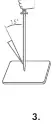
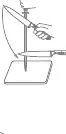

- Positioning: Place the sharpening steel with its tip pointing down on a stable, even surface.
- Angle: Place the clean knife blade against the steel. The angle between the blade and the steel should be approximately 15 degrees. For Japanese knives and Zwilling Santoku knives, the angle should not exceed 10 degrees. The transition from the handle to the steel serves as a guide.
- Sharpening Motion: Draw the knife downwards along the steel in a slight curve. The speed of the movement does not matter.
- Repeat: Repeat the process on the other side of the steel to sharpen the other side of the blade.
- Finish: Repeat steps 3 and 4 five to ten times, alternating between the right and left sides of the cutting edge. Check the sharpness by testing it on a piece of paper.
Important notes
- Hardness: Diamond and ceramic sharpening steels are suitable for knives with a blade hardness up to 67 HRC. Chrome-plated steels are suitable for knives with a blade hardness up to 60 HRC.
- Maintenance: If a knife is overly worn and cannot be restored with a sharpening steel, it requires re-grinding. You can use Zwilling sharpening stones or the Zwilling sharpening service if available in your country.
- Safety: A sharp knife is safer than a blunt one because it requires less pressure to cut, reducing hand fatigue.
Manufacturer information
Zwilling J.A. Henckels
Practical help
Common problems
Knife edge is too worn
The sharpening steel cannot restore the edge; use a sharpening stone or professional sharpening service.
Sharpening is not effective
Ensure the sharpening steel is harder than the blade steel. Check that you are using the correct angle (15 degrees for standard, 10 degrees for Japanese/Santoku).
Before use
- Ensure the knife is non-coated.
- Ensure the knife has a smooth cutting edge.
- Clean the knife blade thoroughly.
- Place the sharpening steel on a stable, even surface.
Show more Show less
Specs in practice
- Sharpening Angle
- 15 degrees for standard knives; max 10 degrees for Japanese and Santoku knives.
- HRC Hardness
- Indicates the hardness of the blade. Diamond/ceramic steels suit up to 67 HRC; chrome-plated steels suit up to 60 HRC.
Images and diagrams
- Diagram 1: Shows the 15-degree angle between the blade and the steel.
- Diagram 2: Shows the downward motion along the steel.
- Diagram 3: Shows the alternating motion for both sides of the blade.
Model compatibility
- Not suitable for coated knives.
- Not suitable for serrated knives.
- Requires the sharpening steel to be harder than the blade steel.

Manual page author
Emily Carter
User documentation editor