HVAC / Fan Coil Units
Installation, Operation, and Maintenance Manual for Ferroli 100-A3 Ultra-Thin Tangential Fan Coil Unit
Comprehensive installation, operation, and maintenance guide for the Ferroli 100-A3 ultra-thin tangential fan coil unit. Includes setup, wiring, touch control operation, and troubleshooting.
Table of contents
Manual images
Click an image to enlargeQuick guide from the manual
This manual provides essential instructions for the installation, operation, and maintenance of the Ferroli 100-A3 ultra-thin tangential fan coil unit. Before starting, ensure the unit is installed on a solid, vibration-free wall and that all electrical connections are performed by qualified personnel. Always disconnect the power supply before performing any maintenance or accessing internal components.
Safety Warnings
- Do not touch the unit with wet body parts or while barefoot.
- Do not pull, detach, or twist electrical cables.
- Do not insert objects through air intake or outlet grilles.
- Do not use the unit in explosive or corrosive atmospheres.
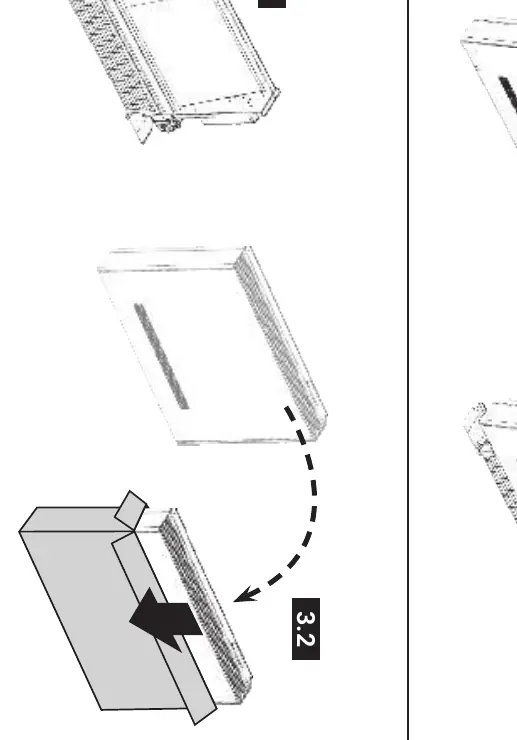
- Always keep the air filter mounted during operation to prevent dust accumulation on the coil and motor.
Installation
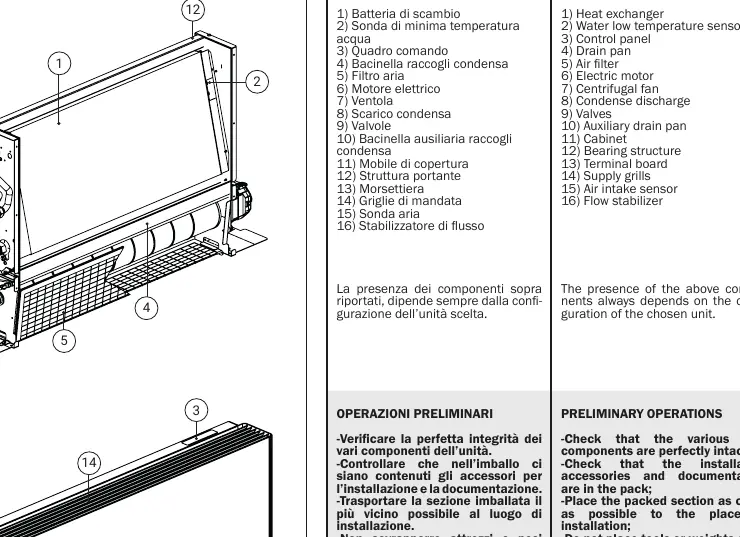
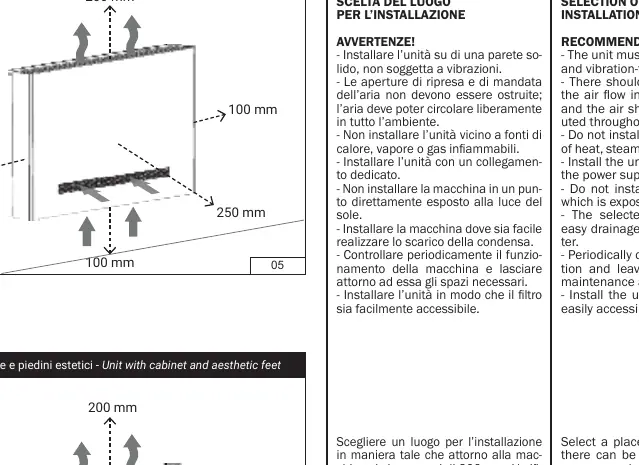
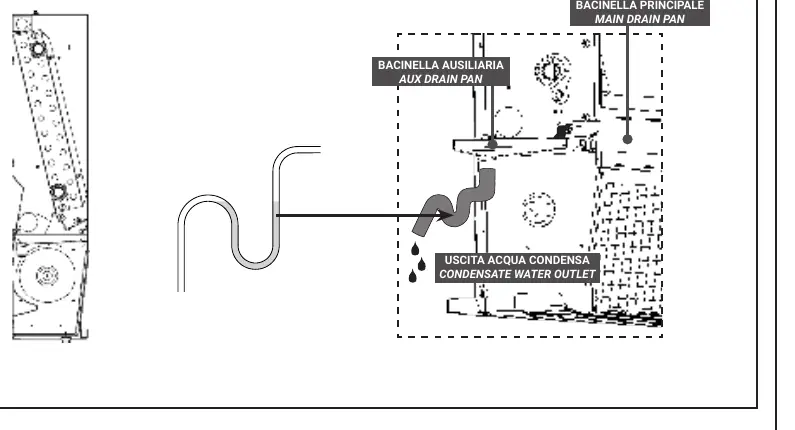
The unit must be installed in a solid, vibration-free location. Ensure there is at least 200 mm of clearance around the appliance for proper airflow and maintenance. The condensate drain pipe must have a downward slope of at least 3 cm/m and should not have any ascending sections or throttles. It is recommended to install a trap on the condensate drain.
Electrical Connections
Electrical connections must be performed by qualified personnel in compliance with local regulations. Ensure the power supply is single-phase 230V/50-60Hz. The unit must be properly grounded. Always check the wiring diagram supplied with your specific unit, as configurations may vary based on accessories.
Operation with Touch Control
The unit is operated via a touch control panel. Use the + and - keys to set the desired temperature. The Fan key adjusts fan speed (F1 minimum, F2 medium, F3 maximum, Aut automatic, SIL silent). The On-Off button turns the unit on and off; it lights up blue for cooling and red for heating.
Maintenance and Cleaning
Regular maintenance is essential for optimal performance. Clean the air filter every 4-6 months (or more frequently in dusty environments) by washing it with water and neutral detergent. Ensure the filter is completely dry before reinstalling. Periodically check the condensate drain for blockages to prevent water leakage.
Troubleshooting
If the unit does not turn on, check the power supply and main breaker. If there is little airflow, check for a clogged filter or obstructions. If water is leaking, check the condensate drain for blockages. If the unit is not heating or cooling, verify the water temperature and ensure the circulation pump is operational.
Practical help
Common problems
Unit does not turn on
Check that the power supply is present and the main breaker is in the ON position.
Little airflow
Check for a clogged air filter or obstructions at the intake/outlet grilles.
Water on the floor
Check the condensate drain for blockages and ensure it is properly sloped.
Unit is not heating or cooling
Check that the circulation pump is running and the water temperature is within operating limits.
Before use
- Ensure the unit is installed on a solid, vibration-free wall.
- Verify that the condensate drain is clear and properly sloped (min 3 cm/m).
- Check that the electrical circuit is protected and grounded.
- Ensure the air filter is correctly installed.
- Verify that the water supply temperature is within the specified operating limits.
Specs in practice
- Operating pressure
- Maximum 8 bar.
- Water temperature (cooling)
- Minimum +6°C inlet.
- Water temperature (heating)
- Maximum +70°C inlet.
- Protection degree
- IPX0 (indoor use only, excluding laundry rooms).
Images and diagrams
- Installation diagrams show required clearances (200mm) around the unit.
- Wiring diagrams are provided for standard units; always refer to the specific diagram supplied with your unit.
Model compatibility
- Indoor use only, excluding laundry rooms or similar environments.
- Not for use in explosive or corrosive atmospheres.

Manual page author
Michael Turner
Technical manual editor
Reviews PDF manuals for structure, safety notes, and practical product details so readers can find the right information quickly.