Furniture / Home Furnishing
User Guide for Master 12VUTV-M 50 Gallon UTV Sprayer
Comprehensive assembly, operation, and maintenance guide for the Master 12VUTV-M 50 Gallon UTV Sprayer. Includes step-by-step installation instructions, safety protocols, chemical handling guidelines, and troubleshooting procedures.
Table of contents
Quick guide from the manual
This document provides essential instructions for the assembly, safe operation, and maintenance of the Master 12VUTV-M 50 Gallon UTV Sprayer. Key requirements include using fresh water for initial leak testing, strictly avoiding flammable or corrosive chemicals, and performing proper winterization to prevent damage. Always wear appropriate personal protective equipment when handling chemicals or servicing the unit.
Assembly
The sprayer requires basic tools: a 1/2 inch socket wrench, pliers, and Teflon tape (not included). Ensure all components are present before starting. Key assembly steps include:
- Drain Assembly: Install the drain cap gasket and tether onto the tank drain outlet.
- Tank Setup: Thread the tank lid onto the sprayer tank.
- Spray Gun Bracket: Attach the bracket to the tank using the provided 1/2 inch bolts.
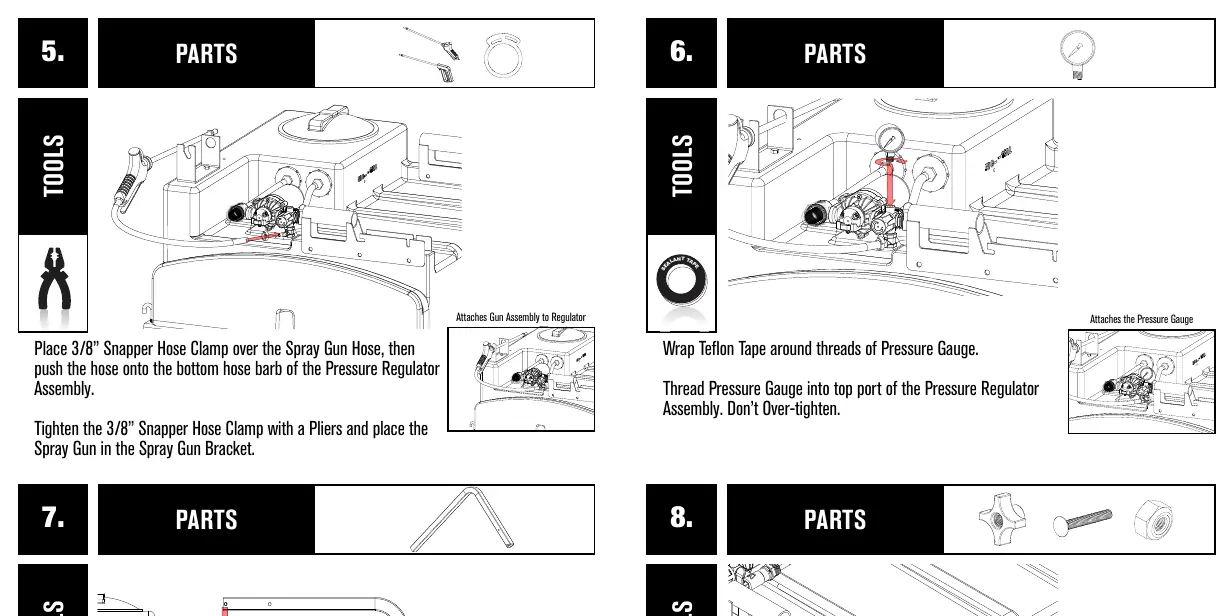
- Regulator & Gauge: Connect the spray gun hose to the pressure regulator using the snapper hose clamp. Wrap the pressure gauge threads with Teflon tape and thread it into the regulator.
- Boom Mounting: Insert boom mounting arms into the tank handle slots and secure them with bolts, wing nuts, and hex nuts. Attach boom mounting brackets using square U-bolts.
- Final Connections: Connect the boom inlet hose to the shut-off valve and wire the harness to the vehicle battery (red to positive, black to negative).
Operation
Before each use, inspect the sprayer for cracks or leaks. Ensure the broadcast nozzle is pointed straight down. Do not spray if wind speeds exceed 4 MPH. When filling, ensure chemicals are thoroughly mixed. For spot spraying, use the spray gun trigger and adjust the nozzle for a straight stream or mist. For broadcast spraying, open the boom valve and ensure uniform coverage.
Cleaning and Storage
Clean the sprayer immediately after every use. Drain excess chemicals into a suitable container and flush the system with fresh water. For end-of-season storage, run RV anti-freeze through the system to lubricate internal parts and prevent freezing. Failure to winterize the unit will void the warranty.
Troubleshooting
If the pump fails to turn on, check battery connections, the fuse, and wire condition. If the pump does not prime, check for air leaks in the inlet or obstructions in the tubes. For low pressure, inspect the spray gun or boom nozzles for wear and check for clogs in the intake strainer. Always relieve system pressure by squeezing the gun trigger before attempting any repairs.
Practical help
Common problems
Pump will not turn on
Check battery connections, replace blown fuse, check wire condition, or check voltage.
Pump will not prime
Refill supply container, tighten fittings to stop air leaks, or remove obstructions from tubes/intake valve.
Low pressure or flow
Replace worn spray gun or boom nozzles, tighten fittings, or clean the intake valve.
Pump leaks
Tighten loose fasteners or replace the pump head assembly/diaphragm.
Before use
- Test sprayer with fresh water to ensure no leaks.
- Inspect all components for cracks or damage.
- Ensure the drain cap is securely tightened.
- Verify wind speed is below 4 MPH.
- Wear appropriate personal protective equipment.
- Ensure the vehicle is off and brakes are set.
Specs in practice
- 3.0 or 5.5 GPM Pump
- The flow rate capacity of the pump depending on the specific model.
- 50 Gallon Tank
- The maximum liquid capacity of the sprayer tank.
Images and diagrams
- The manual includes a detailed breakdown (page 13) listing all parts by ID, description, and quantity for easy identification during assembly or repair.
- Assembly steps (pages 5-7) provide visual guidance for mounting the tank, spray gun, boom arms, and electrical connections.
Model compatibility
- Not certified for dispensing potable water or other consumable liquids.
- Do not use flammable chemicals (e.g., diesel fuel) or corrosive chemicals (e.g., bleach).
- Compatible with a wide range of agricultural pesticides and herbicides.

Manual page author
David Miller
Documentation analyst
Organizes user manual content into clear summaries, with attention to model details, product context, and everyday usability.