Rinnai Infinity 14-17i Flue Gas Exhaust Configurations
Technical guide for Rinnai Infinity 14-17i flue gas exhaust systems, including direct wall, roof, and split configurations with installation specifications.
Table of contents
Overview of Flue Gas Exhaust Systems
This guide provides technical specifications for the flue gas exhaust configurations compatible with the Rinnai Infinity 14-17i series. Proper installation is critical for the safe and efficient operation of the appliance. The system supports various setups, including direct wall discharge, roof discharge, and split systems.
Direct Wall Exhaust Systems
The direct wall exhaust system is designed for horizontal discharge. It is essential to maintain a 3-degree downward slope toward the terminal to prevent condensate from flowing back into the appliance. For condensing models or those equipped with a condensate collector, the slope may be directed toward the appliance.
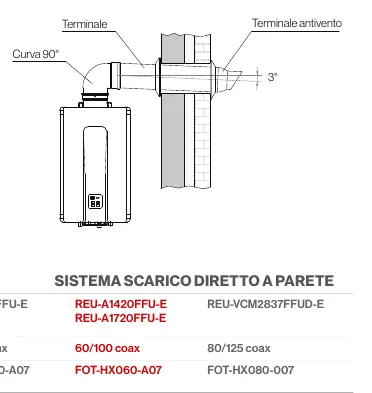
- 80/125 coax: Used for models REU-N2635FFC-E and REU-N3237FFC-E.
- 60/100 coax: Used for models REU-A1111FFU-E, REU-A1420FFU-E, and REU-A1720FFU-E.
Roof Exhaust Systems
Roof exhaust configurations are available for vertical discharge through the roof. These systems require specific terminal components and flashing for inclined roofs to ensure a watertight seal. Maximum exhaust distances vary by model and diameter, ranging from 2m to 15m depending on the configuration and number of bends used.
Split Exhaust Systems
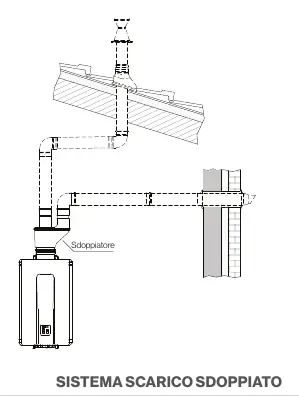
Split systems allow for separate air intake and flue gas exhaust paths. This configuration provides greater flexibility in installation, with maximum exhaust distances reaching up to 25m for specific models. Always adhere to the maximum number of bends specified for each configuration to ensure optimal airflow and combustion safety.
Safety and Maintenance
Installation must be performed by qualified personnel. Ensure that all flue components are securely connected and that the terminal is positioned to prevent obstruction. Regularly inspect the exhaust system for signs of corrosion, blockage, or damage. If the system is not functioning correctly, consult a professional technician. Do not attempt to modify the flue components, as this may compromise the safety of the appliance.

Manual page author
Emily Carter
User documentation editor
Prepares concise manual descriptions and highlights the most useful setup, operation, and maintenance information for readers.