Garden / Lawn Care
Owner's Manual for Al-Ko 175F(D)S, 180F(D)S, 185F(D)S, 190F(D)S Gasoline Engine
A comprehensive owner's manual for the Al-Ko 175F(D)S, 180F(D)S, 185F(D)S, and 190F(D)S gasoline engines. This guide covers essential safety information, operating procedures, maintenance schedules, troubleshooting, and technical...
Table of contents
Manual images
Click an image to enlargeQuick Guide from the Manual
This manual provides essential instructions for the safe operation and maintenance of your Al-Ko gasoline engine. Before operating, ensure the engine is level and perform a pre-operation inspection. Always refuel outdoors in a well-ventilated area and keep the engine away from flammable objects. Never run the engine in a closed or confined space due to carbon monoxide hazards.
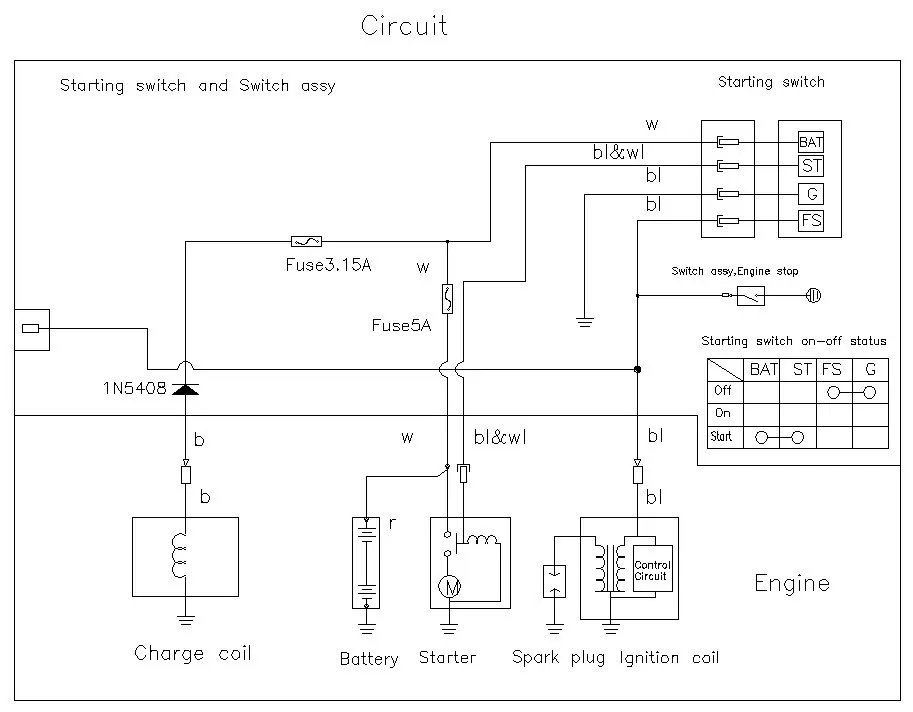
Components and Controls
Familiarize yourself with the engine controls:
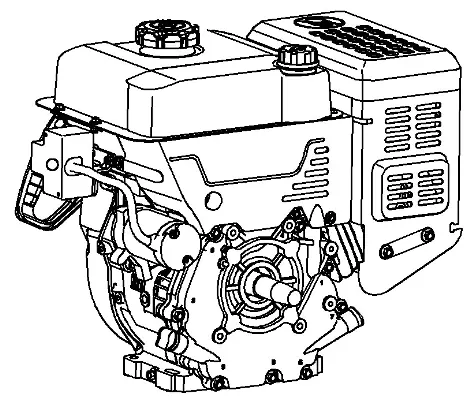
- Engine Switch: Enables and disables the ignition system.
- Fuel Valve Knob: Opens and closes the fuel passage between the tank and carburetor.
- Choke Lever: Used to enrich the fuel mixture for cold starts.
- Throttle Lever: Controls engine speed.
- Priming Pump: Supplies extra fuel for cold weather starting.
Operation
Starting the Engine
- Move the fuel valve lever to the ON position.
- For a cold engine, move the choke lever to the CLOSE position. For a warm engine, leave it in the OPEN position.
- Move the throttle lever away from the SLOW position.
- Insert the engine switch.
- If in a low-temperature environment, press the priming pump up to three times.
- Pull the recoil starter grip lightly until resistance is felt, then pull briskly. For electric start models, press the starter button.
- Once the engine warms up, gradually move the choke lever to the OPEN position.
Stopping the Engine
- Move the throttle lever to the SLOW position.
- Pull out the engine switch.
- Turn the fuel valve lever to the OFF position.
Maintenance
Regular maintenance is essential for safe and reliable operation. Refer to the maintenance schedule for intervals based on usage hours or time.
Engine Oil
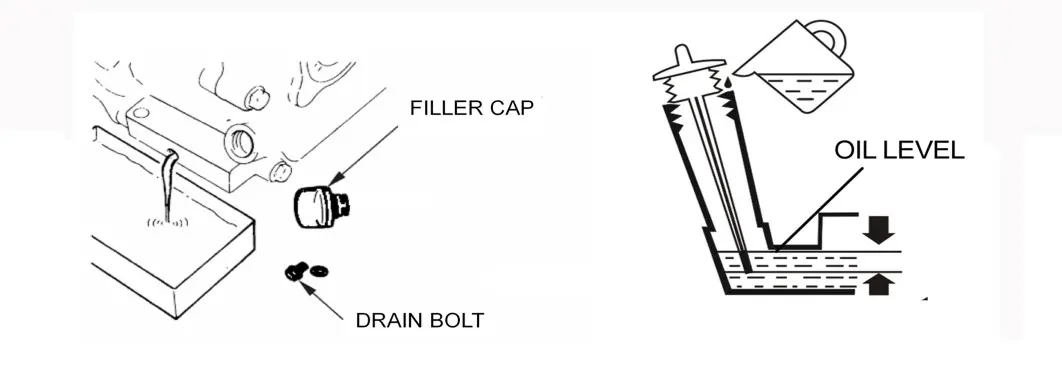
Check the oil level before each use. Change the oil while the engine is warm. Use the dipstick to verify the level is between the upper and lower limits. Engine oil capacities vary by model (0.95 L for 175F/180F, 1.1 L for 185F/190F).
Spark Plug
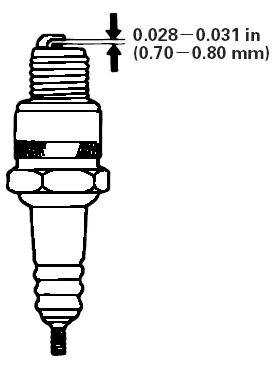
Inspect the spark plug periodically. The recommended gap is 0.70 mm - 0.80 mm. Replace the plug if electrodes are worn or the insulator is damaged.
Storage and Transporting
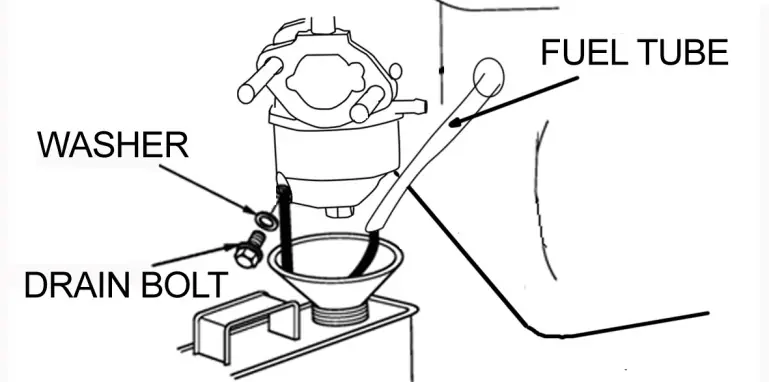
If storing the engine for more than one month, drain the fuel tank and carburetor to prevent deterioration. Clean the engine exterior and ensure it is cool before covering. Store in a well-ventilated area away from flame-producing appliances.
Troubleshooting
If the engine fails to start, check the following:
- Battery: Ensure it is charged (for electric start models).
- Controls: Ensure the engine switch is in the ON position and the choke is set correctly.
- Fuel: Check for fuel in the tank and ensure it is fresh.
- Spark Plug: Check for fouling or improper gap.
Manufacturer information
AL-KO
Practical help
Common problems
Engine will not start
Check battery charge (electric start), ensure engine switch is in, check choke position, verify fuel level, and inspect spark plug for fouling or incorrect gap.
Engine lacks power
Check for empty fuel tank, stale fuel, clogged fuel filter, or carburetor malfunction. Have the engine serviced by an authorized dealer if issues persist.
Before use
- Check engine oil level.
- Check air filter condition.
- Check fuel level.
- Ensure engine is on a level surface.
- Check for oil or gasoline leaks.
- Ensure all shields, covers, nuts, bolts, and screws are secure.
Specs in practice
- Spark Plug Gap
- 0.70 mm - 0.80 mm.
- Valve Clearance (Input)
- 0.10 mm - 0.15 mm (cold).
- Valve Clearance (Output)
- 0.15 mm - 0.20 mm (cold).
Images and diagrams
- Wiring diagrams for electric and manual start configurations.
- Control locations including fuel switch, choke, and throttle.
- Oil level check and change procedure.
Model compatibility
- 120V or 230V electric starter models available.
- High altitude operation (above 5,000 feet/1,500 meters) requires carburetor modification by a dealer.

Manual page author
Michael Turner
Technical manual editor
Reviews PDF manuals for structure, safety notes, and practical product details so readers can find the right information quickly.