Tools / Power Tools
Bosch GSS 12V-13 Cordless Orbital Sander User Manual
Quick guide for the Bosch GSS 12V-13 cordless orbital sander, covering assembly, sanding sheet replacement, dust extraction, and operation.
Table of contents
Manual images
Jump to the sectionQuick guide from the manual
This manual provides essential instructions for the Bosch GSS 12V-13 cordless orbital sander. It covers safety, assembly, operation, and maintenance. Always remove the battery before performing any maintenance or changing accessories to prevent accidental startup.
Device Description
The GSS 12V-13 is a cordless orbital sander designed for dry sanding of wood, plastic, filler, and coated surfaces. It features a variable orbital stroke rate and is compatible with various base plates (square, rectangular, triangular).
Assembly
Changing/fitting base plate and foam pad: Unscrew the 4 screws (11) completely. Pull the base plate away from the four pivoting feet (7). Place the replacement pad on the four pivoting feet (7) and push the pivoting feet into the recess (8). Position the foam pad and secure both parts with the screws (11).
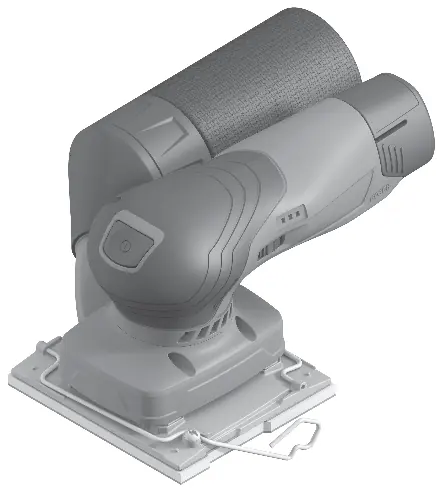

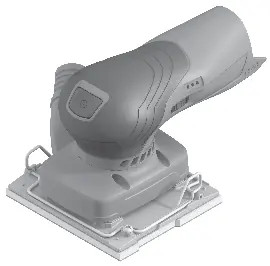

Changing the sanding sheet: Remove dirt and dust from the sanding plate before attaching a new sheet. Ensure the punched holes in the sanding sheet align with the holes in the sanding plate for optimal dust extraction.
Operation
Switching On/Off: Press the on/off switch (1) to start and stop the tool. Ensure you can press the switch without releasing the handle.
Preselecting the orbital stroke rate: Use the thumbwheel (6) to adjust the stroke rate (1-2 low, 3-4 medium, 5-6 high) based on the material and work conditions.
Dust Extraction
Self-generated dust extraction: Attach the complete dust bag (2) onto the extraction outlet (21) until it is flush. Empty the dust bag (22) regularly by pulling it off and unscrewing the adapter (23).
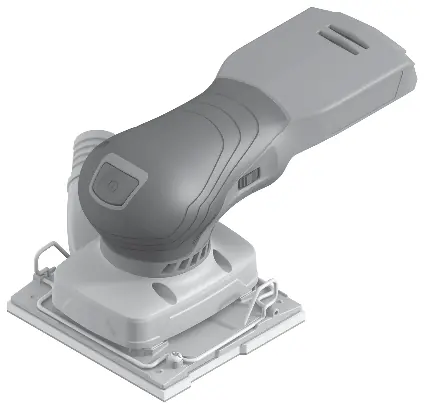
External dust extraction: Connect a dust extraction hose (24) to the extraction outlet (21) and connect it to a suitable vacuum cleaner.
Maintenance
Keep the tool and ventilation slots clean for safe and efficient operation. For repairs or spare parts, contact your local Bosch service center or visit www.bosch-pt.com.
Official resources from the manual
Manufacturer information
Bosch
Practical help
Common problems
Reduced battery runtime
The battery is likely worn out and needs to be replaced.
Dust extraction is not optimal
Empty the dust bag (22) in good time and ensure the holes in the sanding sheet align with the holes in the sanding plate.
Battery charge indicator flashes quickly
The battery temperature is outside the operating range (-30 to +70 °C) or the overload protection has been triggered.
Before use
- Ensure the battery is fully charged.
- Check that the correct base plate and foam pad are securely mounted.
- Ensure the sanding sheet is correctly aligned with the sanding plate holes.
- Check that the dust bag or vacuum hose is securely attached.
- Verify the orbital stroke rate is set appropriately for the material.
Specs in practice
- No-load speed
- 6000–10,000 min⁻¹; determines the sanding intensity.
- Orbit diameter
- 1.6 mm; indicates the size of the sanding movement.
Images and diagrams
- Page 3: Overview of components and base plate options.
- Page 4: Assembly steps (A1-A2) and sanding sheet attachment (B, C, D).
- Page 5: Dust extraction setup (F-H) and external vacuum connection (I).
Model compatibility
- Use only original Bosch sanding accessories.
- Compatible with GBA 12V batteries.
- Compatible with GAL 12 and GAX 18 series chargers.

Manual page author
David Miller
Documentation analyst
Organizes user manual content into clear summaries, with attention to model details, product context, and everyday usability.