Tools / Power Tools
User Manual for Bosch UniversalHedgeCut 18V-48 | 18V-50 | 18V-55 Hedge Trimmer
Quick guide for the Bosch UniversalHedgeCut 18V-48, 18V-50, and 18V-55 cordless hedge trimmers, covering assembly, operation, battery maintenance, and troubleshooting.
Table of contents
Quick guide from the manual
This document provides essential information for the safe and efficient use of the Bosch UniversalHedgeCut 18V-48, 18V-50, and 18V-55 cordless hedge trimmers. Always ensure the battery is removed before performing any maintenance or adjustments to prevent accidental starting.
Device Description
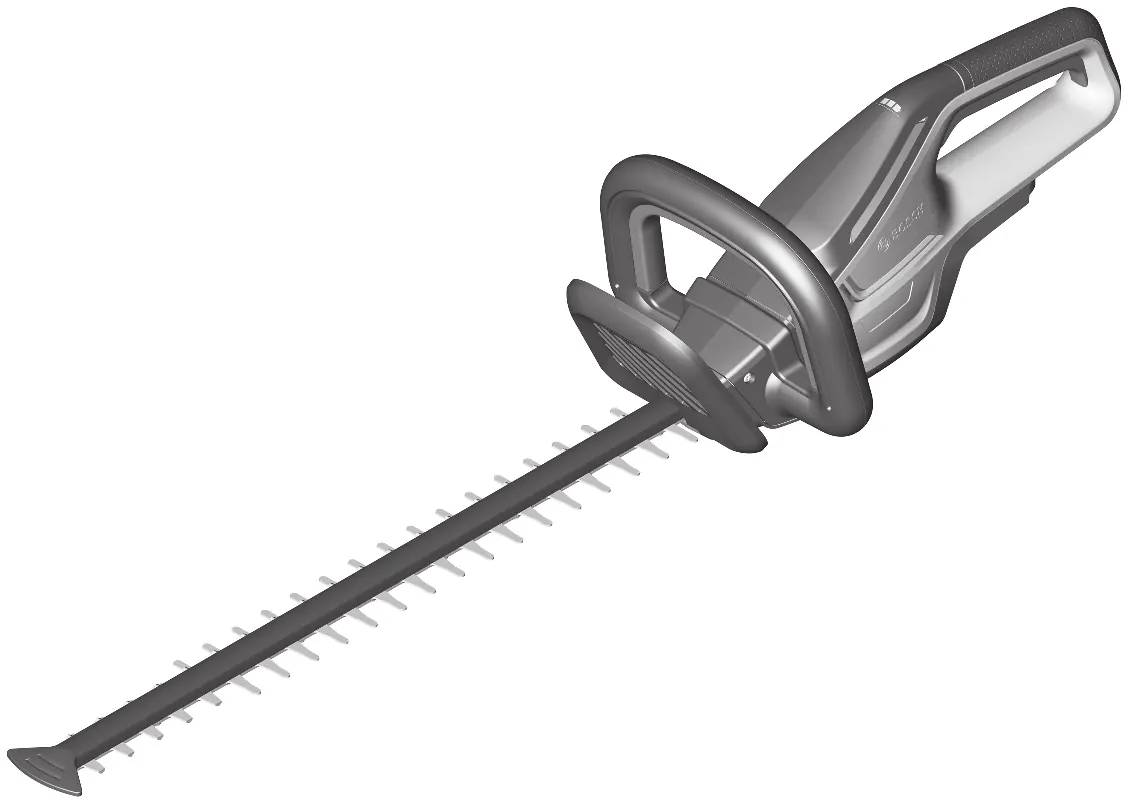
The hedge trimmer is designed for cutting and trimming hedges and bushes in domestic environments. Key components include the front and rear handles with integrated switches, a hand guard, the cutting blade, and the battery compartment.
Operation
To operate the tool, insert the battery until it clicks into place. Press the front switch and the rear handle switch simultaneously to start the motor. Releasing either switch will stop the tool. The device features an anti-blocking mechanism that automatically reverses the motor if the blade stalls on tough material.
Battery Maintenance
Use only the chargers specified in the technical data. Protect the battery from moisture, water, and excessive heat (e.g., direct sunlight). Store the battery separately from the tool within a temperature range of -20 °C to 50 °C. Clean the battery's ventilation slots occasionally with a soft, clean, and dry brush.
Maintenance and Cleaning
Always remove the battery before any work on the tool. After use, clean the hedge trimmer with a damp cloth and apply a lubricant spray to the blades. Clean the area around the front hand guard with a soft cloth or brush. Do not attempt to repair the tool or battery yourself; contact Bosch customer service for any repairs.
Troubleshooting
If the hedge trimmer does not operate, check if the battery is charged and correctly inserted. If the tool operates intermittently, the internal wiring or the on/off switch may be defective; contact a service agent. If the blades become hot, they may be blunt, have dents, or lack lubrication.
Manufacturer information
Bosch
Practical help
Common problems
Hedge trimmer does not operate
Check if the battery is discharged or not fully connected.
Hedge trimmer operates intermittently
Internal wiring or on/off switch may be defective; contact a service agent.
Cutting blade becomes hot
Blade may be blunt, have dents, or lack lubrication. Sharpen or inspect the blade and apply lubricant spray.
Cutting time per battery charge is too low
Clean the blade, apply lubricant, or ensure the battery is fully charged.
Before use
- Inspect the hedge for wires or foreign objects.
- Ensure all handles and guards are properly fitted.
- Lubricate the cutting blade with maintenance spray.
- Check that the battery is fully charged.
- Ensure the area is clear of people and animals within a 3-meter radius.
Specs in practice
- Stroke rate at no-load
- The speed of the blade movement without load (2800 min-1).
- Cutting length
- The effective length of the blade (50 cm or 55 cm depending on model).
- Tooth opening
- The maximum branch diameter the blade can cut (20 mm or 22 mm).
Images and diagrams
- Figure A: Overview of components including handles, switches, hand guard, and battery.
- Figure B: Battery insertion and removal process.
- Figure D: Simultaneous operation of front and rear switches to start the tool.
- Figure F: Proper cutting technique for hedges.
Model compatibility
- Compatible with Bosch 18V Li-ion batteries (PBA 18V...W- series).
- Use only with recommended Bosch chargers (e.g., AL 1810 CV, AL 1830 CV).

Manual page author
David Miller
Documentation analyst
Organizes user manual content into clear summaries, with attention to model details, product context, and everyday usability.