Home Appliances / Dishwashers
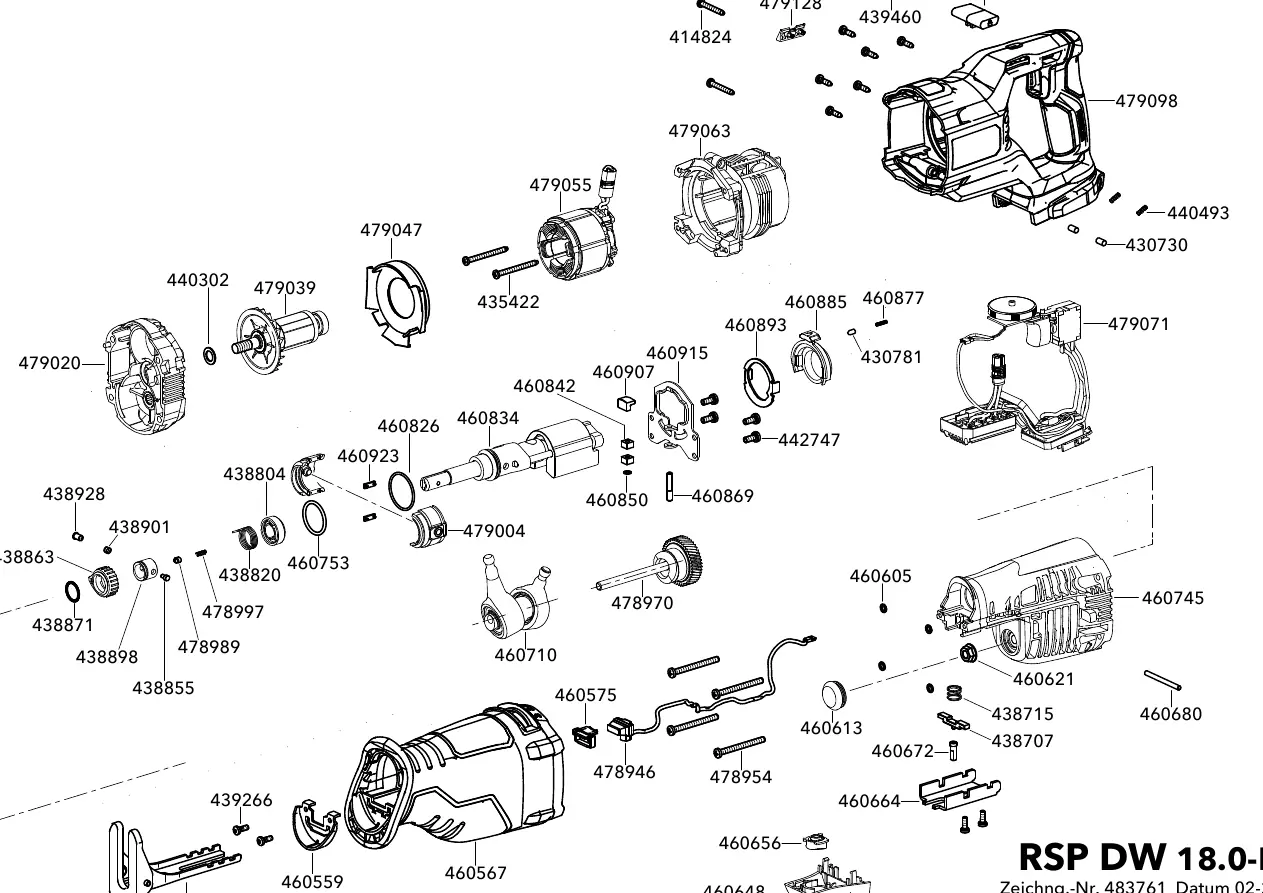
FLEX RSP DW 18.0-EC Reciprocating Saw
Comprehensive guide for the FLEX RSP DW 18.0-EC cordless reciprocating saw, covering operation, maintenance, and safety protocols.
Table of contents
Product Overview
The FLEX RSP DW 18.0-EC is a professional-grade cordless reciprocating saw designed for demanding cutting applications. Engineered with a high-efficiency EC motor, it provides consistent power and durability for various materials. Its ergonomic design ensures comfortable handling during extended use, while the robust construction guarantees longevity in harsh job site conditions.
Safety Instructions
Always wear appropriate personal protective equipment, including eye and ear protection, when operating the tool. Ensure the work area is clean and well-lit. Before starting any work, inspect the tool for any signs of damage. Never bypass safety guards or mechanisms. Always remove the battery pack before performing any maintenance, changing blades, or when the tool is not in use to prevent accidental activation.
Operation
To operate the saw, insert a fully charged battery pack until it clicks into place. Select the appropriate blade for the material being cut and ensure it is securely locked in the blade clamp. Use the variable speed trigger to control the cutting speed based on the material density. Maintain a firm grip on the tool and apply steady pressure, allowing the blade to do the work. Avoid forcing the tool, as this can lead to overheating or blade breakage.
Maintenance and Care
Regular maintenance is essential for optimal performance. Keep the ventilation slots clean and free of debris to prevent motor overheating. Periodically inspect the blade clamp mechanism and keep it lubricated. Check the battery contacts for cleanliness and ensure the battery pack is stored in a cool, dry place. If the tool requires repair, use only genuine replacement parts to maintain safety and performance standards.
Troubleshooting
If the tool fails to start, check the battery charge level and ensure it is properly seated. If the tool stops during operation, it may be due to thermal overload; allow the tool to cool down before resuming. For persistent issues, such as unusual noises or excessive vibration, discontinue use immediately and contact an authorized service center.
Disposal
Do not dispose of power tools or batteries in household waste. Dispose of the tool, accessories, and packaging in accordance with local environmental regulations. Batteries should be recycled through designated collection points to minimize environmental impact.
Related manuals
Related manuals from the same brand or category.
Tools / Drills
FLEX IW 1/2" 750 18.0-EC/5.0 Cordless Impact Wrench Set
FLEXHome Appliances / Refrigerators
FLEX LB 125 18.0-EC/5.0 Set Cordless Angle Grinder
FLEXGeneral / Other Manuals
FLEX IW 3/4" 18.0-EC Parts Diagram
FLEXGeneral / Other Manuals
FLEX SE 125 18.0-EC Parts Diagram
FLEXGeneral / Other Manuals
FLEX DW 45 18.0-EC Cordless Drywall Screwdriver
FLEXTools / Drills
FLEX IW 1/2" 950 18.0-EC Cordless Impact Wrench
FLEXTools / Power Tools
FLEX LBE 125 18.0-EC Cordless Angle Grinder
FLEXHome Appliances / Washing Machines
FLEX PE 150 18.0-EC Professional Polisher
FLEXTools / Drills
FLEX MT 18.0-EC Brushless Cordless Multitool
FLEX
Manual page author
Emily Carter
User documentation editor
Prepares concise manual descriptions and highlights the most useful setup, operation, and maintenance information for readers.