Industrial / Gas Detection
Gastec No. 221L Chloride Ion Detector Tube Instructions
A comprehensive guide for the Gastec No. 221L Chloride Ion Detector Tube. Includes measurement procedures, technical specifications, interference data, and safety precautions for water testing.
Table of contents
Quick Guide
The Gastec No. 221L detector tube is designed to detect Chloride Ion concentrations in waste water. Before use, ensure the water temperature is between 0-50°C (32-122°F) and the pH value is between 3.0 and 11.0. Always handle glass tubes with care to avoid injury from broken glass or reagent contact.
Specifications
- Measuring Range: 25 - 1000 mg/L
- Sampling Time: 3 minutes
- Detecting Limit: 1 mg/L
- Colour Change: Brown to White
- Reaction Principle: 2Cl- + Ag2CrO4 -> 2AgCl
- Coefficient of Variation: 15% (for 25 to 300 mg/L), 10% (for 300 to 1000 mg/L)
Measurement Procedure
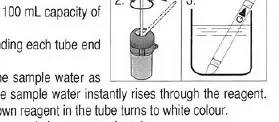
- Take sample water into an approximately 100 mL capacity dry, clean beaker.
- Break the tips off a fresh detector tube by bending each tube end in the tube tip holder (optional).
- Immerse the filled end of the tube into the sample water. Capillary action will cause the sample water to rise through the reagent.
- When the sample water rises up to the upper end plug, remove the tube.
- Read the concentration level at the interface where the stained reagent meets the unstained reagent.
- If the stain exceeds the highest calibration mark (1000 mg/L), dilute the sample with pure water and retest using a fresh tube. Calculate the true concentration by multiplying the tube reading by the dilution ratio (V1+V2 / V1).
Interferences
The test may be affected by coexisting substances. Please refer to the following interference data:
- Cyanide ion (CN-): 1 mg/L (Interference: +, Colour: White)
- Bromide ion (Br-): 10 mg/L (Interference: +, Colour: White)
- Thiocyanate ion (SCN-): 30 mg/L (Interference: +, Colour: White)
- Iodide ion (I-): 50 mg/L (Interference: +, Colour: White)
- Sulphide ion (S2-): 5 mg/L (Interference: +, Colour: Blackish gray)
Note: Test results may show positive results due to other substances not listed in the table.
Safety and Disposal
The reagent contains a small amount of hexavalent chromium. When disposing of the tube, regardless of whether it has been used or not, follow the rules and regulations of your local government. Do not touch broken glass or reagent with bare hands. Keep away from eyes when breaking tube ends.
Manufacturer information
Gastec Corporation
Practical help
Common problems
Stain exceeds 1000 mg/L
Dilute the sample with pure water and retest using a fresh tube. Multiply the reading by the dilution ratio.
Interference from coexisting substances
Check the interference table; test results may show positive results due to other substances not listed.
Before use
- Verify water temperature is between 0-50°C (32-122°F).
- Verify water pH is between 3.0 and 11.0.
- Prepare a clean 100 mL beaker.
- Ensure you have a tube tip holder (optional).
- Check the validity date on the tube box.
Show more Show less
Specs in practice
- Measuring Range
- The concentration range the tube can detect (25-1000 mg/L).
- Sampling Time
- The time required for the sample to rise through the reagent (3 minutes).
- Reaction Principle
- The chemical reaction (2Cl- + Ag2CrO4 -> 2AgCl) that causes the color change.
Images and diagrams
- Break the tube tips using the tip holder.
- Immerse the tube into the sample water.
- Read the concentration at the interface of the stained and unstained reagent.
Model compatibility
- Do not immerse the tube past the upper end plug.
- Store tubes in a dark and cool place.

Manual page author
David Miller
Documentation analyst