Electronics / Smart Trackers
User Manual for Pictor PX 1004G GNSS Tracker
Quick guide for the Pictor PX 1004G 4G hardwired GNSS tracker. Learn about installation, wiring, technical specifications, and key features like crash detection and driving behavior monitoring.
Table of contents
Quick guide from the manual
The Pictor PX 1004G is a 4G hardwired GNSS tracker designed for vehicle tracking and monitoring. It supports 4G LTE Cat-1 and 2G GSM networks. The device requires a stable power source between 5V and 32V DC. Key features include ignition detection, crash detection, driving behavior monitoring, and remote relay control.
Product Overview
The device is a compact tracker with internal antennas for Network, GNSS, BLE, and WiFi. It is configured via a Type C connector. The unit is rated IP41, meaning it is protected against solid objects over 1mm and vertically falling water drops.
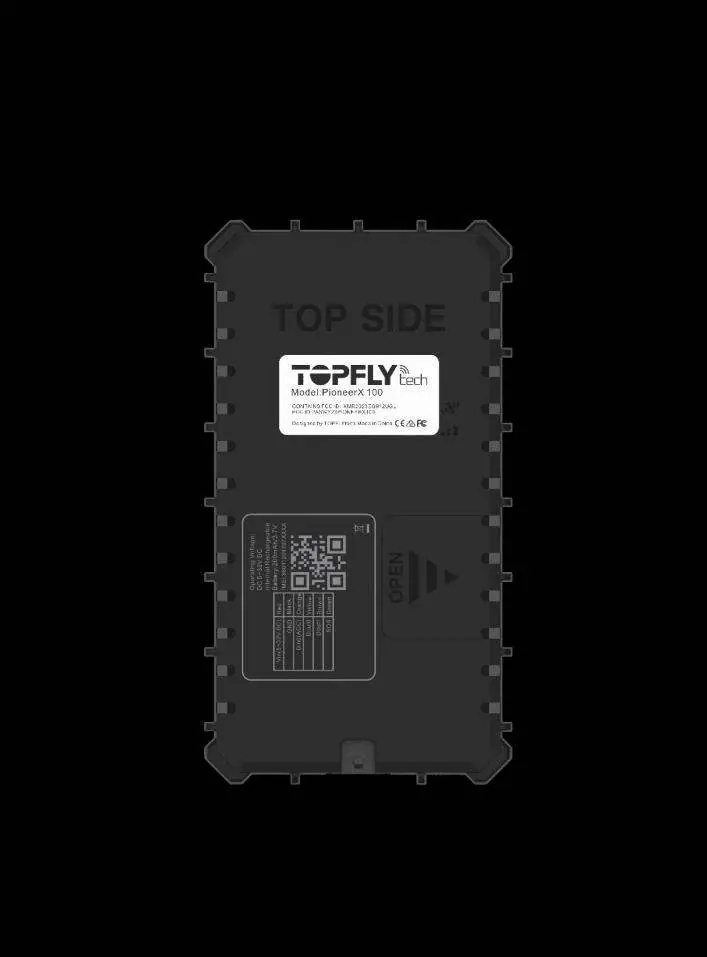
Interfaces and Wiring
The device includes several interfaces for vehicle integration:
- Digital Input (ACC): Used for ignition detection. Input range is 0-32V. Ignition is considered ON when voltage is 5V or higher, and OFF when 2V or lower. Voltages between 2V and 5V are considered unstable.
- Digital Input (SOS): Used for a panic button. Connect to ground to trigger an alert.
- Digital Output: Provides 2 digital outputs for relay control.
Technical Specifications
- Operating Voltage: 5V to 32V DC
- GNSS: Supports GPS, Beidou, Galileo, and QZSS.
- Connectivity: 4G LTE Cat-1 and 2G GSM.
- Sensors: 3-axis accelerometer, temperature sensor.
- Battery: Internal Li-Polymer 200 mAh / 3.7V backup battery.
- Operating Temperature: -30°C to +80°C (-22°F to 176°F).
- Dimensions: 105.7mm x 57.6mm x 16.8mm.
- Weight: 55g.
Features and Alarms
The tracker supports various monitoring and alarm functions:
- Driving Behavior: Monitors harsh braking, acceleration, and turning events.
- Crash Detection: Collects accident data for reconstruction and analysis.
- Alarms: Includes towing alarms (via 3-axis acceleration), external power disconnection alarms, low backup battery alarms, and speeding alarms.
- Remote Control: Supports remote output control for vehicle immobilization or other relay-based actions.
- Data Transmission: Supports TCP, UDP, MQTT, and SMS protocols.
Certifications
The device complies with various industry standards, including FCC, CE, RCM, NBTC, TDRA, CITC, Emark, and Anatel.
Practical help
Common problems
Device not tracking or reporting
Verify the power supply is within the 5V-32V DC range and ensure the Nano SIM card is correctly installed and active.
Ignition status not detected correctly
Check the ACC input wiring. Ensure the voltage is >5V for 'Ignition ON' and <2V for 'Ignition OFF'. Avoid unstable voltage ranges (2V-5V).
Network signal issues
Ensure the device is not installed in a shielded location and has a clear view of the sky for GNSS reception.
Before use
- Verify power source is between 5V and 32V DC.
- Ensure a valid Nano SIM card is inserted.
- Check that the device is mounted in a location with clear GNSS signal access.
- Confirm wiring for ACC (ignition) and SOS button if required.
- Ensure the device is configured via the Type C connector if necessary.
Specs in practice
- Operating Voltage (5V-32V DC)
- The range of voltage the device can accept from the vehicle's electrical system.
- Digital Input (ACC)
- Used to detect if the vehicle engine is running based on voltage thresholds.
Images and diagrams
- The device label indicates the pinout for power, ground, ACC, and SOS connections.
- The Type C connector is located on the device for configuration purposes.
Model compatibility
- Requires a Nano SIM card for cellular connectivity.
- Supports 4G LTE Cat-1 and 2G GSM networks.
- Compatible with relay control via digital outputs.

Manual page author
Emily Carter
User documentation editor
Prepares concise manual descriptions and highlights the most useful setup, operation, and maintenance information for readers.