Home Appliances / Washing Machines
Singer 14SH644 & 14SH654 Overlock Machine Operator's Guide
Comprehensive operator's guide for Singer 14SH644 and 14SH654 overlock machines, covering setup, threading, stitch adjustments, maintenance, and troubleshooting.
Table of contents
Product Overview
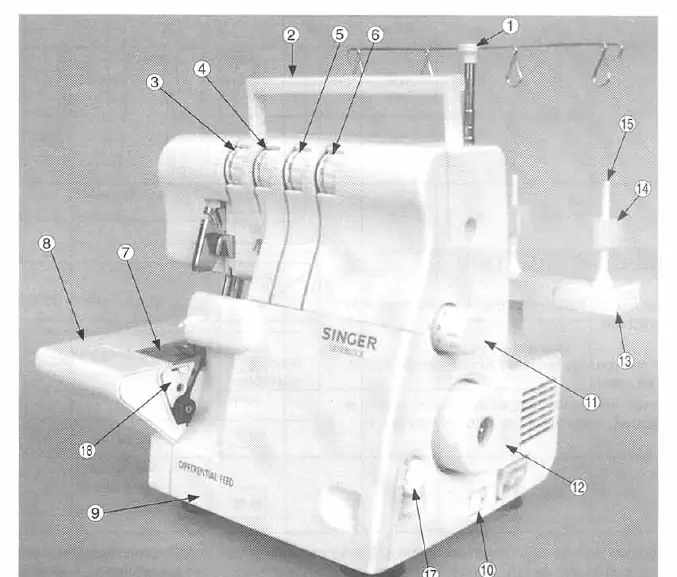
The Singer 14SH644 and 14SH654 are high-performance 3 and 4-thread overlock machines designed for household use. These machines are capable of handling a wide range of fabrics, from light lawn to heavy denim, providing professional-grade overedging and seaming capabilities. The 14SH654 model includes a differential feed feature for better control over fabric stretching or gathering.
Safety Instructions
Always prioritize safety when operating the machine:
- Never leave the machine unattended while plugged in.
- Always unplug the machine before changing needles, light bulbs, or performing maintenance.
- Keep fingers away from all moving parts, especially the needle area.
- Do not use bent needles or pull/push fabric while stitching, as this may cause needle breakage.
- Ensure the machine is placed on a flat, stable surface and that air openings are not blocked.
Getting Started
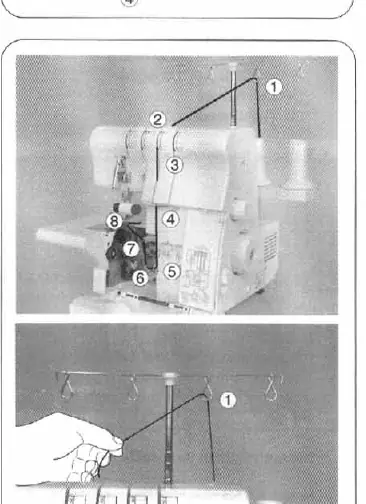
To begin using your machine, connect the foot controller and power cord to an appropriate electrical outlet. The machine is turned on and off using the power switch. Before sewing, ensure the thread guide holder is fully extended and the machine is correctly threaded according to the color-coded diagram located inside the looper cover. Always perform a test sew on a scrap piece of fabric to verify tension settings.
Threading and Stitch Adjustments
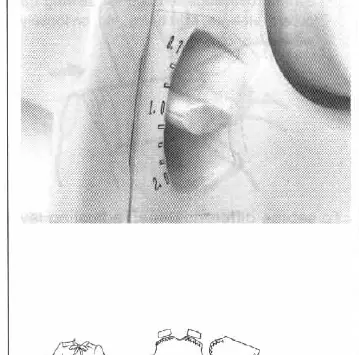
The machine uses a color-coded system to simplify the threading process for the upper looper (orange), lower looper (yellow), right needle (green), and left needle (blue). Use the provided tweezers to assist with threading. You can adjust the stitch length and seam width to suit your project requirements. The differential feed lever allows you to manage fabric feed to prevent puckering or to create decorative gathered effects.
Maintenance
Regular maintenance is essential for optimal performance:
- Clean the looper and knife area frequently using a dry brush to remove lint buildup.
- Periodically oil the internal working parts using recommended sewing machine oil.
- Replace the stationary knife if it becomes dull to ensure clean fabric trimming.
- Always disconnect the power before performing any cleaning or maintenance tasks.
Troubleshooting
If you encounter issues, consult the troubleshooting chart. Common problems such as skipped stitches, thread breakage, or fabric puckering can often be resolved by re-threading the machine, adjusting thread tension, changing the needle, or cleaning the machine. If the machine fails to operate, check the power connection.
Related manuals
Related manuals from the same brand or category.
Home Appliances / Washing Machines
Singer 138w102 Sewing Machine Parts List
SingerHome Appliances / Washing Machines
Singer 12K221 Series Sewing Machines Instructions
SingerGeneral / Service Manuals
SINGER 15-Class Sewing Machine Instruction Manual
SingerFurniture / Home Furnishing