General / Accessories
Corning 048TUZ-T4180D20 LSZH Loose Tube Cable Specification
Technical specification and installation guide for the Corning 048TUZ-T4180D20 48-fiber multimode OM3 LSZH loose tube cable, including environmental ratings, mechanical limits, and construction details.
Table of contents
Manual images
Jump to the sectionQuick guide from the manual
This document provides technical specifications for the Corning 048TUZ-T4180D20, a 48-fiber, 50 µm multimode (OM3) loose tube cable. It is designed for indoor and outdoor use, featuring a flame-retardant, low-smoke, zero-halogen (LSZH) jacket. The cable is all-dielectric, requiring no grounding or bonding, and utilizes water-swellable yarn instead of gel-filling compounds for easier preparation.
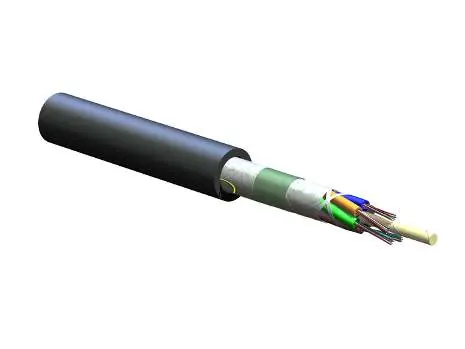
Cable construction
The cable features a robust design suitable for aerial and duct installations. Key components include:
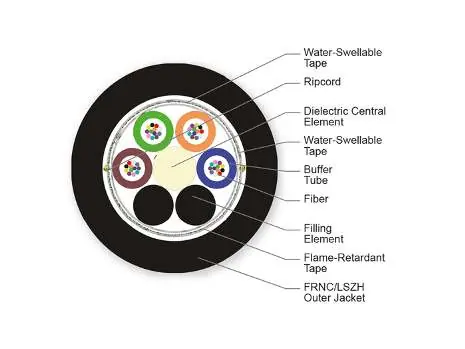
- Outer Jacket: Flame-retardant, UV-resistant, non-corrosive LSZH material.
- Central Element: Dielectric material.
- Buffer Tubes: 4 active tubes containing 12 fibers each, color-coded per Telcordia standards.
- Filling Elements: 2 elements included in the design.
- Protection: Water-swellable tapes and flame-retardant layers.
- Ripcords: 2 ripcords for jacket removal.
Installation and environmental conditions
Adherence to temperature and mechanical limits is critical for maintaining cable integrity:
- Installation Temperature: -30 °C to 60 °C (-22 °F to 140 °F).
- Operation/Storage Temperature: -40 °C to 70 °C (-40 °F to 158 °F).
- Min. Bend Radius (Installation): 192 mm (7.56 in).
- Min. Bend Radius (Operation): 128 mm (5.04 in).
- Max. Tensile Strength (Short-Term): 2700 N (606.98 lbf).
- Max. Tensile Strength (Long-Term): 810 N (182.1 lbf).
Safety and standards
The cable is compliant with RoHS 2011/65/EU and meets various industry standards, including:
- Flame Rating: LSZH (OFN-LS).
- Approvals: NEC OFCR-LS/Riser, Sunlight Resistant (SUN RES), IEEE-1202 flame test, and suitable for direct burial.
- Compliance: IEC 60332-3, IEC 60754-2, IEC 61034, and ANSI/ICEA S-104-696.
Manufacturer information
Corning Optical Communications
Practical help
Common problems
Exceeding bend radius during installation
Ensure the cable is not bent tighter than 192 mm during the installation process to prevent fiber damage.
Exceeding tensile strength
Do not exceed 2700 N of pulling force during installation; maintain long-term tension below 810 N.
Before use
- Verify the installation environment temperature is between -30 °C and 60 °C.
- Ensure the cable path allows for the minimum bend radius of 192 mm.
- Check that the installation method (aerial, duct, or direct burial) is compatible with the cable's ratings.
- Confirm the fiber count (48) matches the project requirements.
Specs in practice
- LSZH (Low-Smoke, Zero-Halogen)
- Material that emits minimal smoke and no toxic halogens during combustion, essential for indoor safety.
Images and diagrams
- The cross-section diagram shows the central dielectric element surrounded by 4 active buffer tubes and 2 filling elements.
- The diagram identifies the placement of water-swellable tapes and the flame-retardant outer jacket.
Model compatibility
- Suitable for indoor/outdoor, aerial, duct, and direct burial applications.
- Compliant with NEC Article 770 for general purpose horizontal installations.

Manual page author
Michael Turner
Technical manual editor
Reviews PDF manuals for structure, safety notes, and practical product details so readers can find the right information quickly.