Software / Apps Services
AppBlaster User Guide for TWN4
A comprehensive guide to using the AppBlaster software for configuring and programming Elatec TWN4 readers, including firmware updates, project creation, and OSDP settings.
Table of contents
Manual images
Jump to the sectionQuick guide from the manual
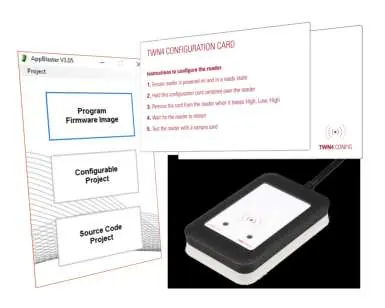
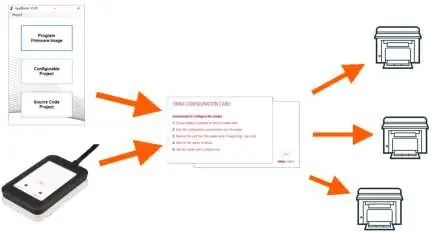
AppBlaster is a software tool designed for the Elatec TWN4 developer pack. It allows users to configure and program TWN4 readers for specific applications. You can prepare the reader by directly programming firmware, using interactive configuration, or by writing custom C code. The software also supports configuration via RF interface using configuration cards.
System Requirements
- Operating system: Microsoft Windows 7 or later (32 or 64 bit)
- Microsoft .NET Framework 4.7.2
- Processor: 2 GHz
- Hard Disk: 100 MB
- RAM: 4 GB
Installation
The software is distributed as a zip file within the developer pack. To install, create an empty directory on your hard disk and unzip the entire content of the package into it. The executable file is located in the top directory.
Configurable Project
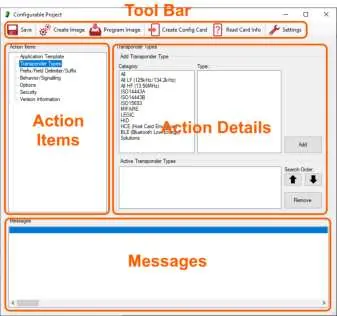
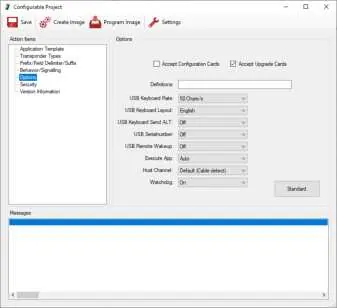
To start a new project, select the Configurable Project button in the main dialog. The process involves several steps:
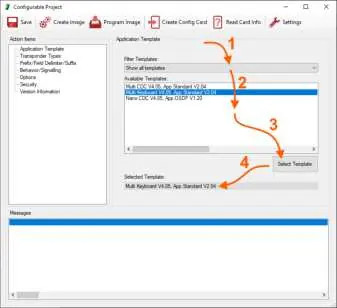
- Select Application Template: Choose the appropriate template based on your hardware. MultiBIX templates support multiple hardware types.
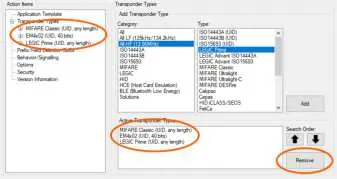
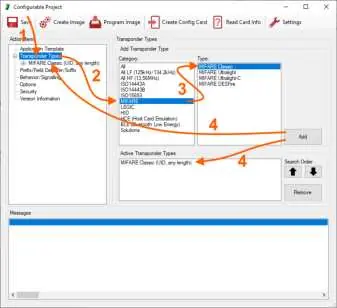
- Add Transponder Types: Select the required transponder technologies from the category list and add them to the active list.
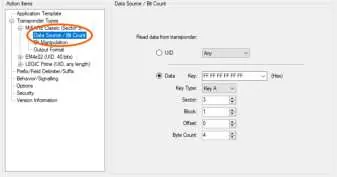
- Specify Data Source: Define where data is stored on the transponder (e.g., UID, sector, block).
- Output Format: Configure how the data is formatted and output.
- Signalling/Behaviour: Customize LED and beeper responses for events like startup, card detection, or timeout.
- Security: Manage device security settings as detailed in the separate TWN4 Device Security document.
- Version Information: Assign a naming scheme to your firmware image for easier identification.
- Create and Program Image: Build the firmware image and program it into the TWN4 device.
OSDP Projects
OSDP applications differ from standard apps as signalling and behaviour are controlled by the host. Configuration is limited to OSDP-specific properties, such as reader model selection, standard properties (address, baud rate), and custom properties for customer-designed hardware.
Source Code Project
For advanced requirements not covered by standard configuration, you can create a source code project. This allows you to implement custom logic, host-based communication, or specific I/O handling using C programming language. The project dialog is simplified, focusing on template selection, source code module specification, and compilation options.
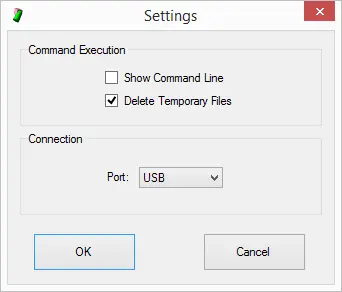
Setting Up AppBlaster
Access settings to manage command execution (e.g., showing command lines for make-based projects) and connection ports. Ensure the correct port (USB or COM) is selected based on your hardware connection.
Manufacturer information
ELATEC GmbH
Practical help
Common problems
Firmware image not recognized
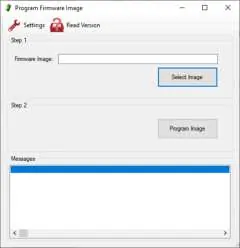
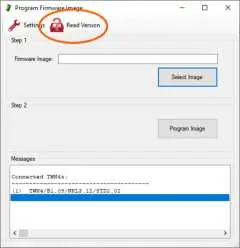
Ensure the file extension is correct (.bix for firmware, .gbl for BLE module firmware).
Cannot configure signalling/behaviour in OSDP
This is expected behavior; OSDP signalling is fully controlled by the host system.
Need to split source code into multiple files
AppBlaster has limitations for complex projects; consider using the command-line tools provided in the 'Tools' subdirectory.
Before use
- Verify system meets Windows 7+ and .NET 4.7.2 requirements.
- Ensure TWN4 reader is connected via USB or configured COM port.
- Download the latest TWN4 developer pack zip file.
- Identify if you need a standard configurable project or a custom source code project.
Specs in practice
- MultiBIX-template
- A template supporting multiple types of TWN4 hardware, recognizable by the word 'Multi' in the filename.
- App Characters
- 1-4 letters or digits used in the firmware naming scheme to identify the project.
Images and diagrams
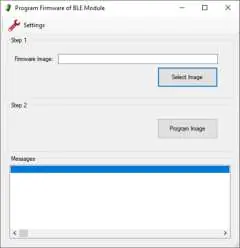
- The start dialog provides three main paths: Program Firmware Image, Configurable Project, and Source Code Project.
- The project dialog is divided into Tool Bar (actions), Action Items (steps), Action Details (input), and Messages (feedback).
Model compatibility
- OSDP applications are only supported by devices in the TWN4 Palon family.
- Security features require TWN4 with boot loader V1.20 or later.

Manual page author
Michael Turner
Technical manual editor
Reviews PDF manuals for structure, safety notes, and practical product details so readers can find the right information quickly.