General / Other Manuals
FDA Compliance Guide for Yogurt Products (FDA-2023-D-4722)
A comprehensive compliance guide for yogurt manufacturers regarding FDA standards, including ingredient requirements, labeling, and production specifications for the U.S. market.
Quick answers from the manual
Quick answer
- This guide provides FDA compliance requirements for yogurt manufacturers, including standards for ingredients (minimum 3.25% milkfat, 8.25% milk solids not fat), pH levels (4.6 or lower), and specific labeling rules for cultures, vitamins, and sweeteners. p. 4, 6, 7, 15
Key actions
- Ensure yogurt has a pH of 4.6 or lower within 24 hours after filling. p. 5, 6
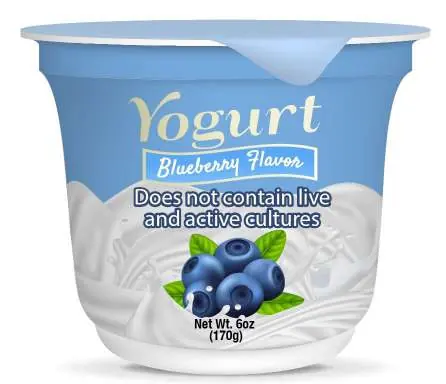
- Label products treated to inactivate cultures with 'does not contain live and active cultures'. p. 15
Technical specifications
| Parameter | Value | Meaning | Pages |
|---|---|---|---|
| Milkfat | 3.25% (min) | Minimum milkfat content for standard yogurt. | p. 6, 7 |
| Milk solids not fat | 8.25% (min) | Minimum milk solids not fat content. | p. 6, 7 |
| pH | 4.6 or lower | Maximum pH level for finished yogurt. | p. 6, 9 |
| RACC | 170 grams | Reference Amount Customarily Consumed for yogurt. | p. 10, 12 |
Show 1 more answers Show less
Where to find it in the PDF
- Table of Contents p. 2, 3
- Basic Requirements p. 6, 7
- Labeling Requirements p. 12, 13, 14, 15
Table of contents
Manual images
Click an image to enlargeQuick Guide to Yogurt Compliance
This document serves as a Small Entity Compliance Guide for yogurt manufacturers to comply with 21 CFR parts 130 and 131. It outlines the standards of identity, ingredient requirements, and labeling obligations for yogurt products sold in the U.S. market. Manufacturers must begin complying with these rules for products labeled on or after January 1, 2024.
Yogurt Definition and Basic Requirements
Yogurt is defined as food produced by culturing basic dairy ingredients with characterizing bacterial cultures. Before adding cultures, ingredients must be pasteurized or ultra-pasteurized. Key requirements include:
- Milkfat: Minimum 3.25% (with specific exceptions for reduced fat/lowfat/nonfat products).
- Milk Solids Not Fat: Minimum 8.25%.
- Acidity: pH of 4.6 or lower, measured on the finished product within 24 hours after filling.
Ingredients
Required Ingredients:
- Basic dairy ingredients: Cream, milk, partially skimmed milk, skim milk, or their reconstituted versions.
- Bacterial cultures: Must include Lactobacillus delbrueckii subsp. bulgaricus and Streptococcus thermophilus.
Optional Ingredients:
- Other bacterial cultures, sweeteners, flavoring ingredients, color additives, stabilizers, emulsifiers, preservatives, Vitamin A, and Vitamin D.
Labeling Requirements
Labeling must be accurate regarding the product's composition:
- Live and Active Cultures: You may state "contains live and active cultures" only if the product contains at least 10^7 CFU/g at manufacture and maintains 10^6 CFU/g through shelf life.
- Inactivated Cultures: If treated to inactivate microorganisms, the label must state "does not contain live and active cultures" in letters at least half the height of the product name.
- Vitamins: If Vitamin A or D is added, the label must specify the amount and include phrases like "vitamin A added" or "vitamins A and D added."
- Sweeteners: If a nutritive carbohydrate sweetener is added without characterizing flavor, the label must include the word "sweetened."
Requirements for Reduced Fat Products
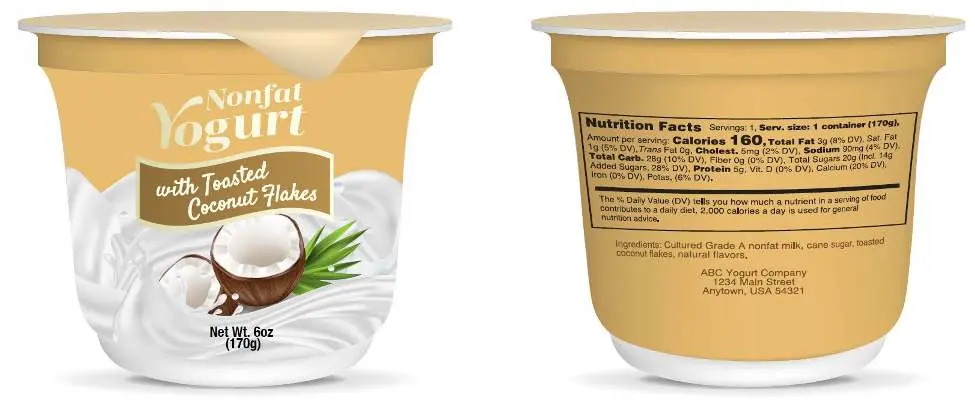
Products with less than 3.25% milkfat must comply with specific nutrient content claim regulations (21 CFR 130.10). For example, "lowfat" yogurt must contain less than or equal to 3 grams of milkfat per RACC (170g).
Practical help
Common problems
Determining if a product can be labeled as 'lowfat' or 'nonfat'
Ensure compliance with 21 CFR 101.62(b). 'Lowfat' must have <= 3g milkfat per RACC (170g); 'Nonfat' must have < 0.5g milkfat per RACC.
Labeling yogurt with inactivated cultures
You must include the phrase 'does not contain live and active cultures' on the principal display panel in letters at least half the height of the product name.
Adding vitamins A or D
If added, the label must specify the amount and include a statement like 'vitamin A added' or 'vitamin D added' near the product name.
Before use
- Verify milkfat content is at least 3.25% (unless producing reduced fat/lowfat/nonfat variants).
- Ensure milk solids not fat content is at least 8.25%.
- Confirm pH is 4.6 or lower within 24 hours of filling.
- Ensure bacterial cultures include Lactobacillus delbrueckii subsp. bulgaricus and Streptococcus thermophilus.
- Check that all optional ingredients (sweeteners, stabilizers, etc.) are safe and suitable.
- Verify labeling for live/active cultures or inactivated cultures meets size and phrasing requirements.
Show more Show less
Images and diagrams
- Labels for yogurt must clearly state the milkfat percentage if it falls between 2.44% and 3.25%.
- Fat-containing flavoring ingredients (e.g., nuts, chocolate) must be declared alongside the nutrient content claim (e.g., 'lowfat yogurt with cashews').
- Products treated to inactivate cultures must clearly display the 'does not contain live and active cultures' statement.
Model compatibility
- Compliance is required for products labeled on or after January 1, 2024.
- These regulations apply to yogurt products sold in the U.S. market.

Manual page author
Emily Carter
User documentation editor