Hvac / Thermostats Controls
Flomasta Steel Panel Radiator Installation and Care Guide
Comprehensive installation, safety, and maintenance instructions for Flomasta steel panel radiators, ensuring efficient heating and long-term performance.
Table of contents
Manual images
Jump to the sectionProduct Overview
The Flomasta steel panel radiator is designed for high-performance central heating systems. These radiators comply with EN 442 standards and are manufactured under strict quality management systems (EN ISO 9001) and environmental management standards (EN ISO 14001). They are built to withstand a maximum operating pressure of 10 bars and can handle temperatures up to 120°C.
Safety Information
Safety is paramount during installation and operation. Keep children away from the radiator and packaging materials. The radiator should be installed by a qualified professional to ensure compliance with relevant building regulations. Always use appropriate personal protective equipment (PPE) during installation. Do not use the radiator in outdoor environments or in systems where the ambient temperature may drop below 0°C, as freezing can cause severe damage. Avoid hanging heavy objects on the radiator or covering it, as this restricts airflow and reduces heating efficiency.
Installation Guide
Before beginning, ensure all components are present. The radiator must be installed using the provided brackets. If mounting on hollow walls, such as plasterboard, ensure appropriate fixings are used to support the weight. Before drilling, check for hidden pipes or electrical wires. The radiator should be connected to a central heating system that uses a suitable chemical inhibitor to prevent internal corrosion. Do not remove the protective packaging until the radiator is ready to be mounted to avoid damaging the finish.
Operation and Maintenance
To put the radiator into use, open the radiator valve and ensure the central heating system is active. If the radiator does not heat up, bleed the system using a bleed key or screwdriver to release trapped air until water flows out. For routine cleaning, wipe the surface with a soft, damp cloth. Never use solvents, scouring agents, bleach, or strong detergents, as these can damage the paintwork. If the radiator reaches the end of its service life, it should be disposed of at a metal recycling facility in accordance with local regulations.
Manufacturer information
Flomasta
Practical help
Common problems
Radiator does not heat up
Check if the central heating system is operating and bleed the radiator to remove trapped air.
Missing or damaged parts
Contact the supplier immediately before attempting installation.
Before use
- Verify all components are present
- Ensure the wall type is suitable for the fixings
- Check for hidden pipes and wires
- Ensure the central heating system is isolated
- Wear appropriate PPE
- Use a chemical inhibitor in the water circuit
Specs in practice
- Max Operating Pressure
- 10 Bars
- Max Operating Temperature
- 120°C
Images and diagrams
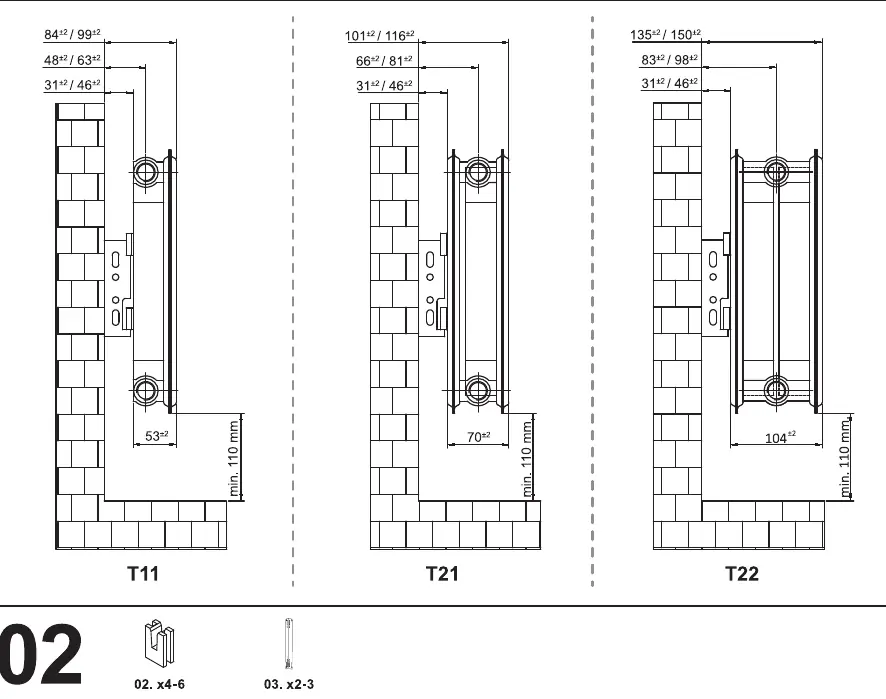
- T11, T21, T22 represent different radiator types with varying depths and bracket configurations.
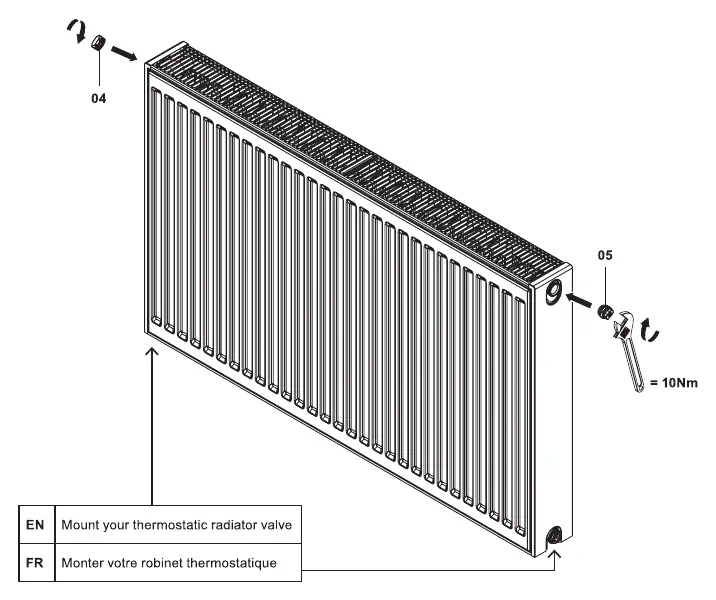
- Installation steps show the use of a drill, spirit level, and wrench for secure wall mounting.
- Bleed valve operation is shown for air removal.
Model compatibility
- Not suitable for direct central heating systems (e.g., kitchen/bathroom taps).
- Requires chemical inhibitor to prevent corrosion.
- Compatible with thermostatic radiator valves (not included).

Manual page author
David Miller
Documentation analyst
Organizes user manual content into clear summaries, with attention to model details, product context, and everyday usability.