Computers / PC Components
Software Installation Guide for GIGABYTE AI TOP Utility
A comprehensive guide for installing and configuring the GIGABYTE AI TOP Utility software on Windows using WSL (Windows Subsystem for Linux), including GPU driver setup, dependency installation, and SSD mounting procedures.
Table of contents
Manual images
Click an image to enlargeQuick guide from the manual
This guide provides instructions for installing the GIGABYTE AI TOP Utility on Windows 11 using the Windows Subsystem for Linux (WSL). The process involves setting up WSL, configuring system memory, installing necessary Linux dependencies, setting up GPU drivers (NVIDIA or AMD), and finally installing the utility software. An optional procedure for mounting an NVMe SSD for large model training is also included.
Prerequisites and WSL Setup
Before beginning, ensure you are running Windows 11 and have WSL2 installed. If you have previous versions of Ubuntu installed, uninstall them via Applications. To install the environment:
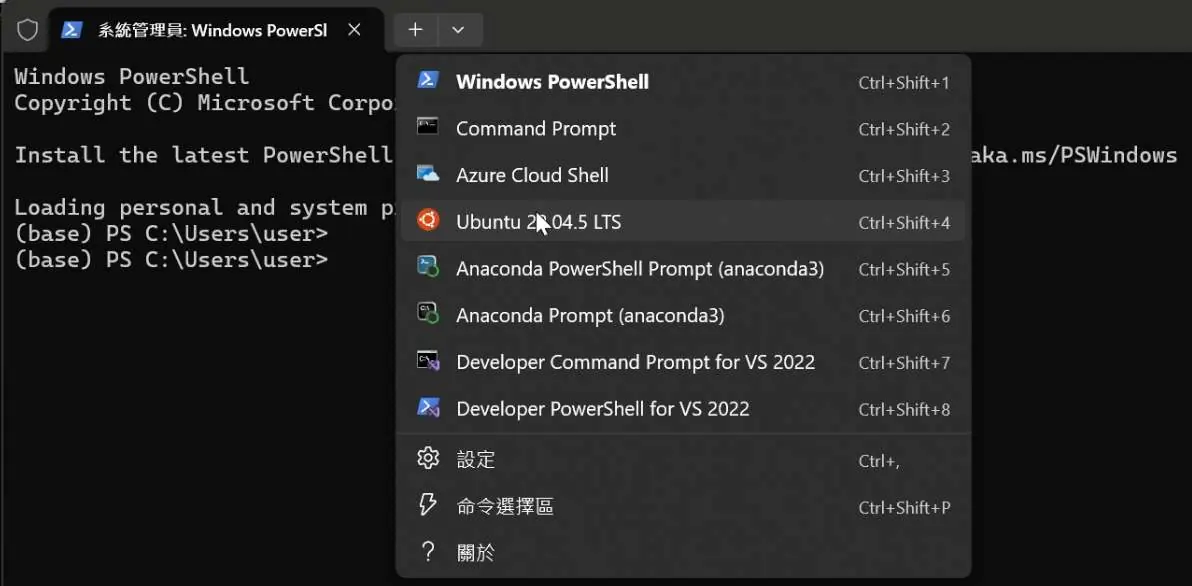
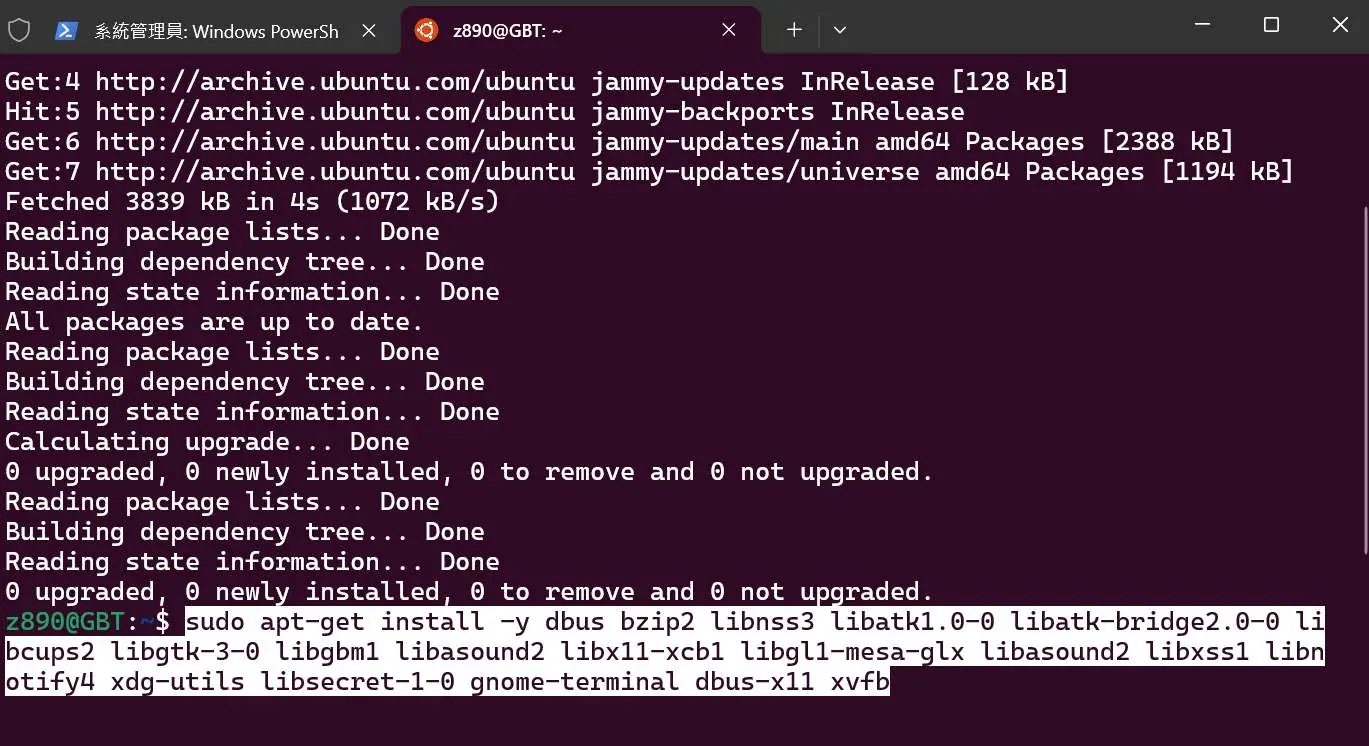
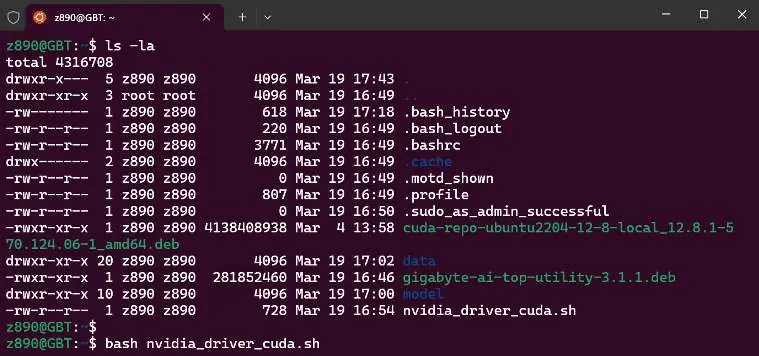
- Open the Microsoft Store on Windows.
- Search for and install Ubuntu 22.04.5 LTS.
- Update WSL by opening Windows PowerShell as Administrator and running the command: wsl --update.
Configuring WSL System Memory
By default, WSL2 allocates up to 50% of total system RAM. You can manually adjust this by editing the .wslconfig file:
- Open Windows PowerShell as Administrator.
- Run the command: cd ~
- Run the command: notepad .\.wslconfig
- Add the following lines to the file: memory=192GB (adjust to your needs) and swap=8GB (optional).
- Save the file and restart WSL by running: wsl --shutdown, then launch WSL again.
Installing Dependencies and Software
After booting Ubuntu and creating your user account, update the package index and install required dependencies:
- Run: sudo apt update, sudo apt upgrade, and sudo apt install -f.
- Install the list of missing dependencies provided in the manual (e.g., dbus, libnss3, libatk1.0-0, etc.).
- Install VcXsrv (XLaunch.exe) for graphical support. When running VcXsrv, ensure you select 'Disable access control' and allow it through the Windows Firewall.
- Install the Linux version of Google Chrome inside the WSL environment using wget and the provided .deb package link.
GPU Driver and CUDA Installation
Locate the driver files (nvidia_driver_cuda.sh or amd_driver_rocm.sh) in the AI_TOP_Utility_ver_x_x folder. Copy the appropriate file to your WSL home directory (e.g., \\wsl.localhost\Ubuntu-22.04\home\username). Open the Ubuntu terminal and run the script using: bash ./[driver_filename].sh.
Installing AI TOP Utility
Place the gigabyte-ai-top-utility-4.0.0.deb file in your WSL home directory. Open the Ubuntu terminal and run: sudo dpkg -i gigabyte-ai-top-utility-4.0.0.deb. To launch the GUI, run: /opt/gigabyte-ai-top-utility/gigabyte-ai-top-utility --no-sandbox.
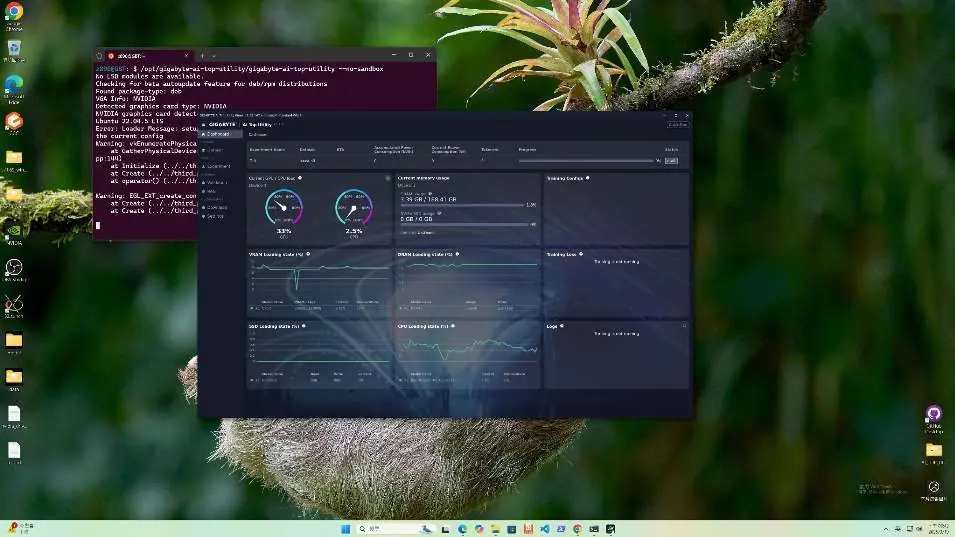
Mounting SSD for WSL
If model sizes exceed VRAM/DRAM capacity, you can mount an NVMe SSD:
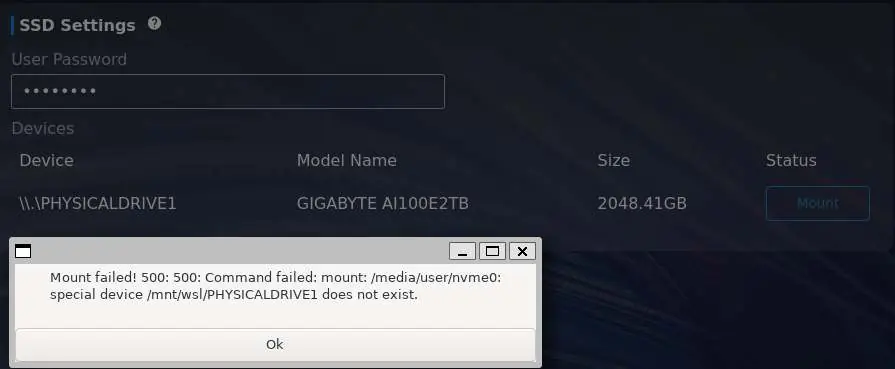
- Mount the drive in Windows PowerShell (Administrator) using: wsl --mount \\.\PHYSICALDRIVE1 --type ext4.
- In the AI TOP Utility Settings tab, enter your OS password and click 'Mount'.
- If mounting fails, ensure the SSD is formatted as EXT4, not NTFS.
Official resources from the manual
Manufacturer information
Gigabyte Technology Co., Ltd.
Practical help
Common problems
Mount failed! 500: Command failed: mount: /media/user/nvme0: special device /mnt/wsl/PHYSICALDRIVE1 does not exist.
Ensure you have run the 'wsl --mount' command in Windows PowerShell as Administrator before clicking the Mount button in the application.
SSD mounting fails even after running the mount command.
The SSD is likely formatted as NTFS. You must reformat the SSD to the EXT4 filesystem.
Error: 'Authorization required, but no authorization protocol specified.'
Ensure VcXsrv is running with 'Disable access control' selected and that Windows Firewall allows XLaunch.exe/VcXsrv.exe.
Before use
- Ensure Windows 11 and WSL2 are installed.
- Uninstall any existing versions of Ubuntu.
- Identify your GPU type (NVIDIA or AMD) to select the correct driver script.
- Have your OS user password ready for the Linux environment.
- Ensure the SSD intended for mounting is formatted as EXT4.
Images and diagrams
- Terminal commands for configuring WSL memory and restarting the service.
- The SSD Settings interface showing the Mount button and device status.
- The VcXsrv 'Extra settings' dialog showing the required 'Disable access control' checkbox.
Model compatibility
- Requires Windows 11 and WSL2.
- Requires EXT4 filesystem for SSD mounting.
- Requires Linux version of Google Chrome installed within the WSL environment.

Manual page author
David Miller
Documentation analyst
Organizes user manual content into clear summaries, with attention to model details, product context, and everyday usability.