Tools / Power Tools
OFITE 171-181-N HTHP Filter Press with Threaded Cells
The OFITE 171-181-N is a high-temperature, high-pressure (HTHP) filter press designed for testing drilling fluids, cement slurries, and completion fluids under simulated downhole conditions.
Table of contents
Product Overview
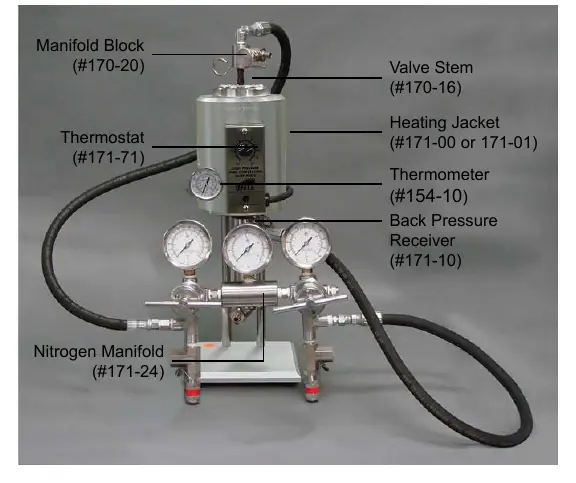
The OFITE HTHP Filter Press is designed to evaluate the filtration characteristics of drilling fluids, cement slurries, fracturing fluids, and completion fluids under elevated temperatures and pressures. This 175 mL unit is engineered for field portability and conforms to API specifications. It simulates downhole environments to monitor fluid properties, filtration behavior, and wall cake building characteristics.
Technical Specifications
- Test Cell Capacity: 175 mL
- Maximum Temperature (Heating Jacket): 400°F (204°C)
- Maximum Temperature (Cell): 500°F (260°C)
- Maximum Pressure (Cell): 5,000 psi
- Power Requirements: 115 VAC or 230 VAC, 50/60 Hz
- Pressure Source: Nitrogen (minimum 1,500 psi required)
Safety Considerations
Operating at high temperatures and pressures requires strict adherence to safety protocols. Always use a safety shield when operating the equipment. Never exceed the pressure or temperature limits specified. Ensure the use of a Safety Retainer Pin to prevent manifold separation. If testing above 350°F (177°C), all o-rings must be replaced after every test to prevent catastrophic seal failure.
Operation and Setup
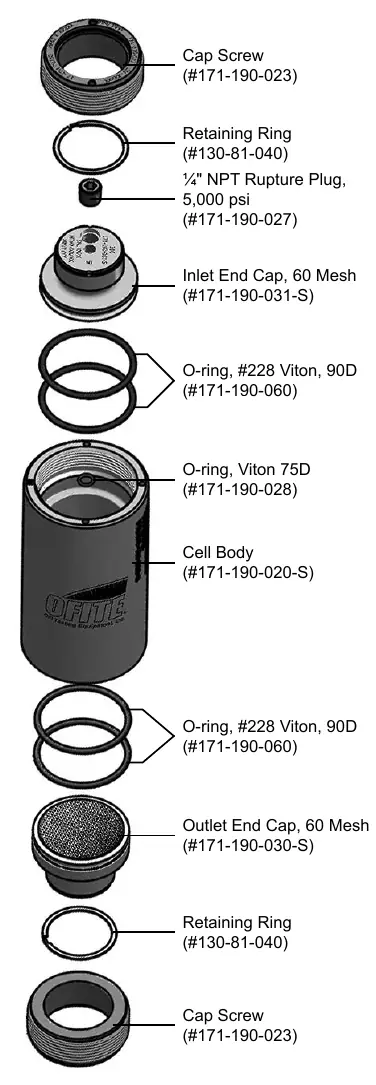
The system requires careful assembly of the test cell, including proper o-ring placement and lubrication. The heating jacket must be preheated, and the sample should be allowed one hour of heating time once inserted to ensure the fluid reaches the target temperature. Filtration is initiated by applying a 500 psi differential pressure. Filtrate volume should be recorded at 1, 7.5, and 30 minutes.
Maintenance
Regular maintenance is essential for accurate results. Clean and dry all components thoroughly after each use. Periodically check the cell assembly for leaks by pressurizing and immersing it in water. Inspect the power cord for insulation wear. If the regulator exhibits symptoms like seat creep or gas leaks, it should be repaired by a qualified technician. Always ensure the pressure is fully relieved before disassembling the cell.
Related manuals
Related manuals from the same brand or category.
Tools / Power Tools
OFITE 120-20-A Automated Curing Chamber
OfiteGeneral / Other Manuals
OFITE 171-193-6K Permeability Plugging Tester
OfiteHvac / Heat Pumps
OFITE 171-00-C Series HTHP Filter Press
Ofite
Manual page author
Emily Carter
User documentation editor
Prepares concise manual descriptions and highlights the most useful setup, operation, and maintenance information for readers.