Health / Medical Imaging
Site Planning and Installation Guide for Philips Ingenia Ambition 1.5T S/X MRI System
Comprehensive site planning and installation guide for the Philips Ingenia Ambition 1.5T S/X MRI system. Includes detailed room requirements, technical specifications, power and HVAC needs, and safety guidelines for facility preparation.
Table of contents
Manual images
Click an image to enlargeSite Planning and Installation Overview
This document provides essential technical requirements for the installation and site planning of the Philips Ingenia Ambition 1.5T S/X MRI system. Proper facility preparation is critical for the safe and efficient operation of the equipment.
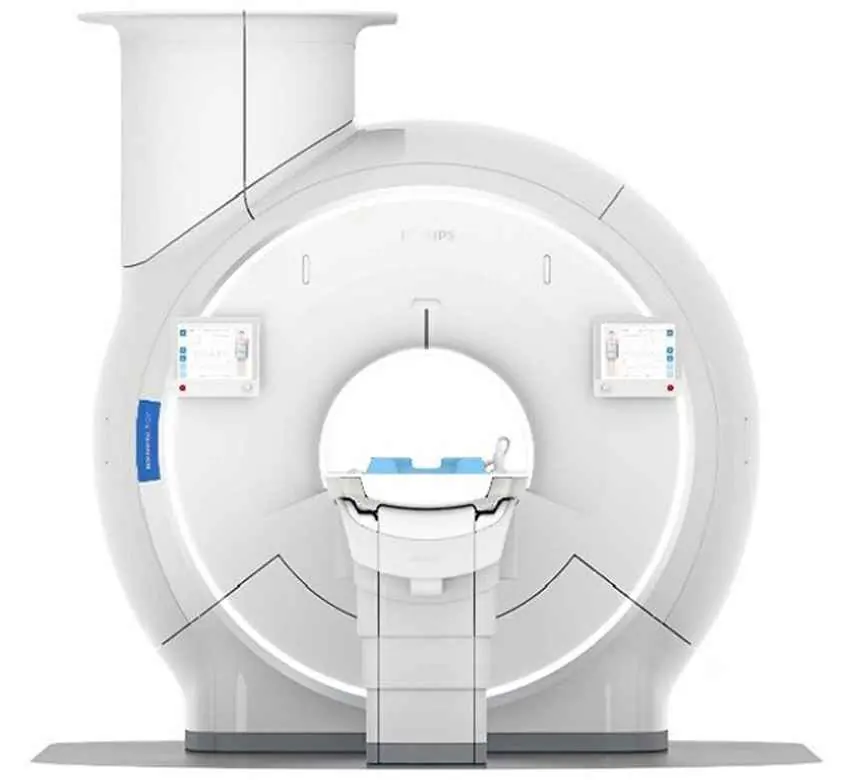
Room Requirements
The facility must meet specific dimensional and structural requirements to accommodate the MRI system:
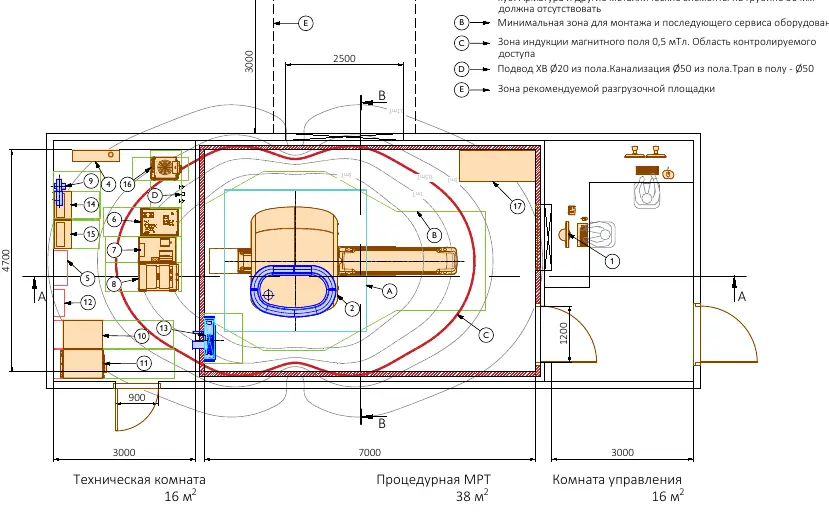
- Procedure Room: 7000 x 4800 mm
- Operator Room: 3000 x 4800 mm
- Technical Room: 3000 x 5100 mm
- Ceiling Height: Recommended 3000 mm from floor to ceiling slab.
Structural Considerations: The floor must support the weight of the gantry (3700 kg) and meet strict limitations regarding the presence of ferromagnetic materials. Avoid proximity to elevators, electrical rooms, subways, and high-traffic areas.
Safety and Magnetic Field
Strict safety protocols must be followed regarding the magnetic field:
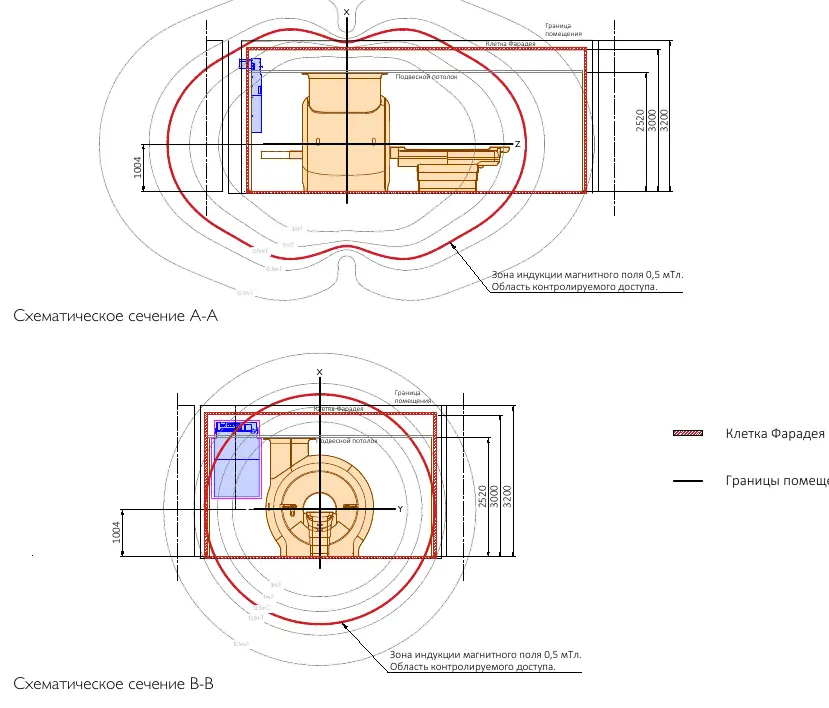
- Magnetic Field Zones: The 0.5 mT field line defines the controlled access area.
- Pacemaker Safety: Individuals with pacemakers are prohibited from entering areas with a magnetic field of 0.5 mT or higher.
- Ferromagnetic Objects: Significant masses of metal, transformers, and high-power electrical devices must be kept away from the procedure room. Structural beams should be at least 2.5 meters from the center of the apparatus.
Power and HVAC Specifications
The system requires a stable and dedicated power supply and climate control:
- Power Supply: 380/400V, 3-phase, TN-C-S system.
- UPS: A dedicated Uninterruptible Power Supply (UPS) is required to handle peak currents.
- HVAC: The system requires a dedicated climate control system to manage heat dissipation (approx. 8000 W for the main system).
Equipment Specifications
Key components and their approximate requirements:
- Gantry: 3700 kg, 2278 x 1838 x 2505 mm.
- UPS (120 kVA): 600 x 980 x 1400 mm, 240 kg.
- Cooling System Cabinet: 609 x 800 x 1955 mm, 326 kg.
Note: The BlueSeal MRI system does not require a helium quench pipe.
Manufacturer information
Philips
Practical help
Common problems
Magnetic field interference
Ensure the procedure room is located away from elevators, subways, high-power electrical cables, and heavy traffic areas.
Floor load and material restrictions
Verify the floor can support the gantry weight (3700 kg) and ensure no ferromagnetic materials are present within the specified zones.
Power supply instability
A dedicated power line from the transformer and a UPS are required to manage peak currents and ensure system stability.
Before use
- Verify room dimensions (Procedure: 7000x4800mm, Operator: 3000x4800mm, Technical: 3000x5100mm).
- Ensure power supply is 380/400V, 3-phase, TN-C-S.
- Confirm floor load capacity and absence of ferromagnetic materials.
- Check for proximity to elevators, subways, or high-power electrical equipment.
- Verify HVAC system capacity for heat dissipation.
- Ensure the 0.5 mT magnetic field zone is clearly marked and restricted.
Specs in practice
- Gantry Weight
- 3700 kg; requires a floor capable of supporting this load.
- Heat Dissipation
- Approximately 8000 W; requires dedicated climate control.
Images and diagrams
- Floor plan showing the layout of the procedure, operator, and technical rooms.
- Cross-section diagrams (A-A and B-B) illustrating magnetic field zones and ceiling/floor boundaries.
- Ferromagnetic object distance chart showing minimum distances from the isocenter.
Model compatibility
- Requires dedicated UPS for power stability.
- BlueSeal system does not require a helium quench pipe.
- Requires specific HVAC system for heat dissipation.

Manual page author
Emily Carter
User documentation editor
Prepares concise manual descriptions and highlights the most useful setup, operation, and maintenance information for readers.