Power / Batteries & Chargers
Rolls 12V & 24V LFP Lithium-Ion Battery Operating Manual
Quick guide for Rolls 12V & 24V LFP Lithium-Ion batteries. Includes installation, charging profiles, series/parallel connection steps, BMS protection, and troubleshooting.
Table of contents
Manual images
Click an image to enlargeQuick guide from the manual
This manual provides essential safety, installation, and operating instructions for Rolls 12V and 24V Lithium Iron Phosphate (LFP) batteries. Key takeaways include strict temperature limits for charging (0°C to 50°C) and discharging (-20°C to 58°C), the requirement for proper cable sizing, and the necessity of using a 2-stage CC/CV charging profile for optimal performance.
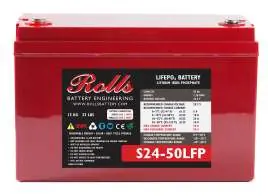
Safety and Warnings
- Explosion and Fire Hazard: Never charge batteries below 0°C or discharge below -20°C.
- Handling: Always use insulated tools. Do not drop tools onto the battery.
- Storage: Store between -20°C and +60°C. If stored for extended periods, charge at least once per year.
- Maintenance: Do not dismantle the battery. Maintenance should be performed by qualified personnel.
Installation and Connections
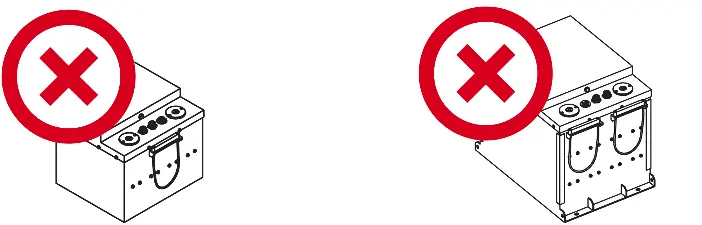
Batteries must be installed upright in an indoor space, away from direct sunlight. Ensure all cable connections are clean, properly mated, and insulated.

Terminal Torque
For M8 fasteners, terminal connections must be torqued to 10-12Nm. Do not over-torque.
Series and Parallel Connections
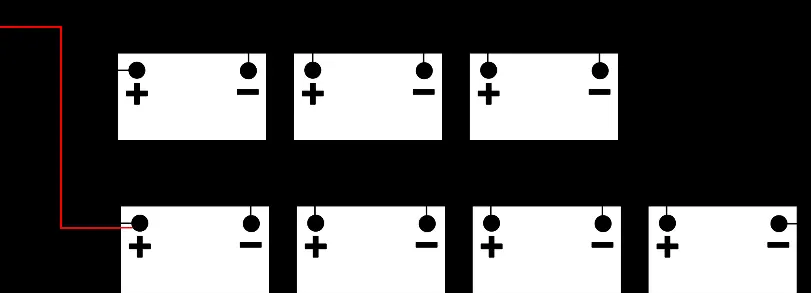
- Series: Maximum of four (4) 12V batteries in series. 24V batteries cannot be connected in series.
- Parallel: Maximum of two (2) parallel strings.
- Voltage Matching: Before connecting, ensure the voltage difference between units is less than 15mV.
- Mixing: Do not mix old and new batteries, different batches, or different types.
Battery Management System (BMS)
The built-in BMS protects the battery from unsafe conditions. It will automatically interrupt current if it detects overvoltage, undervoltage, overcurrent, short circuits, or extreme temperatures. Some protections (like extended undervoltage) are non-resettable.
Charging Guidelines
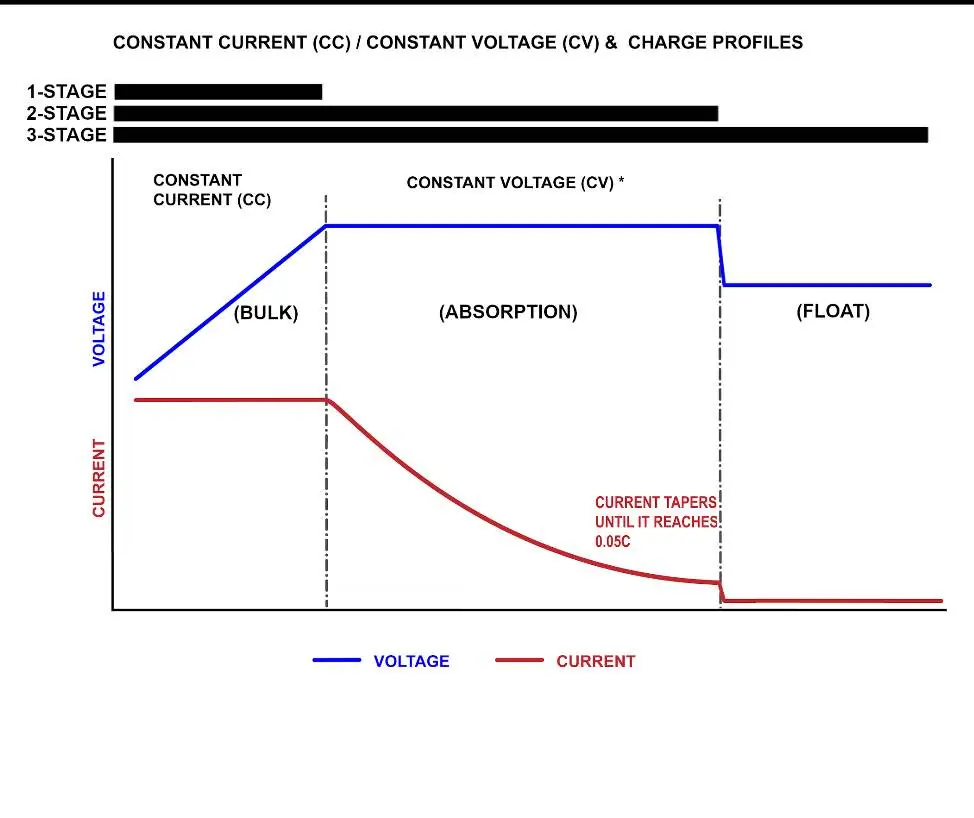
A 2-stage CC/CV (Constant Current/Constant Voltage) charge profile is recommended. If using a 3-stage charger, ensure temperature compensation is turned off and equalization is disabled.
Charging Parameters
- Recommended Profile: 2-Stage CC/CV.
- Termination: Charge until current tapers to 0.05C.
- Temperature Limits: Do not charge below 0°C or above 50°C.
Troubleshooting
If the battery does not charge or has no terminal voltage, it may be in a protection state. Connect to a charger to wake the battery. If the battery is out of balance, leave it at the absorption/CV voltage for up to 48 hours to allow the BMS to rebalance the cells.
Practical help
Common problems
Battery did not charge despite available solar energy
Low temperature may be preventing charging. Ensure the battery space is heated if ambient temperatures are below 0°C.
Terminal voltage is absent or low
The battery may be in under-voltage protection. Connect to a charger to wake the battery and recover terminal voltage.
Charger disconnects on connection
LFP batteries have lower impedance than lead-acid batteries, causing high inrush current. Reset the charger and try again.
Battery current reduces to zero while charging
The battery may be out of balance or triggered temperature protection. Allow to cool and leave at CV voltage for 48 hours to balance.
Before use
- Verify battery is installed upright and indoors.
- Ensure cables are properly sized and insulated.
- Torque M8 terminals to 10-12Nm.
- Check voltage difference between units is <15mV before connecting in series/parallel.
- Ensure charger settings are configured for LFP (disable equalization and temperature compensation).
Specs in practice
- Operating Temp (Charge)
- 0°C to 50°C.
Images and diagrams
- Series connection: Connect positive terminal of one battery to the negative terminal of the next.
- Parallel connection: Connect positive to positive and negative to negative across strings.
Model compatibility
- Do not mix 12V and 24V batteries.
- 24V batteries cannot be connected in series.
- Do not mix old and new batteries.
- If replacing lead-acid, ensure charger settings are updated.

Manual page author
Emily Carter
User documentation editor
Prepares concise manual descriptions and highlights the most useful setup, operation, and maintenance information for readers.