Automotive / Parts & Accessories
Volkswagen 1.4-ltr. 16V 55kW Engine Technical Guide
Technical service guide for the Volkswagen 1.4-ltr. 16V 55kW engine. Covers design, mechanics, engine management, specifications, and service procedures.
Table of contents
Manual images
Click an image to enlargeImportant Information
This document is a Self-Study Programme designed for technical training and service reference. It is not a workshop manual. It covers the design and function of the 1.4-ltr. 16V 55kW engine, which features significant design changes compared to previous generations, such as roller-type cam followers and a plastic intake manifold.
Engine Mechanics
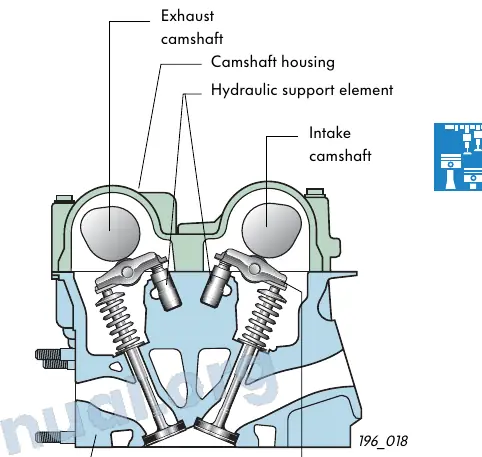
The engine features a die-cast aluminium crankcase and a plastic intake manifold, which reduces weight by approximately 36% compared to aluminium versions. The valve gear utilizes roller-type cam followers with hydraulic support elements to reduce friction and moving masses.
Crankshaft and Sealing
Warning: The crankshaft in the 1.4-ltr. engine must not be removed or loosened. Loosening the bearing cover screws causes the aluminium bearing seat structure to relax, resulting in permanent deformation of the crankshaft. If the bearing cover screws are undone, the crankcase must be replaced complete with the crankshaft.
Toothed Belt Drive
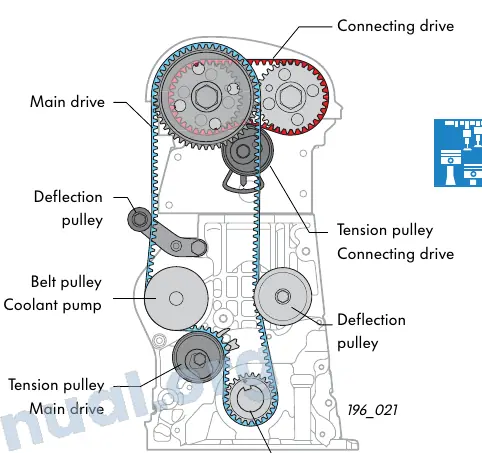
The drive system is divided into a main drive and a connecting drive. The main drive connects the crankshaft to the coolant pump and intake camshaft. The connecting drive connects the intake camshaft to the exhaust camshaft.
Engine Management
The engine uses the Magneti Marelli 4AV management system. Key components include:
- Engine speed sender G28: Scans a 60-2 sender wheel on the crankshaft.
- Hall sender G40: Located on the intake camshaft to determine cylinder-selective knock control and sequential injection.
- Static high-voltage distribution: Uses an ignition transformer located at the end of the camshaft housing, eliminating the need for a distributor.
Service and Maintenance
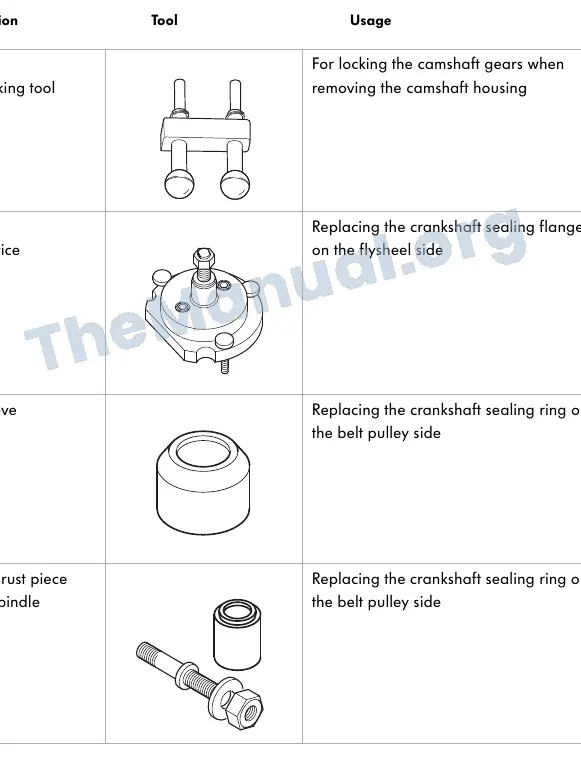
For repair work, specific special-purpose tools are required, including the T10016 camshaft locking tool, T10017 assembly device for the sealing flange, and T10022 sleeve/thrust piece for the crankshaft sealing ring. Only G12 coolant additive is approved for use to prevent corrosion.
Self-Diagnosis
The engine management system supports self-diagnosis via V.A.G. 1551, 1552, or VAS 5051. Functions include interrogating fault memory, actuator diagnosis, basic adjustment, and reading measured value blocks.
Practical help
Common problems
Crankshaft deformation
Do not loosen or remove the crankshaft bearing cover screws. If loosened, the crankcase and crankshaft must be replaced as a set.
Engine management emergency mode
If the engine speed sender (G28) or Hall sender (G40) fails, the system enters emergency mode. Check sensor signals and wiring.
Before use
- Verify engine code (AHW or AKQ) before ordering parts.
- Use only G12 coolant additive.
- Ensure special tools T10016, T10017, and T10022 are available for relevant repairs.
- Do not apply sealant too thickly between camshaft housing and cylinder head.
Specs in practice
- 1.4-ltr. 16V 55kW
- 1390 cm3 displacement, 128Nm torque at 3200rpm, 55kW output at 5000rpm.
- Magneti Marelli 4AV
- Engine management system with cylinder-sequential injection and self-diagnostic capability.
Images and diagrams
- Valve gear: Shows the roller-type cam follower and hydraulic support element assembly.
- Toothed belt drive: Illustrates the main drive and connecting drive layout.
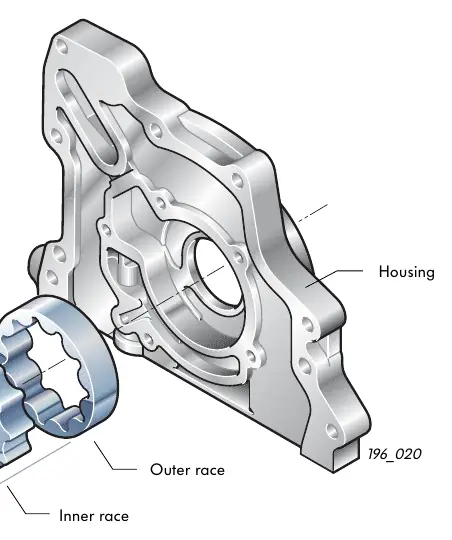
- Sealing flange: Details the integration of the sender wheel for G28.
Model compatibility
- Not compatible with 1.6-ltr. 16V 88kW engine parts (e.g., crankshaft, intake manifold).
- Sealing flanges from different manufacturers may not be interchangeable.

Manual page author
Michael Turner
Technical manual editor
Reviews PDF manuals for structure, safety notes, and practical product details so readers can find the right information quickly.