Tools / Lifting Tools
User Manual for XPOtool 15L Pneumatic Grease Pump
Quick guide for the XPOtool 15L pneumatic grease pump. Includes setup instructions, operation steps, maintenance tips, and troubleshooting for common issues.
Table of contents
Manual images
Click an image to enlargeQuick guide from the manual
This pneumatic grease pump is designed for high-pressure lubrication in automotive and industrial applications. Before using the device, ensure you have read all safety instructions. Always wear appropriate protective equipment, including work gloves, non-slip shoes, protective goggles, and a breathing apparatus. Keep the work area well-lit and tidy to prevent accidents. Be cautious of slipping hazards caused by leaked lubricants and ensure environmental regulations regarding lubricant disposal are followed.
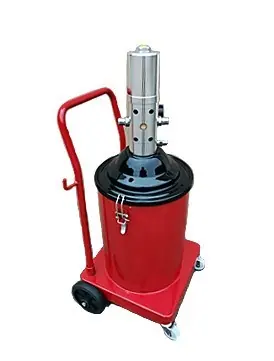
Technical specifications
- Pressure ratio: 60:1
- Pneumatic cylinder diameter: 70 mm
- Capacity: 15 L
- Pressure range: 5–8 bar
- Grease pump capacity: 0–0.85 ℓ/min
- Delivery pressure: 300–480 ℓ/min
First steps
- Preparation: Loosen the wing screws on the oil cartridge and tilt the construction by 20–30° to allow air to enter the lower end of the rubber plate.
- Filling: Inject grease into the container, ensuring the level mark is not exceeded and the grease is compressed to avoid bubbles.
- Assembly: Insert assembly parts (lid, pressure device) vertically into the storage cylinder. Insert the grease feed pipe into the bottom of the housing and tighten the locking screw.
- Operation: Check all hoses for damage. Attach the air inlet hose to the quick connector. Insert the connector into the air inlet port and open the pressure control valve. The pump will begin to move up and down to vent air and fill the pipeline.
- Usage: Once the pump is pressurized and the oil pressure reaches a balance, the pump will stop. It will automatically resume movement to refill grease when the grease gun is triggered.
Important instructions
- Air filtration: Compressed air should be filtered to prevent dirt ingress and wear.
- Pressure limit: Do not exceed 8 bar to protect the integrity of parts and hoses.
- Hose care: Avoid kinking, squeezing, or over-tensioning high-pressure grease hoses.
- Storage: When not in use, loosen the quick connection nipple and operate the grease syringe to release residual pressure.
- Maintenance: Oil the pump at regular intervals. Do not operate with low grease levels to prevent overheating. Clean the pump regularly and remove grease residues using cleaning oil.
Troubleshooting
If you encounter issues, refer to the following solutions:
- Improper lubricant delivery: Re-fasten the charging bar, remove dirt from the grease inlet, check if grease is too thick (adjust based on season), clean the valve, or top up the grease.
- Pressure loss: Renew valve seals or fasten loose slide shoes/screws.
- Insufficient grease pressure: Clean blocked outlet hoses or grease channels, or clean the one-way valves and piston.
- Grease leaks: Renew V-type seals or butyl rubber seals and clean the contaminated area.
Exploded view and parts list
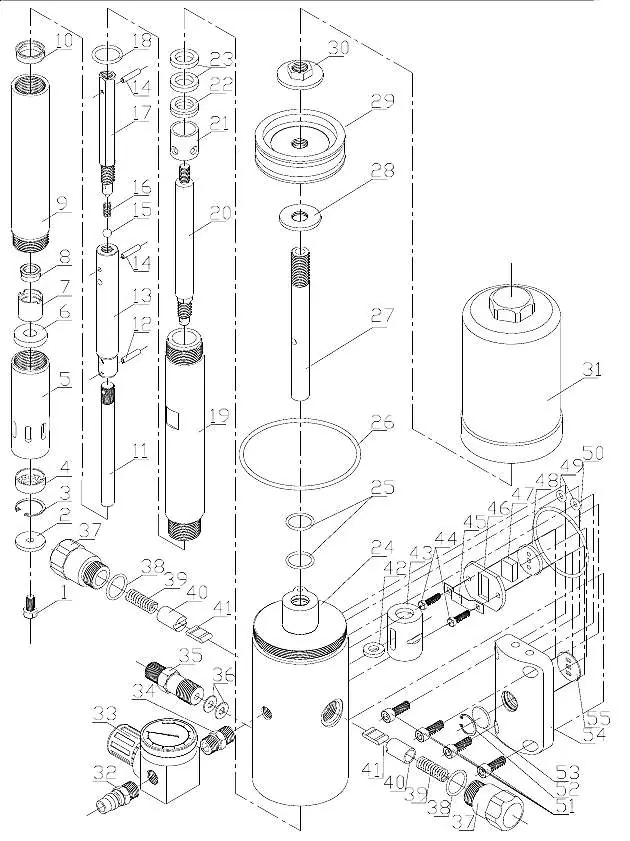
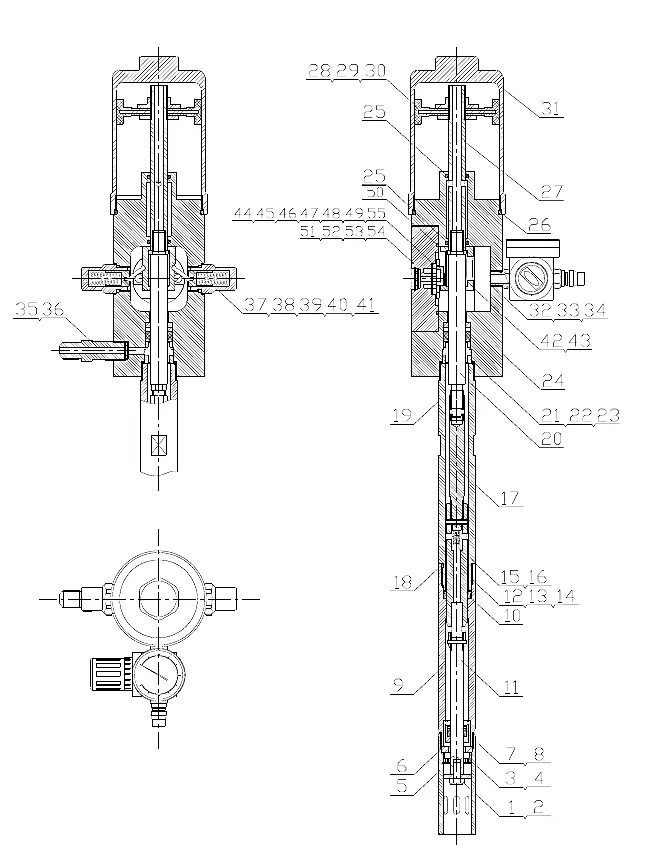
The manual provides a detailed exploded view diagram and a corresponding parts list (numbered 1–55) to assist with maintenance and identifying components such as the pump body, piston, return springs, and various seals.
Practical help
Common problems
Improper lubricant delivery
Check for a loose charging bar, dirt in the grease inlet, or insufficient grease. If grease is too thick, adjust the lithium grease usage based on the season.
Pressure loss
Renew worn valve seals or fasten loose slide shoes and screws.
Insufficient grease delivery pressure
Check for blockages in the outlet hose or grease channel. Clean the one-way valves and piston.
Grease leaks
Renew the V-type seal or butyl rubber seal and clean the contaminated area.
Before use
- Check all hoses for damage and replace if necessary.
- Ensure the work area is well-lit and tidy.
- Wear protective equipment (gloves, goggles, breathing apparatus).
- Verify the grease level in the container.
- Ensure the air supply is filtered.
- Check that the pressure control valve is closed before connecting air.
Specs in practice
- Pressure ratio 60:1
- The ratio of output pressure to input air pressure, indicating the pump's efficiency.
- Pressure range 5–8 bar
- The recommended operating air pressure range for the device.
- Capacity 15 L
- The maximum volume of grease the container can hold.
Images and diagrams
- The exploded view diagram illustrates the assembly of the pump body, piston, and valve components.
- Numbered parts list corresponds to the diagram for identifying specific seals, springs, and valves during maintenance.
Model compatibility
- Use lithium grease.
- Adjust grease viscosity based on the season: 1–2 times in winter, 2 times in spring/autumn, and 2–3 times in summer.

Manual page author
Michael Turner
Technical manual editor
Reviews PDF manuals for structure, safety notes, and practical product details so readers can find the right information quickly.