Tools / Impact Wrenches
User Manual for Bosch GDR | GDX | GDS 18V-200 C Cordless Impact Driver/Wrench
Quick guide for the Bosch GDR, GDX, and GDS 18V-200 C cordless impact drivers/wrenches. Includes assembly, operation, maintenance, and safety instructions.
Table of contents
Manual images
Click an image to enlargeQuick guide from the manual
This manual covers the operation and maintenance of the Bosch GDR, GDX, and GDS 18V-200 C cordless impact drivers/wrenches. Before using the tool, ensure the battery is fully charged and the correct bit or socket is securely attached to the tool holder. Always wear appropriate personal protective equipment, including eye protection.
Safety Instructions
General Power Tool Safety: Keep your work area clean and well-lit. Do not operate power tools in explosive atmospheres. Keep children and bystanders away while operating the tool.
Electrical Safety: Ensure the power tool plug matches the outlet. Avoid body contact with earthed or grounded surfaces. Keep power tools away from rain or wet conditions.
Personal Safety: Stay alert and use common sense. Use personal protective equipment. Prevent unintentional starting by ensuring the switch is in the off-position before connecting the battery.
Product Description
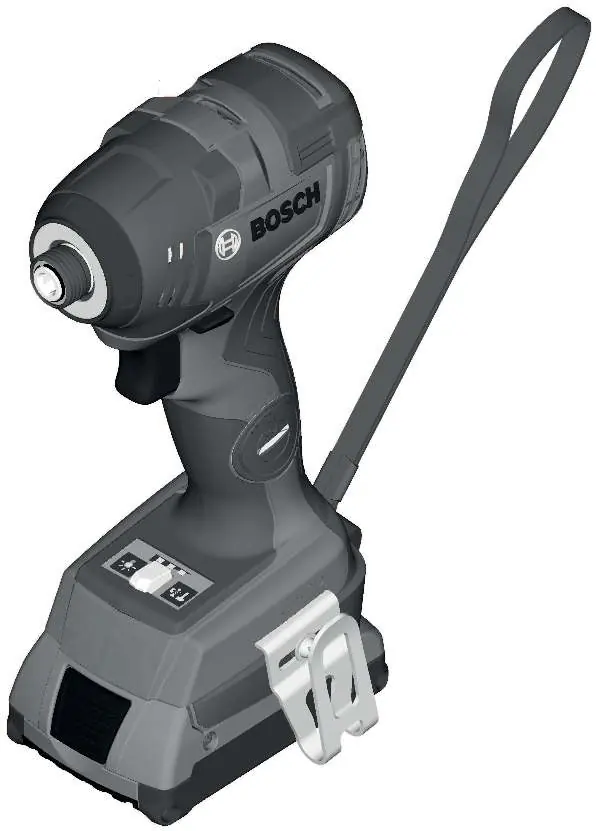
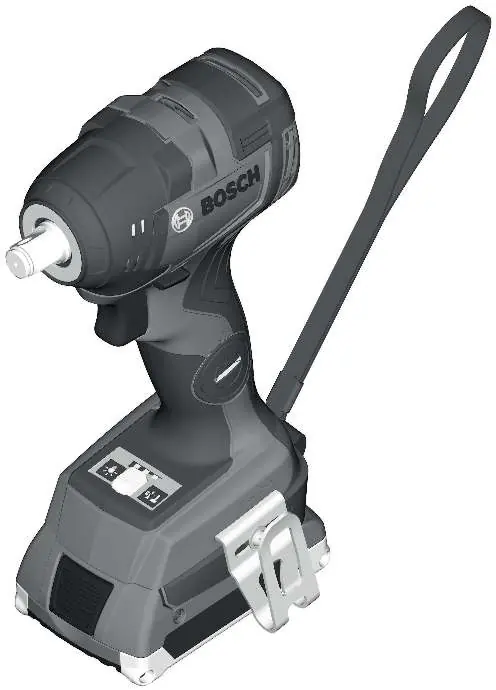
The tool is designed for driving and loosening screws and bolts, as well as tightening and loosening nuts within the specified dimension range. Key components include the tool holder, rotational direction switch, on/off switch, and battery charge indicator.
Assembly
Always remove the battery before carrying out any work on the power tool (e.g., maintenance, tool change). Use only the chargers listed in the technical data. The battery is supplied partially charged; fully charge it before the first use.
Operation
Starting Operation: Insert the charged battery into the handle until it engages. Set the rotational direction switch to the middle position to prevent unintentional switching on.
Setting Rotational Direction: Use the rotational direction switch to change the direction. Right rotation is for driving in screws and tightening nuts; left rotation is for loosening them.
Speed/Impact Rate: Use the button for electronic speed preselection to choose between three stages. The speed can be adjusted continuously by varying the pressure on the on/off switch.
Practical Advice
The torque depends on the impact duration. Maximum torque is achieved after an impact duration of 6–10 seconds. Always check the actually achieved tightening torque with a torque wrench. Hard, spring-loaded, or soft seats result in different torque characteristics.
Maintenance and Cleaning
Clean the tool holder and locking sleeve regularly and grease them lightly. Keep the air vents clean to prevent dust accumulation, which can cause electrical hazards.
Manufacturer information
Bosch
Practical help
Common problems
Tool does not start
Check battery charge and ensure it is properly inserted.
Battery not charging
Ensure the charger is compatible and the battery is within the allowed temperature range (0°C to +35°C).
Tool stops during operation
Battery may be discharged or overheated; allow to cool or recharge.
Before use
- Ensure the battery is fully charged.
- Check that the correct bit or socket is securely attached to the tool holder.
- Verify the rotational direction switch is in the desired position.
- Ensure the work area is clean and well-lit.
- Wear appropriate personal protective equipment.
Specs in practice
- Rated voltage
- 18V DC
- No-load speed
- 0-3400 min-1 (depending on setting)
Images and diagrams
- (1) Tool holder
- (2) Locking sleeve
- (12) Rotational direction switch
- (13) On/off switch
Model compatibility
- Compatible with GBA 18V and ProCORE18V batteries.
- Compatible with Bosch chargers GAL 18..., GAX 18..., GAL 36...

Manual page author
David Miller
Documentation analyst
Organizes user manual content into clear summaries, with attention to model details, product context, and everyday usability.