Tools / Power Tools
Bosch PFS 105 E Fine Spray System User Manual
Comprehensive user guide for the Bosch PFS 105 E fine spray system, covering setup, operation, maintenance, and troubleshooting for optimal painting results.
Table of contents
Manual images
Jump to the sectionProduct Overview
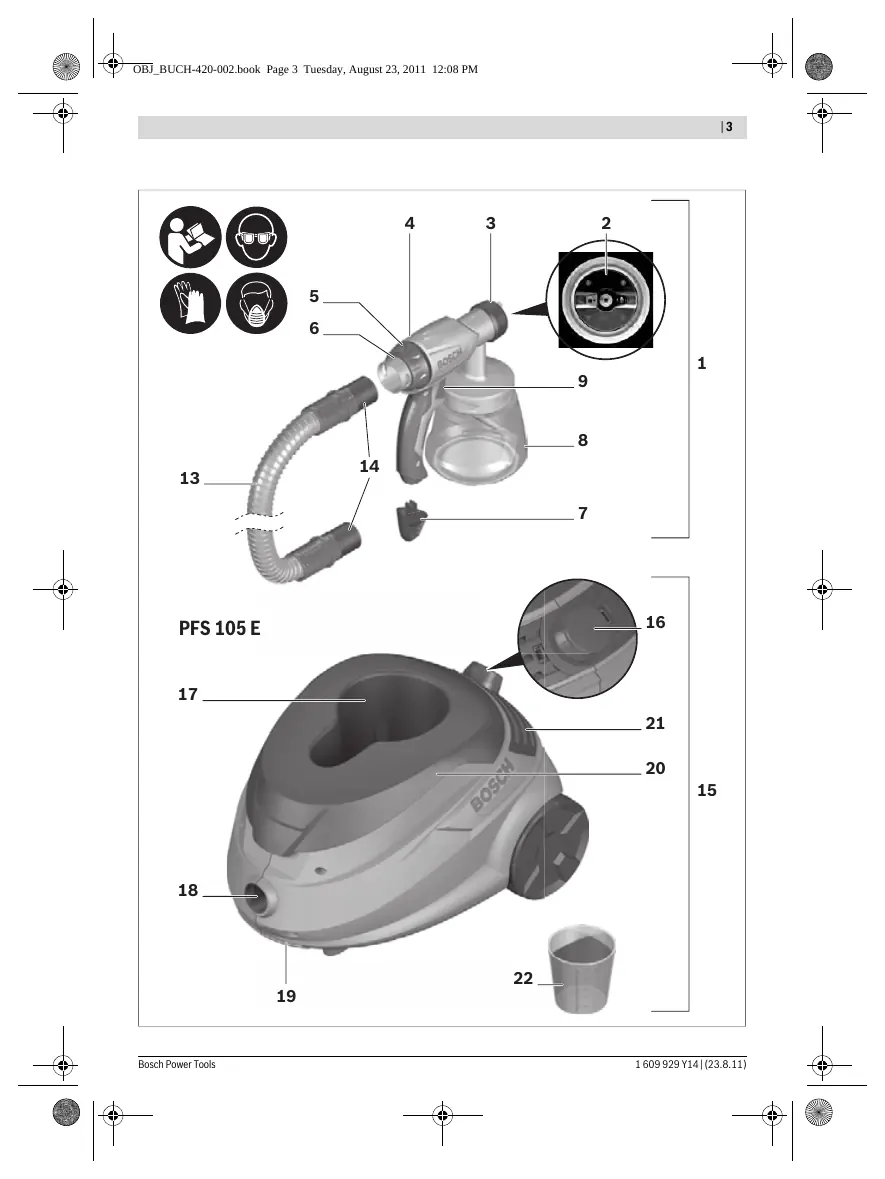
The Bosch PFS 105 E is a high-performance fine-spray system designed for atomizing various solvent-based and water-dilutable materials. It is ideal for applying paints, finishes, primers, clear coats, automotive finishes, wood preservatives, and disinfection agents. The system features a base unit for air supply and a spray gun for precise application. Please note that this tool is not suitable for dispersion paints, latex, caustic solutions, or acidic coating materials.
Safety Precautions
Safety is paramount when operating fine-spray systems. Always wear appropriate personal protective equipment, including eye protection, a dust mask, and protective gloves. Ensure the work area is well-ventilated to prevent the accumulation of explosive solvent vapors. Never spray near ignition sources such as open flames, cigarettes, or electrical sparks. Keep the spray jet away from yourself, other people, and animals. If material penetrates the skin, seek immediate medical attention.
Preparation and Operation
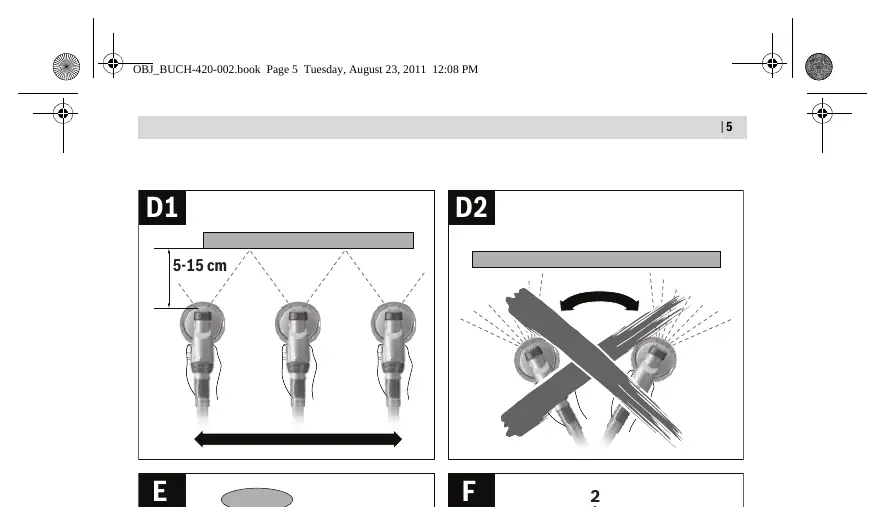
Before starting, ensure the spray surface is clean, dry, and free of grease. If necessary, roughen smooth surfaces and remove dust. Dilute your spray material according to the manufacturer's instructions, typically by 10% with a suitable thinner. Connect the air hose securely to the base unit and the spray gun using the SDS connectors. Place the base unit on a level, horizontal surface. Turn the control knob to the desired air flow and use the trigger switch to begin spraying. Maintain a consistent distance of 5-15 cm from the surface and move the gun evenly to achieve a uniform finish.
Adjustments
The system allows for precise control over the spray pattern and volume. You can adjust the spray pattern by loosening the union nut and rotating the air cap to select between vertical, horizontal, or round jets. The spraying capacity is controlled via a thumbwheel on the gun, while the overall air flow is managed by the control knob on the base unit. Always perform a test spray on a sample surface before beginning your main project.
Maintenance and Cleaning
Proper cleaning is essential for the longevity and performance of your spray system. After each use, empty the remaining material and flush the system with the appropriate diluting agent until the spray runs clear. Clean the nozzle, air cap, and suction tube thoroughly. Never immerse the entire spray gun in cleaning agents. Regularly check and replace the air filter when soiled to ensure consistent air flow.
Manufacturer information
Bosch
Practical help
Common problems
Spray material does not cover properly
Increase spraying capacity, reduce distance to target, or thin the material.
Spray material runs off
Reduce spraying capacity, increase distance, or apply fewer layers.
Atomization is too coarse
Increase air flow, clean the nozzle, or thin the material.
Spray jet pulsates
Refill container, clean suction tube and venting hole, or replace air filter.
No material emerges
Increase air flow, tighten container, or clean nozzle and suction tube.
Before use
- Ensure the spray surface is clean, dry, and grease-free.
- Check that the spray material is suitable for the system.
- Dilute the material by 10% if required.
- Ensure the air hose is securely connected to the base unit and gun.
- Verify the air filter is clean.
- Perform a test spray on a sample surface.
- Wear appropriate protective gear (mask, goggles, gloves).
Specs in practice
- Rated power input
- 350 W, the electrical power consumption of the unit.
- Spraying capacity
- 150 g/min, the maximum rate of material application.
- Container capacity
- 800 ml, the volume of the material container.
- Air hose length
- 3.4 meters, providing reach for the spray gun.
Images and diagrams
- Figures A1-A2: Connecting the air hose to the gun and base unit.
- Figures C1-C2: Filling the container and adjusting the suction tube.
- Figures D-E: Proper spraying technique and distance.
- Figure F: Adjusting the spray pattern (vertical, horizontal, round).
- Figure L: Changing the air filter.
Model compatibility
- Not suitable for dispersion/latex paints.
- Not suitable for caustic or acidic coating materials.
- Use only materials with a flashpoint above 21 °C.
- Compatible with solvent-based and water-dilutable paints.

Manual page author
David Miller
Documentation analyst
Organizes user manual content into clear summaries, with attention to model details, product context, and everyday usability.