Automotive / Garage Equipment
User Manual for CLAS HU 0189NBL 70L Mixed Waste Oil Drainer
Quick guide for the CLAS HU 0189NBL 70L Mixed Waste Oil Drainer. Learn how to operate, perform oil extraction, and troubleshoot common issues with this pneumatic oil drainer.
Table of contents
Manual images
Click an image to enlargeQuick guide from the manual
The CLAS HU 0189NBL is a pneumatic oil drainer designed for extracting waste engine and gear oil. To ensure proper operation, please note the following critical conditions:
- Oil Temperature: Must be between 60-100°C for effective extraction. If the oil is too cold, the density increases, leading to slow flow or pump failure.
- Air Pressure: The air compressor must provide 10 bar output, ensuring at least 8 bar at the nozzle of the pumping unit.
- Safety: Only trained personnel should operate the device. Never smoke near the unit. Wear protective gloves and a protective coat.
Description and Components
The unit consists of several key components for oil management:
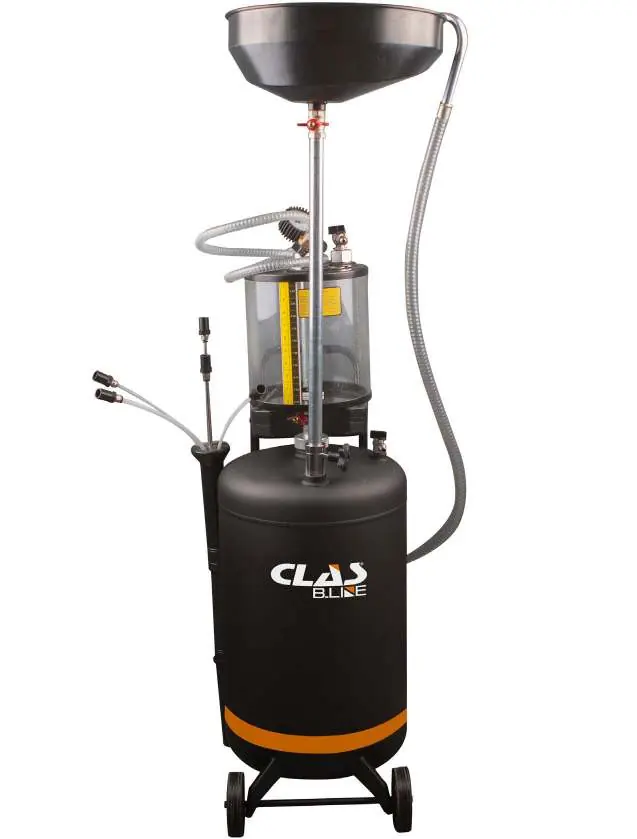
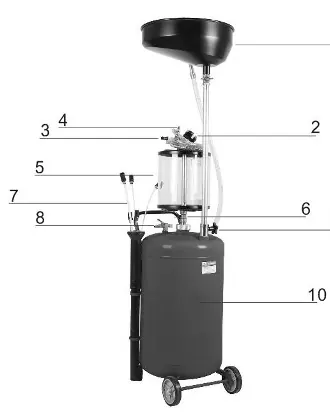
- Oil collecting pan: Used for gravity draining.
- Vacuum gauge: Monitors the vacuum pressure during suction.
- Vacuum generator: Creates the necessary suction force.
- Measuring glass: Allows for visual inspection of extracted oil.
- Oil tank: The main 70L storage reservoir.
- Pumping pipe: Used to extract oil via the dipstick tube.
Operating Instructions
Pumping waste oil into the oil tank
- Connect the appropriate suction pipe to the pumping pipe and insert it into the engine's dipstick hole.
- Close the switch on the pumping pipe.
- Open the switch connecting the measuring glass to the oil tank.
- Connect the vacuum generator to the compressed air supply and open the air switch.
- Once the vacuum pressure drops to -0.5 bar, open the switch on the pumping pipe to begin extraction.
Collecting waste oil into the oil collecting pan
- Lift the vehicle using a lift.
- Position the unit under the engine and unscrew the oil drain plug.
- Open the drain ball valve on the collecting pan and the upper ball valve on the pumping drum to allow oil to flow into the tank.
Draining waste oil from the oil tank
- Ensure the switch between the measuring glass and the oil tank is closed to prevent overpressure damage.
- Open the switch connecting to the elbow.
- Connect the quick coupler on top of the oil tank to the compressed air supply and open the air switch to drain the oil.
Troubleshooting
If you encounter issues, check the following:
- Vacuum gauge not dropping: Verify input air pressure is 8-10 bar, check that all valves are closed, and inspect the seal between the measuring glass and the oil tank.
- Oil not pumping: Ensure the seal between the pumping and suction pipe is airtight, check that the oil temperature is not too low, verify the pumping pipe switch is open, and ensure the pipe is not blocked or touching the bottom of the oil reservoir.
Manufacturer information
CLAS EQUIPEMENTS
Practical help
Common problems
Vacuum gauge pressure not dropping
Check that input air pressure is 8-10 bar, ensure all valves are closed properly, and check the seal between the measuring glass and the oil tank.
Oil not pumping/suction failure
Check the seal between the pumping and suction pipe, ensure oil temperature is 60-100°C, verify the pumping pipe switch is open, and check for blockages in the pipe.
Before use
- Ensure the air compressor is set to 8-10 bar.
- Verify the waste oil temperature is between 60-100°C.
- Check that all valves are closed before starting.
- Wear protective gloves and a protective coat.
- Ensure the suction pipe is 2-3cm longer than the distance to the oil level.
Specs in practice
- Vacuum degree
- 0 to -0.8 bar (negative pressure required for suction).
- Operating air pressure
- 8-10 bar (required for the vacuum generator to function).
- Pumping oil drum volume
- 70L total capacity.
Images and diagrams
- 1. Oil collecting pan
- 2. Vacuum gauge
- 3. Vacuum generator
- 7. Pumping pipe
Model compatibility
- Suitable for engine oil and gear oil.
- For vehicles like the Toyota Camry where the dipstick is inaccessible, use the drain plug instead.

Manual page author
Michael Turner
Technical manual editor
Reviews PDF manuals for structure, safety notes, and practical product details so readers can find the right information quickly.