General / Service Manuals
ESAB Rogue ET 180i / ET 200iP PRO Quick Start Guide
Quick start guide for ESAB Rogue ET 180i and ET 200iP PRO welding machines, covering setup, safety, and operation procedures.
Table of contents
Product Overview
The ESAB Rogue ET 180i and ET 200iP PRO are professional-grade welding power sources designed for versatility and performance. These units support both MMA (Manual Metal Arc) and TIG (Tungsten Inert Gas) welding processes, providing reliable results for various industrial and workshop applications.
Safety Precautions
Before operating the equipment, it is critical to read and understand the safety instructions. Welding involves significant risks, including electric shock, arc radiation, and exposure to hazardous fumes. Always wear appropriate personal protective equipment (PPE), including a welding helmet, protective clothing, and gloves. Ensure the workspace is well-ventilated and free from flammable materials. Never operate the machine in damp or wet conditions.
Setup and Installation
Proper installation is essential for safe and efficient operation:
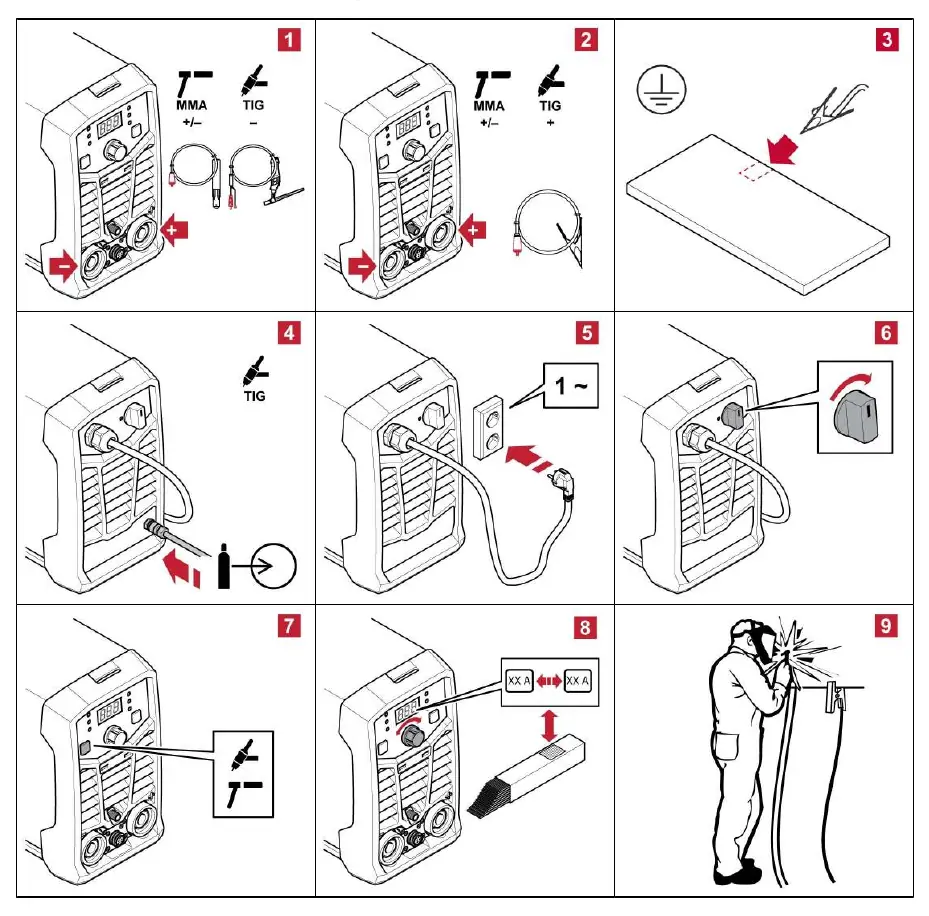
- MMA Setup: Connect the electrode holder and work clamp according to the required polarity for your specific electrode type.
- TIG Setup: Connect the TIG torch and gas supply. Ensure all connections are secure and leak-free.
- Power Connection: Connect the machine to a compatible power supply as specified on the rating plate. Ensure the unit is properly grounded.
- Gas Supply: For TIG welding, connect the shielding gas regulator to the gas cylinder and the machine inlet. Check for leaks before starting.
Operation
The control panel allows for precise adjustment of welding parameters. Select the desired welding process (MMA or TIG) using the mode selector. Adjust the current (amperage) settings based on the material thickness and electrode size. Ensure the work clamp is securely attached to the workpiece to complete the electrical circuit before striking an arc.
Maintenance and Troubleshooting
Regular maintenance ensures the longevity of your welding equipment. Periodically inspect cables, connectors, and the torch for signs of wear or damage. Keep the ventilation slots clear of dust and debris to prevent overheating. If the machine fails to operate, check the power supply, cable connections, and ensure no thermal overload protection has been triggered. For persistent issues, consult the full technical manual or contact authorized service personnel.
Disposal
At the end of its service life, the equipment should be disposed of in accordance with local environmental regulations. Do not discard electrical equipment with household waste. Utilize designated recycling facilities for electronic components and metals.
Related manuals
Related manuals from the same brand or category.
Tools / Power Tools
ESAB Rogue ES Series Pulsed Stick Welders
ESABGeneral / Other Manuals
ESAB Caddy Tig 1500i and 2200i Welding Power Sources
ESAB
Manual page author
Emily Carter
User documentation editor
Prepares concise manual descriptions and highlights the most useful setup, operation, and maintenance information for readers.