Automotive / Exhaust Systems
Installation Instructions for JBA Performance Exhaust 1670S Headers
Quick installation guide for JBA Performance Exhaust 1670S Cat4Ward Headers for 2005-2010 Ford Super Duty and Excursion V-10 6.8L. Includes step-by-step mounting instructions, parts list, and warranty details.
Table of contents
Manual images
Click an image to enlargeImportant Information from the Manual
This document provides installation instructions for the JBA Performance Exhaust 1670S Cat4Ward Headers, designed for 2005–2010 Ford Super Duty Truck and Excursion vehicles with the Triton V-10 6.8L engine. Please read all instructions completely before beginning the installation. Ensure the vehicle is cool and the battery is disconnected before starting work.
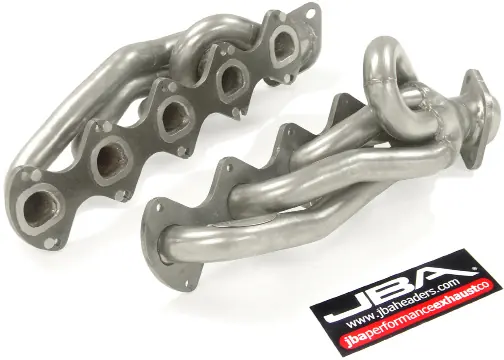
Parts List
- 1 Driver Side Header Assembly
- 1 Passenger Side Header Assembly
- 2 Header gaskets
- 4 Collector Bolts & Nuts
- 20 8mm x 25mm Bolts with lock washers
- 1 CARB EO Sticker
Preparation
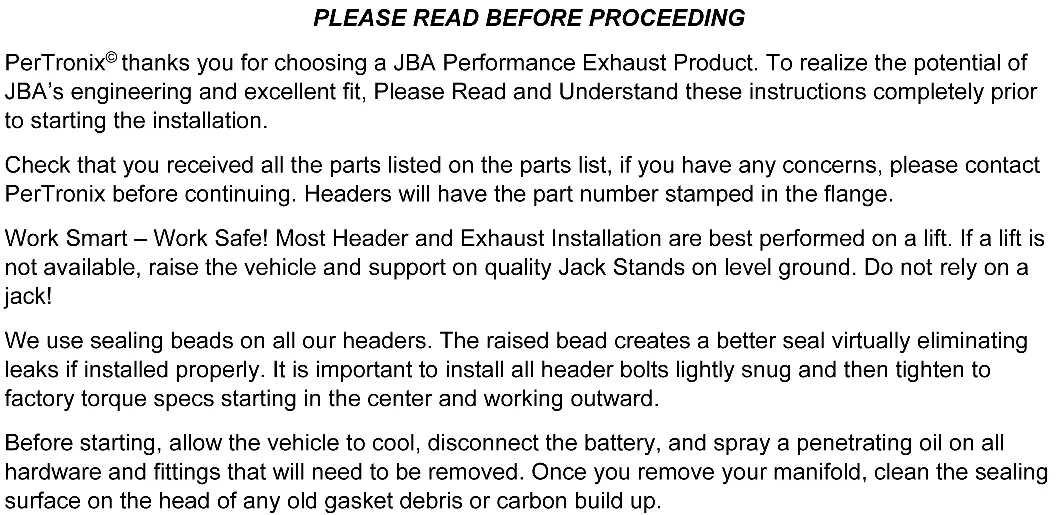
Work safely by using a vehicle lift if available. If a lift is not available, raise the vehicle and support it on quality jack stands on level ground; do not rely on a jack. Spray penetrating oil on all hardware and fittings to be removed. Once the manifold is removed, clean the sealing surface on the head of any old gasket debris or carbon buildup.
Installation Steps

Removal
- Remove the factory y-pipe, unbolting it from the exhaust system and stock manifolds. Disconnect the O2 sensors.
- Loosen the EGR tube from the driver side manifold.
- Remove the nuts attaching the manifolds to the heads, remove the manifolds, and then remove the studs from the heads.
- Remove the dipstick by unbolting the factory bracket.
- Use a scraper to remove all carbon deposits and high spots from the head surface, taking care not to gouge the aluminum heads.
Installation
Passenger Side:
- From underneath, slide the header into place and install using the supplied gasket and hardware.
- Use Anti-Seize on the header bolts.
- Tighten evenly from the center out.
Driver Side:
- Slide the dipstick through the header into the hole in the block and ensure it is seated well.
- Loosely attach the EGR tube.
- Using the supplied gasket and hardware, install the header and tighten evenly from the center out.
- Tighten the EGR tube and dipstick bracket.
Post-Installation
- Apply a small amount of Hi-temp RTV (sensor safe) around the exhaust pipe flares.
- Reinstall the factory y-pipe using the supplied hardware and reconnect the O2 sensors.
- Recheck everything, ensuring adequate clearance on all lines (vacuum, brake, A/C, fuel).
- Reconnect the battery cables.
- Start the engine, check for leaks, and test drive.
- Let the engine cool and re-torque the header bolts. Periodically check and retighten the header bolts.
Warranty
JBA Headers and Exhaust products are guaranteed to the original purchaser to be free of defects in materials and workmanship for one year. This warranty covers the replacement or repair of the product only and does not cover the cost of removal and installation, customer-applied aftermarket coatings, or any discoloration or corrosion of finished surfaces. Damage resulting from collision, improper installation, off-road use, road hazards, or the use of exhaust insulating wrap is not covered.
Practical help
Common problems
Exhaust leaks
Ensure sealing beads are clean and bolts are tightened evenly from the center out to factory torque specs.
Clearance issues
Check all lines (vacuum, brake, A/C, fuel) after installation to ensure adequate clearance.
Before use
- Verify all parts from the parts list are present.
- Ensure the vehicle is cool before starting.
- Disconnect the battery.
- Have a lift or quality jack stands available.
- Apply penetrating oil to old hardware.
Specs in practice
- 8mm x 25mm Bolt
- Supplied hardware for header installation.
Model compatibility
- Compatible with 2005–2010 Ford Super Duty Truck/Excursion with Triton V-10 6.8L engine.
- CARB EO Sticker included for California emissions compliance.

Manual page author
David Miller
Documentation analyst
Organizes user manual content into clear summaries, with attention to model details, product context, and everyday usability.