General / Accessories
ELECTRIC WHEELBARROW 150KG CAPACITY
High-performance 150kg capacity electric wheelbarrow designed for rugged terrain, featuring a 500W motor, 75L bucket, and 8-hour operating time per charge.
Table of contents
Product Overview
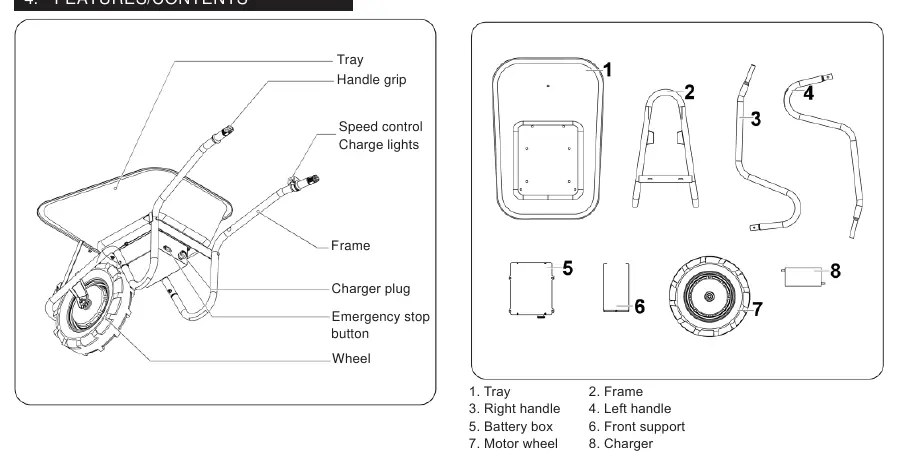
The Sealey WBR150E is a robust electric wheelbarrow designed for transporting heavy loads across challenging terrain such as construction sites, farms, and landscaped gardens. Its balanced design and motorized drive system significantly reduce physical strain during operation.
Technical Specifications
- Model: WBR150E
- Load Capacity: 150kg
- Bucket Capacity: 75L
- Motor Power: 500W
- Voltage: 24V DC
- Max Speed: 7km/h
- Operating Time: Up to 8 hours per charge
- Charging Time: 4.5 hours
Safety Guidelines
Users must read all safety instructions before operation. Key safety measures include:
- Always wear appropriate personal protective equipment, including non-slip footwear and eye protection.
- Do not operate the machine in rain or damp environments.
- Keep children and unauthorized persons away from the work area.
- Ensure the emergency stop button is functional and understood.
- Use both hands on the handles during operation.
- Do not exceed the maximum load capacity or operate on slopes beyond the machine's capability.
Operation and Charging
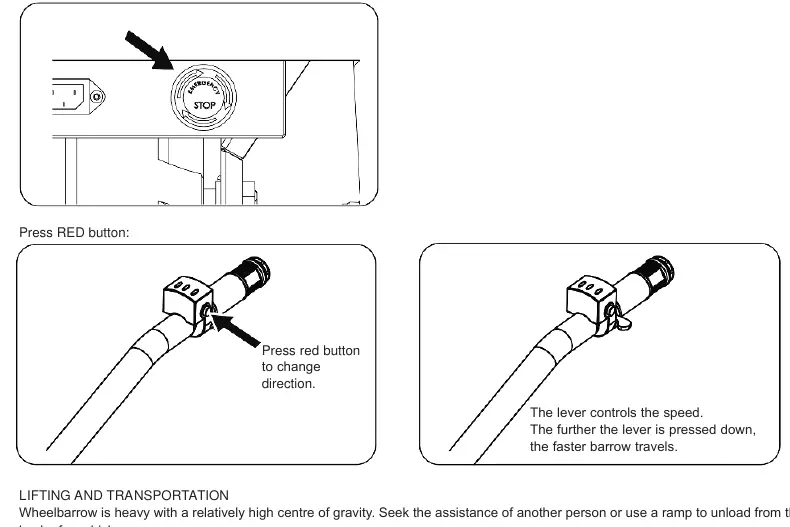
Before use, inspect the wheelbarrow for any structural damage or loose cables. To start, unlock the emergency stop button. Speed is controlled via a lever on the handle; pressing it further increases travel speed. A separate button allows for changing the direction of travel. When charging, connect the charger to the dedicated plug and monitor the LED indicators on the handle to determine battery status.
Maintenance and Storage
The wheelbarrow requires minimal maintenance. Regularly check all cables and structural fixings. Clean the unit with a damp sponge and mild solution; never use high-pressure cleaners or running water on electronic components. If storing for more than a month, ensure the battery is fully charged and keep the unit in a dry, closed location.
Troubleshooting and Disposal
If the unit fails to operate, check the battery charge level, motor status, and cable connections. Always disable the battery before performing any troubleshooting. At the end of its service life, the product must be dismantled and recycled in accordance with local WEEE regulations, ensuring the battery is handled safely.
Related manuals
Related manuals from the same brand or category.
General / Accessories
Sealey 12L Oil Extractor
SealeyFurniture / Home Furnishing
Sealey Racking Unit with 5 Shelves (150kg Capacity Per Level)
SealeyGeneral / Service Manuals
Sealey 1500SLR 1.5 Tonne Low Profile Trolley Jack
SealeyFurniture / Home Furnishing
Sealey 1500KG Hydraulic Coil Spring Compressing Station
SealeyFurniture / Home Furnishing
Sealey Modular Storage Cabinets (APMS64, APMS65, APMS68)
SealeyFurniture / Home Furnishing
Sealey 135KG Hydraulic Lift for Off-Road and Trials Motorcycles
SealeyHome Appliances / Washing Machines
Sealey PW2000HW.V2 Hot/Cold Water Pressure Washer 135bar 2300W/230V
SealeyDocuments / Warranty Safety