Power / Batteries Chargers
User Manual for Clarke Summit Pro 18SQ Wet-Dry Vacuum
Quick guide for the Clarke Summit Pro 18SQ wet-dry vacuum, covering assembly, wet and dry operation, maintenance, and safety instructions.
Table of contents
Quick guide from the manual
The Clarke Summit Pro 18SQ is a commercial-grade wet-dry vacuum designed for indoor use. This guide provides essential instructions for assembly, operation, and maintenance. Always ensure the machine is unplugged before performing any service. Do not use extension cords with this unit.
Assembly
Follow these steps to assemble the handle and squeegee:
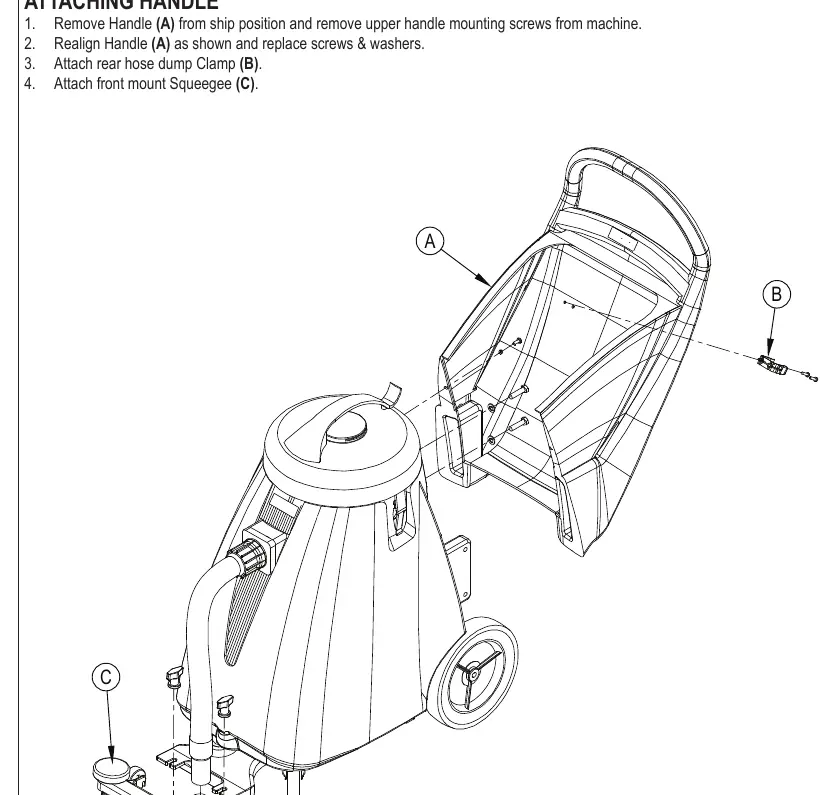
- Remove the handle from the shipping position and remove the upper mounting screws.
- Realign the handle as shown in the diagram and secure it with the screws and washers.
- Attach the rear hose dump clamp.
- Attach the front-mount squeegee assembly.
Wet Pickup
Important: You must use the GV25014 blue nylon foam suppression bag (bubble buster) for all wet pickup applications to avoid voiding the motor warranty.
- Remove the vacuum head and the cloth/paper filter. Install the bubble buster.
- Check that the float shut-off is unobstructed.
- Replace the vacuum head and latch it.
- Connect the vacuum hose and appropriate accessory.
- Plug into a grounded outlet.
- If using the front squeegee, lower it using the pedal at the rear of the machine.
- Turn the power switch to ON.
- If foam develops, use a de-foamer chemical to prevent motor damage.
Dry Pickup
- Remove the vacuum head and bubble buster. Ensure the cloth or paper filter is properly installed.
- Replace the vacuum head and latch it.
- Connect the hose and accessory.
- Plug into a grounded outlet and turn the power switch to ON.
- Replace the filter bag when it is 3/4 full for optimal performance.
Draining the Recovery Tank
- Unplug the machine.
- Transport to a floor drain or bucket.
- Remove the drain hose from the rear, remove the ball plug, and drain the contents.
- Rinse the tank with clean water after draining.
- Replace the ball plug and hang the hose back on the machine.
Maintenance and Storage
- After each use: Drain and rinse the recovery tank, clean the float shut-off, and check the filter bag.
- Monthly: Lubricate wheels, casters, and axles with water-resistant lubricant.
- Storage: Store in an upright, dry position with the squeegee off the ground and the vacuum head removed to allow the tank to breathe.
Safety
This machine must be grounded. Never remove the ground pin from the plug. Do not operate in flammable or explosive areas, in standing water, or outdoors.
Manufacturer information
Clarke International
Practical help
Common problems
Foam in recovery tank
Use a de-foamer chemical. Foam will not trigger the float shut-off and can damage the motor.
Reduced air flow
Check for clogs in the vacuum hose or ensure the bubble buster/filter is clean and properly installed.
Odors in recovery tank
Remove the vacuum head when the machine is not in use to allow air to circulate.
Before use
- Ensure the machine is grounded.
- Check that the power cord and plug are not damaged.
- Verify all safety devices are in place.
- Install the correct filter (bubble buster for wet, cloth/paper for dry).
- Ensure the handle is properly assembled.
Specs in practice
- GV25014 Bubble Buster
- Blue nylon foam suppression bag required for all wet pickup applications.
- Float shut-off
- Automatic mechanism that prevents water from entering the motor when the recovery tank is full.
Images and diagrams
- The handle assembly diagram shows the correct alignment of the handle (A), rear hose clamp (B), and front squeegee (C).
- The wiring diagram confirms the machine requires a 120V 60Hz single-phase power supply.
Model compatibility
- Do not use extension cords.
- Intended for commercial indoor use only.
- Use only manufacturer-recommended accessories.

Manual page author
Michael Turner
Technical manual editor
Reviews PDF manuals for structure, safety notes, and practical product details so readers can find the right information quickly.