General / Accessories
CLAS OP 0053BL Pneumatic Vacuum Brake Bleeder User Guide
Quick guide for the CLAS OP 0053BL pneumatic vacuum brake bleeder. Includes safety instructions, operating steps, maintenance tips, and troubleshooting advice for professional brake system maintenance.
Table of contents
Quick guide from the manual
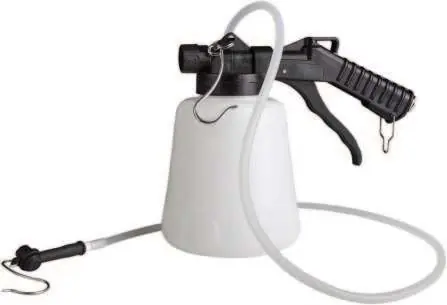
The CLAS OP 0053BL is a professional pneumatic tool designed for bleeding vehicle brake systems. This guide covers the essential safety precautions and operational steps required to use the device effectively. Always ensure the vehicle is properly immobilized and follow the manufacturer's specific recommendations for the brake system being serviced.
Safety
- Brake system maintenance must be performed by qualified personnel only.
- Always secure the vehicle against unintended movement.
- Brake fluid is hygroscopic and absorbs moisture from the air, which can lower its boiling point and cause system malfunction. Do not leave fluid exposed to air.
- Use only new, unused brake fluid.
Instructions
- Connect the brake bleeder to a compressed air supply (maximum 8 bars). Do not operate the brake pedal during the bleeding process.
- Attach the bleeding adapter to the nozzle on the brake caliper or wheel cylinder and open the nozzle slowly. Opening too far may allow air to be sucked into the system; opening too little may restrict fluid flow.
- Activate the bleeder trigger to create a vacuum, which will draw the brake fluid into the drain canister. Note: On vehicles with load-dependent brake systems on the rear axle or ABS, fluid may not flow; refer to the vehicle manufacturer's instructions.
- Once bubble-free, fresh brake fluid appears in the clear hose, close the nozzle and remove the adapter.
- Repeat the process for each brake caliper or wheel cylinder. Ensure the refilling canister has sufficient fresh brake fluid throughout the process to prevent air from entering the circuit.
- After finishing, check the brake fluid reservoir level in the vehicle and refill if necessary. Close and seal the reservoir and check all nozzles for leaks.
Maintenance
It is recommended to perform a thorough cleaning of the device after each use.
Manufacturer information
CLAS EQUIPEMENTS
Practical help
Common problems
Brake fluid does not flow
Check if the vehicle has a load-dependent brake system on the rear axle or ABS; refer to the manufacturer's instructions. Ensure the nozzle is opened sufficiently.
Air is being sucked into the system
Ensure the nozzle is not opened too far. Verify that there is sufficient fresh brake fluid in the refilling canister at all times.
Before use
- Ensure the vehicle is immobilized.
- Verify access to a compressed air supply (max 8 bars).
- Have new, unused brake fluid ready.
- Check that the bleeding adapter is compatible with the vehicle's nozzle.
Specs in practice
- Air pressure
- Maximum 8 bars allowed for operation.
Model compatibility
- For use by qualified personnel only.
- Special procedures may apply to vehicles with ABS or load-dependent brake systems.

Manual page author
David Miller
Documentation analyst
Organizes user manual content into clear summaries, with attention to model details, product context, and everyday usability.