General / Other Manuals
User Manual for CLAS HU 0189NBL 70L Mixed Waste Oil Drainer
Quick guide for the CLAS HU 0189NBL 70L waste oil drainer. Includes operating instructions for vacuum extraction and gravity collection, technical specifications, and troubleshooting steps.
Table of contents
Manual images
Jump to the sectionQuick guide from the manual
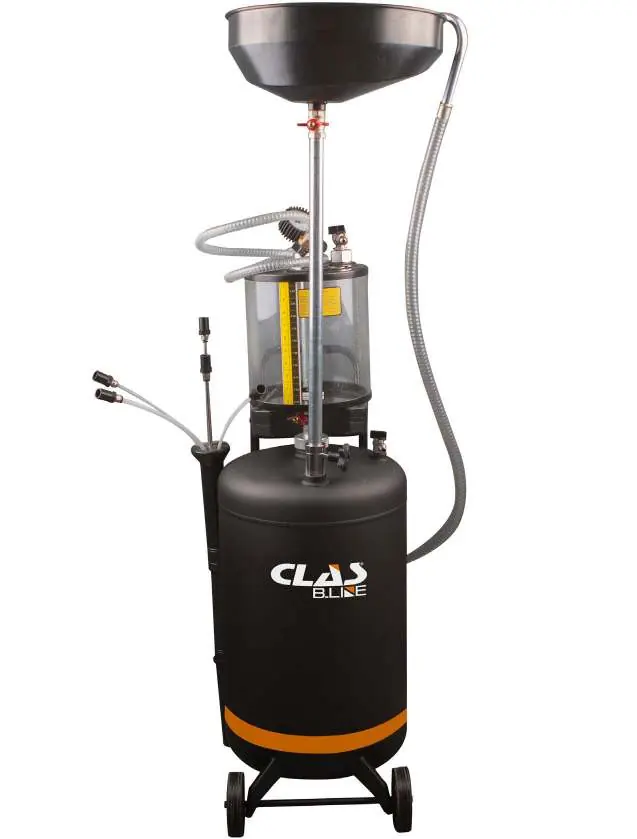
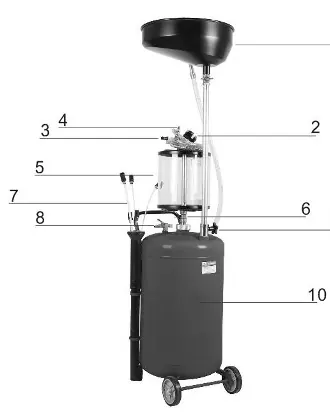
The CLAS HU 0189NBL is a 70L mixed waste oil drainer designed for professional use. It supports both vacuum-assisted extraction via dipstick probes and gravity collection using an oil collecting pan. Proper operation requires trained personnel and adherence to specific temperature and pressure conditions.
Important safety and operating conditions
- Personnel: Only qualified and trained personnel should operate the device.
- Temperature: Waste engine oil must be between 60-100°C for optimal extraction. If the temperature is above 70°C, exercise caution.
- Air Pressure: Requires 10 bar input pressure at the compressor, ensuring 8 bar at the pumping unit nozzle.
- Safety: Never smoke near the device. Wear protective gloves and an overall during operation.
- Maintenance: Regularly inspect quick couplers for leaks. Ensure the mesh muffler on the pumping unit is clean to prevent oil or water splashing.
Operating instructions
Vacuum extraction (into oil tank or measuring glass)
- Connect the appropriate suction probe to the pumping pipe and insert it into the engine's dipstick hole.
- Configure the valves to connect the measuring glass to the oil tank (or isolate it, depending on the desired collection method).
- Connect the vacuum generator to a compressed air supply.
- Open the compressed air switch and monitor the vacuum gauge.
- Once the vacuum reaches 0.5 bar, open the pumping pipe switch to begin extraction.
Gravity collection
- Lift the vehicle using a lift.
- Position the oil collecting pan under the engine and remove the drain plug.
- Open the drain ball valve on the pan and the upper ball valve on the pumping drum to allow oil to flow into the reservoir.
Draining the oil tank
- Ensure the switch between the measuring glass and the oil tank is closed to prevent overpressure damage.
- Open the switch connecting to the elbow.
- Connect the quick coupler on top of the tank to the compressed air supply to drain the oil via the elbow.
Technical specifications
- Vacuum range: 0 to -0.8 bar
- Operating air pressure: 8-10 bar
- Oil tank capacity: 70L
- Collecting pan/Measuring glass capacity: 10L each
- Net weight: 21 kg
Manufacturer information
CLAS EQUIPEMENTS
Practical help
Common problems
Vacuum gauge pressure not dropping
Verify input air pressure is 8-10 bar (200L/min capacity). Check that all valves are closed properly and the seal between the measuring glass and oil tank is intact.
Oil not pumping despite vacuum
Check the seal between the pumping and suction pipes. Ensure oil temperature is not too low, the pumping pipe switch is open, and the pipe is not blocked or touching the bottom of the tank.
Before use
- Verify the oil temperature is between 60-100°C.
- Ensure the air compressor provides 8-10 bar of pressure.
- Check that all quick couplers are tight and free of leaks.
- Wear protective gloves and an overall.
- Ensure the mesh muffler is clean.
Specs in practice
- Vacuum range (0 to -0.8 bar)
- The negative pressure required to draw oil out of the engine.
- Operating air pressure (8-10 bar)
- The required compressed air supply to power the vacuum generator.
- Dipstick probe diameters (6x4.5mm / 8x6.5mm)
- Different sizes for varying suction flow rates (0.4-1.6 L/min).
Images and diagrams
- The device features a central 70L tank, a 10L measuring glass, and an adjustable oil collecting pan.
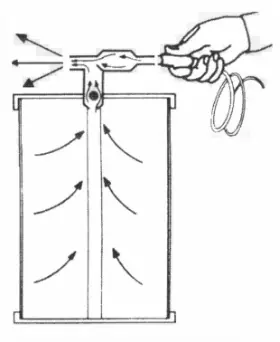
- The vacuum generator uses compressed air to create the suction necessary for oil extraction.
Model compatibility
- Not suitable for all vehicles; for some (e.g., Toyota Camry), the dipstick design may prevent probe insertion, requiring traditional drain plug removal.

Manual page author
Michael Turner
Technical manual editor
Reviews PDF manuals for structure, safety notes, and practical product details so readers can find the right information quickly.