Power / Batteries Chargers
Gude Li-Ion Battery and Charger System Instructions
Comprehensive operating instructions for Gude Li-Ion battery packs and compatible charging equipment, covering safety, charging procedures, maintenance, and disposal.
Table of contents
Product Overview
This manual provides essential instructions for the safe and efficient use of Gude Li-Ion battery packs and their corresponding charging equipment. These systems are designed for specific power tool applications and must be used in accordance with the provided guidelines to ensure optimal performance and safety.
Safety Instructions
Warning: Failure to follow safety instructions may result in electric shock, fire, or serious injury. Always read the manual carefully before starting the machine. The equipment should only be used by adults or children over 8 years old under supervision. Never use damaged, defective, or deformed batteries. Protect batteries from heat, fire, water, and moisture. Do not store or charge batteries in environments with acids or flammable materials.
Charging Procedure
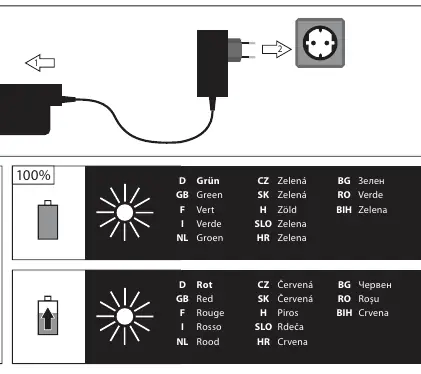
Batteries are supplied partially charged and must be fully charged before the first use. Ensure the mains voltage matches the specifications on the charger's type plate. Never cover cooling slots on the charger, as this may hinder the cooling function and lead to overheating. If the device runs slowly or stops, the battery needs to be recharged. The Li-Ion battery can be charged at any time without shortening its lifespan, and the charging process can be interrupted without damaging the battery.
Maintenance and Care
Keep the outer surface of the battery clean and dry. If the battery is damaged, vapours may leak; in such cases, seek fresh air and consult a doctor. A significantly shorter operating time after a full charge indicates that the battery is worn out and must be replaced. Use only original spare battery packs.
Disposal and Environment
Li-Ion batteries are subject to special disposal obligations. Do not dispose of batteries in household waste. Deliver them to a specialized collection center for environmentally friendly recycling. Before disposal, ensure the battery is discharged and cover the poles with adhesive tape to prevent short circuits.
Practical help
Common problems
Device runs slowly or stops
The battery is likely discharged; recharge the battery pack.
Significantly shorter operating time
The battery is worn out and must be replaced with an original spare.
Charger not working or overheating
Ensure cooling slots are not covered and the device is not near heat sources. If the defect persists, contact a specialized workshop.
Before use
- Read the operating instructions carefully.
- Ensure the battery surface is clean and dry.
- Check that the mains voltage matches the charger's type plate.
- Ensure the charger is used in a dry, indoor environment.
- Verify the battery is compatible with the charger model.
- Charge the battery fully before the first use.
Specs in practice
- Battery Capacity (Ah)
- Indicates the total energy storage capacity of the battery.
- Charging Time
- The approximate time required to fully charge the battery based on its capacity.
- Protection Class II
- Double-insulated electrical equipment that does not require a safety earth connection.
Images and diagrams
- The manual includes diagrams showing the connection of the charger to the power supply.
- LED indicators on the charger show the charging status (Green/Red lights).
- Diagrams illustrate the correct way to insert the battery into the charging station.
Model compatibility
- 18 L chargers are compatible with 1.5Ah/18 AP batteries.
- 25 L chargers are compatible with 2Ah/25 AP and 3Ah/25 AP batteries.
- 36 L chargers are compatible with 2.6Ah/36 AP, 3Ah/36 AP, and 4Ah/36 AP batteries.

Manual page author
Michael Turner
Technical manual editor
Reviews PDF manuals for structure, safety notes, and practical product details so readers can find the right information quickly.