Garden / Watering Equipment
Solo Compression Sprayer 454/456/458 Series
Quick guide for Solo 454, 456, and 458 series compression sprayers. Includes assembly, operation, maintenance, cleaning, and troubleshooting steps.
Table of contents
Manual images
Click an image to enlargeQuick Guide and Safety Information
This manual covers the operation and maintenance of Solo compression sprayers, including models 454, 456, 458, and their variants. Always wear rubber gloves, safety goggles, and appropriate protective clothing when handling chemicals or performing maintenance.
- Maximum Pressure: Do not exceed 45 psi.
- Temperature Limit: Do not use liquids above 120°F (45°C).
- Chemical Safety: Do not use gasoline, acid, acetone, caustic, or potentially injurious chemicals. Always check chemical manufacturer recommendations.
- Pressure Relief: Always pull the pressure relief valve to release tank pressure before removing any parts.
Assembly Instructions for Wand
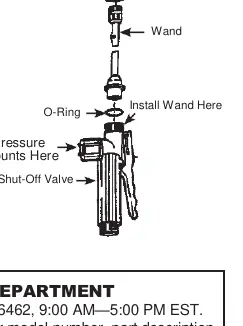
- Ensure the O-ring is on the non-threaded end of the wand.
- Insert the non-threaded end of the wand into the O-ring inside the open end of the shut-off valve.
- Tighten the screw cap securely.
Operation
Before using chemicals, fill the sprayer with fresh water to test the assembly and practice spraying. To operate:
- Turn the pump handle counter-clockwise to remove the pump.
- Fill the tank with premixed formula up to the maximum fill mark.
- Tighten the cap and pump assembly to ensure a good seal.
- Pump to a maximum of 45 psi (3 bar). The valve stem on the pressure relief valve will rise to vent excess pressure.
- Squeeze the lever on the shut-off valve to spray.
- Release pressure before removing the pump by pulling up on the pressure relief valve stem.
Using the Adjustable Nozzle
To change the spray pattern:
- Ensure the retaining nut is screwed tight to the elbow.
- Straight Stream: Rotate the nozzle cap outward.
- Hollow Cone: Rotate the nozzle cap inward towards the retaining nut.
- If rotation is difficult, remove the nozzle cap and lubricate the O-ring on the nozzle body with non-water soluble grease.
Cleaning and Maintenance
Clean the sprayer after every use to ensure longevity:
- Empty all remaining chemicals.
- Flush the system with water (or mineral spirits for oil-based chemicals), followed by warm soapy water, and finally warm clear water.
- Pressurize and spray until all liquid is gone.
- Lubrication: Periodically lubricate the O-ring in the pressure relief valve and the pump piston O-ring with non-water soluble grease.
- Storage: Store in a dry area, protected from freezing, heat, and sunlight.
Troubleshooting
If you experience issues, check the following:
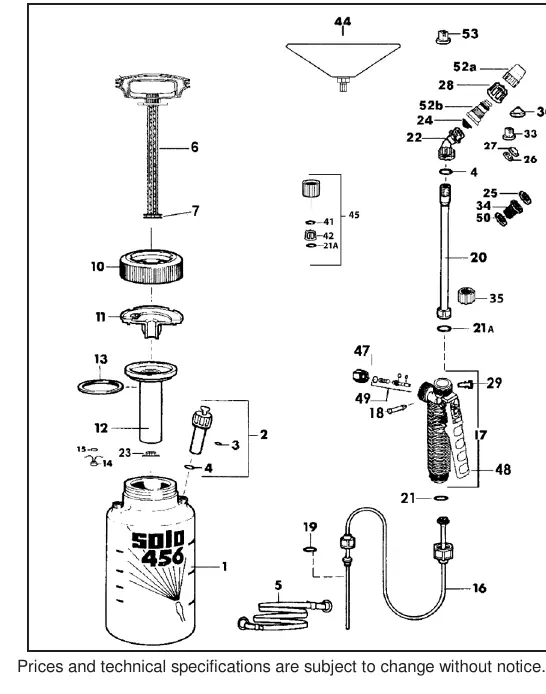
- Difficulty moving pump handle: Clean the cylinder wall or replace/grease the piston O-ring.
- Low pressure: Lubricate the piston/cylinder, check for leaks, or tighten the tank cap.
- Leaks from wand: Rebuild the shut-off valve.
- Leaks under cap: Replace the umbrella valve at the bottom of the cylinder.
Manufacturer information
SOLO Kleinmotoren GmbH
Practical help
Common problems
Difficulty moving pump handle
Clean the cylinder wall or replace/grease the piston O-ring.
Low pressure during pumping
Lubricate the piston/cylinder, replace the umbrella valve, or tighten the tank cap.
Leaks from end of spray wand
Rebuild the shut-off valve.
Pressure relief valve sticks
Tighten fittings, replace worn parts, or disassemble and lubricate O-rings.
Before use
- Check that the O-ring is properly seated on the wand.
- Test the unit with fresh water to ensure proper assembly and no leaks.
- Ensure the pressure relief valve is functional.
- Wear protective gear: rubber gloves, safety goggles, and protective clothing.
- Verify the chemical is safe for use in a sprayer with Viton seals.
Specs in practice
- Max Pressure
- 45 psi (3 bar). Do not exceed to prevent injury or damage.
- Max Temperature
- 120°F (45°C). Do not use liquids hotter than this.
Images and diagrams
- Wand Assembly: Shows the sequence of the O-ring, wand, and shut-off valve connection.
- Nozzle Adjustment: Illustrates the nozzle cap, retaining nut, and body for spray pattern changes.
- Pump Maintenance: Shows the umbrella valve and piston assembly for cleaning and lubrication.
Model compatibility
- Compatible with a wide variety of agricultural, industrial, and household chemicals due to Viton seals.
- Do not use gasoline, acid, acetone, caustic, or potentially injurious chemicals.
- Always follow the chemical manufacturer's recommendations.

Manual page author
David Miller
Documentation analyst
Organizes user manual content into clear summaries, with attention to model details, product context, and everyday usability.