Baby / Children Products
Thule Spring Stroller User Manual
A comprehensive user guide for the Thule Spring stroller. This manual provides essential instructions for assembly, safe operation, maintenance, and cleaning to ensure your stroller remains in optimal condition.
Table of contents
Manual images
Click an image to enlargeQuick guide from the manual
The Thule Spring stroller is designed for flexibility and safety. Before using your stroller, ensure you have read the safety manual and keep these instructions for future reference. Always perform a visual check of the stroller before use to ensure all locking mechanisms are engaged and the stroller is in good condition.
Product features
The Thule Spring stroller includes the following key components:
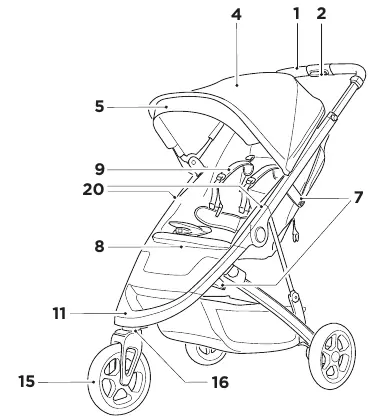
- Handlebar and adjustment: Features a height adjustment button for comfort.
- Canopy: Includes a sun visor and a zipper for extension and ventilation.
- Wheels: Swivel front wheel with release and lock/release switches; rear wheels with release buttons.
- Storage: Includes a mesh pocket and a basket for essentials.
- Safety: Equipped with a harness and a parking brake.
Assembly and setup
Follow the visual instructions provided in the manual for initial assembly:
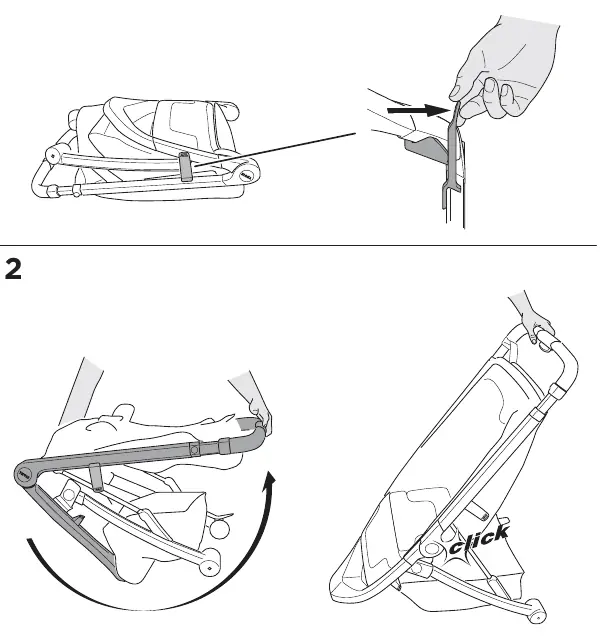
- Unfolding: Use the fold handle and lock mechanism to unfold the stroller until it clicks into place.
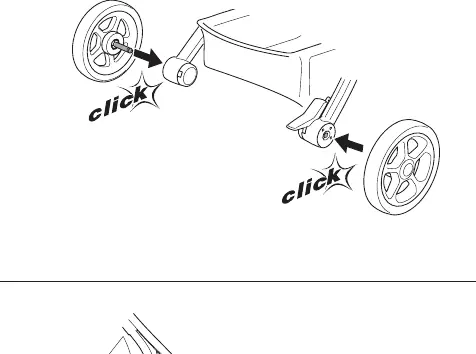
- Wheel installation: Attach the front and rear wheels by clicking them into their respective slots on the chassis.
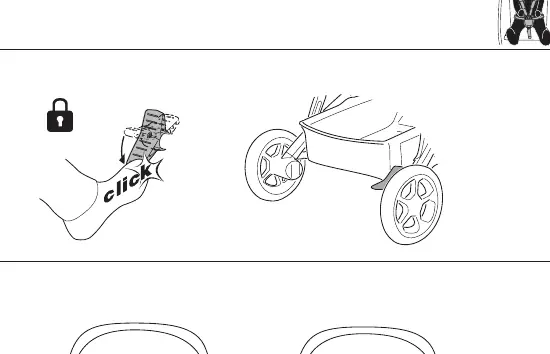
- Harness adjustment: Adjust the harness straps to fit your child securely. Ensure the straps are not twisted.
Operation and usage
Braking: Engage the parking brake by pressing the pedal. Ensure it is fully engaged before leaving the stroller.
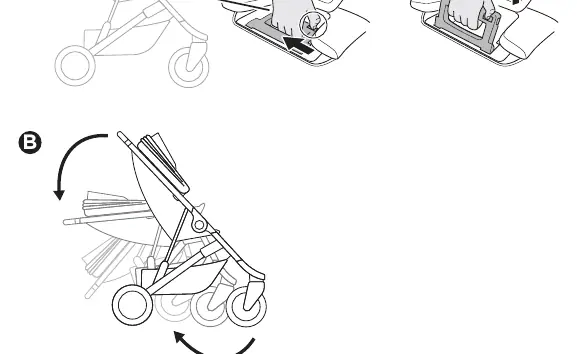
Folding: To fold the stroller, ensure the parking brake is engaged, then use the fold handle to collapse the frame. Ensure the fold lock is engaged for storage.
Canopy adjustment: Use the zipper to extend the canopy for extra sun protection or ventilation.
Maintenance and cleaning
Regular maintenance is crucial for the longevity of your stroller:
- Inspection: Regularly check metal components for dents or cracks. Do not use the stroller if components are damaged. Examine fabric for tears or worn spots.
- Cleaning: Spot clean or hand wash fabric with mild soap and warm water. Do not use cleaning solvents, bleach, or iron. Hang to air dry.
- Lubrication: If wheels squeak, apply a small amount of silicone lubricant. Do not use oil or grease-based products, as these attract dirt and clog the movement.
- Storage: Store in a dry area away from direct sunlight. Ensure the stroller is completely dry before storage to prevent mold or bacteria growth.
Safety warnings
Always follow the safety guidelines provided in the separate Thule Stroller Safety manual. Never leave your child unattended. Ensure the child is properly secured with the harness at all times.
Manufacturer information
Thule
Practical help
Common problems
Wheels are squeaking
Lubricate sparingly with silicone lubricant. Do not use oil or grease-based products.
Fabric is dirty
Spot clean or hand wash gently with mild soap and warm water. Do not use cleaning solvents.
Stroller does not fold
Ensure the parking brake is engaged and the fold lock is released correctly.
Before use
- Check metal components for dents or cracks.
- Examine fabric for tears or worn spots.
- Ensure all locking mechanisms are engaged.
- Verify the parking brake is functioning correctly.
- Ensure the child is properly secured with the harness.
Specs in practice
- Max weight (Europe & rest of world)
- 22 kg / 49 lbs
- Max weight (USA & Canada)
- 29 kg / 64 lbs
- Max basket load
- 5 kg / 11 lbs
- Max sun visor load
- 1.4 kg / 3 lbs
Images and diagrams
- Page 2: Numbered parts list (1-20) identifying all stroller components.
- Page 23: Unfolding sequence.
- Page 24: Wheel assembly steps.
- Page 27: Harness adjustment and safety checks.
- Page 29: Folding sequence.
Model compatibility
- Use only replacement parts supplied or approved by the manufacturer.
- Replacement parts are available through local Thule dealers.

Manual page author
David Miller
Documentation analyst
Organizes user manual content into clear summaries, with attention to model details, product context, and everyday usability.