Lighting / Stage Lighting
User Manual for Citronic SpectraBar 154.057UK LED Colour Blinder and Strobe Bar
Quick guide for the Citronic SpectraBar 154.057UK LED Colour Blinder and Strobe Bar. Includes setup, DMX channel modes, control panel settings, and troubleshooting.
Table of contents
Manual images
Click an image to enlargeQuick guide from the manual
The Citronic SpectraBar is an 800W Multicolour LED stage-blinder bar designed for moving effects, strobes, and washes. It features integrated automatic and sound-to-light programs, as well as 5 DMX modes for precise control. The unit is housed in an all-metal casing with fan cooling.
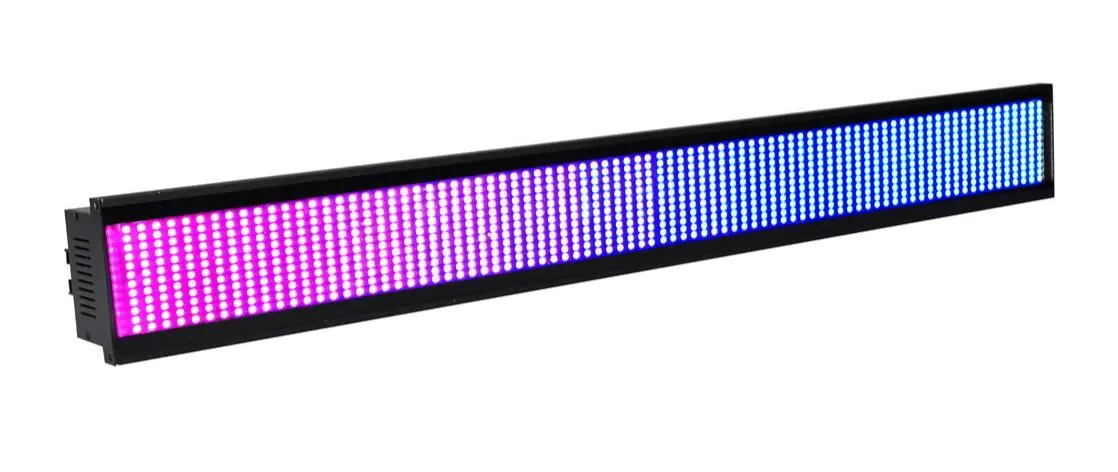
Placement and installation
- Use the included mounting bracket to fix the unit to a stand or lighting truss.
- Always use secondary safety fixings if mounting the unit overhead.
- Ensure there is adequate airflow around the fixture housings to prevent overheating.
- Keep the unit away from damp or dusty environments.
- Do not aim the LED output directly into the line of sight to avoid eye injury.
Rear panel controls
The rear panel contains the following connections and controls:

- Power input/output: Twist and lock connectors.
- DMX input/output: 3-pin XLR connectors.
- Control panel: Includes MENU, UP, DOWN, and ENTER buttons.
- LCD display: Shows current settings and DMX status.
- Earth screw: Do not remove.
Manual control menu
Press the MENU button to enter the settings menu. Use UP and DOWN to navigate, and ENTER to confirm selections.
- Auto: Auto mode with speed and strobe frequency settings.
- DMX512: DMX address settings.
- Show: 87 show modes with speed and strobe frequency settings.
- Music: 3 Sound-to-light modes with sensitivity settings.
- Slave: Select as slave when connected to other units.
- Dimmer: Select Red, Green, or Blue and adjust strobe frequency.
- Colour: 37 Colour choices with strobe frequency settings.
- Settings: Adjust LCD display time, flow direction, and temperature settings.
- Information: Display software version.
DMX operation
To enter DMX mode, select d001 from the menu. The 'd' on the LED display will flash once it receives a DMX signal. The unit supports 5, 9, 36, 49, or 144 channel modes. Connect the DMX signal source to the DMX input via a balanced XLR lead. You can daisy-chain extra fixtures using the DMX out port.
Cleaning and maintenance
- Use a soft cloth with a neutral detergent to clean the casing.
- Use a vacuum cleaner to clear ventilation grilles of any dust or debris build-ups.
- Do not use strong solvents for cleaning.
Specifications
- Power supply: 110-240Vac, 50/60Hz
- Power consumption: 800W
- LED type: 1080pcs RGB SMD5050 LEDs
- Beam angle: 135°
- Weight: 5.5kg
Practical help
Common problems
No power
Check that the mains voltage is correct, the outlet is switched on, and the twist-and-lock power lead is connected properly.
No light output
Check control panel mode settings and verify DMX controller settings (dimmer levels, blackout).
Unresponsive to DMX
Ensure the unit is in DMX mode and the 'A' on the display flashes. Check that the controller is not in blackout, is on the correct fixture/page, and that the DMX address and connections are correct.
Overheating/Cutting out
Ensure adequate ventilation and that the unit is not placed too close to a heat source.
Before use
- Verify the package contains the main unit, fixing bracket with thumbscrews, and twist-and-lock UK mains lead.
- Ensure the environment is dry and free of excessive dust.
- Check that the power source matches the 110-240Vac requirement.
- If mounting overhead, ensure secondary safety fixings are used.
- Ensure the unit has adequate airflow around the housing.
Specs in practice
- Power consumption
- 800W maximum power draw.
- DMX channels
- Supports 5, 9, 36, 49, or 144 channel modes for varying levels of control.
Images and diagrams
- The rear panel diagram identifies the power input/output, DMX input/output, control buttons (Menu, Up, Down, Enter), and the LCD display.
- The diagram also highlights the location of the earth screw and the control panel interface.
Model compatibility
- Requires a DMX controller for advanced lighting effects.
- Supports Master/Slave mode for daisy-chaining multiple units.

Manual page author
David Miller
Documentation analyst
Organizes user manual content into clear summaries, with attention to model details, product context, and everyday usability.