Home Appliances / Washing Machines
Danfoss 120Z0055 Commercial Compressor Crankcase Heater User Guide
Quick guide for installing and operating Danfoss commercial compressor crankcase heaters. Includes assembly steps, safety precautions, technical specifications, and model compatibility table.
Table of contents
Quick guide from the manual
This document provides essential instructions for the installation and operation of Danfoss commercial compressor crankcase heaters. These heaters are designed to prevent refrigerant migration during compressor off-cycles. Installation must be performed by qualified personnel.
Safety measures prior to assembly
- Use only with compatible Danfoss Commercial Compressors.
- Ensure the heater model matches the compressor model using the provided table.
- Verify that the power supply voltage matches the specifications printed on the heater cable.
- Do not cut the lead wires of heating belts that have 3 wires, as they contain glass fiber.
- Modifications or alterations to the product are not allowed.
Assembly
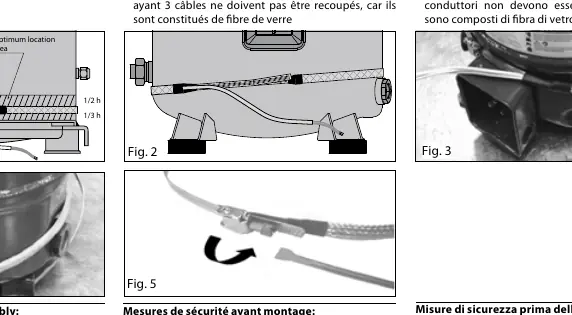
- Install the heater at the lower part of the compressor, below the sight glass, where oil accumulates.
- Ensure the heater is fitted around the compressor with good contact along its entire length.
- Route the heater around the electrical box (Ebox).
- Lock the clip and tighten the screw to a maximum torque of 2 Nm.
- Ensure the main power supply is switched off and isolated before making electrical connections.
- A separate, permanent electrical supply is recommended.
Start up
- Check the resistance value against the model table on page 1.
- Perform an insulation test before starting.
- Verify the supply voltage.
- Ensure the minimum oil superheat required by the compressor model is maintained.
Operating conditions and maintenance
Crankcase heaters are not self-regulating; they must be energized only when the compressor is switched off. Under ambient temperatures below -5°C and wind speeds above 5 m/s, it is recommended to thermally insulate the heater to limit energy losses.
Technical specifications
- Insulation resistance: Minimum 100 megohms at 2500 Volts.
- Tolerance: Output ±10%.
- Cold tail: 3xAWG20 or AXG18 or AVLV2/8, PVC or Silicone insulated.
- Cold tail length: 0.41 to 1.27 meters.
- Operating temperature: -40°C to 105°C.
- Certifications: IP55, CE, UKCA (except 24V), and UL (cUL on 75W and specific models).
Manufacturer information
Danfoss A/S
Practical help
Common problems
Heater not heating or energy loss
If ambient temperature is below -5°C and wind speed is above 5 m/s, thermally insulate the heater.
Electrical connection issues
Ensure the main power supply is switched off and isolated before starting. A separate permanent supply is recommended.
Incorrect heater model
Verify the heater model against the compressor model using the compatibility table on page 1.
Before use
- Verify heater model matches compressor model.
- Check that power supply voltage matches heater cable specifications.
- Ensure the compressor is switched off before energizing the heater.
- Perform an insulation test.
- Check supply voltage.
Specs in practice
- Insulation resistance
- Minimum 100 megohms at 2500 Volts to ensure electrical safety.
- Max torque 2 Nm
- Maximum tightening force for the heater clip screw to prevent damage.
- Operating temperature
- The heater is rated for environments between -40°C and 105°C.
Images and diagrams
- Fig 1 & 2: Shows the optimum location for the heater at the lower part of the compressor, below the oil sight glass.
- Fig 5: Illustrates the correct method for locking the clip and tightening the screw.
Model compatibility
- Designed exclusively for Danfoss Commercial Compressors.
- Not self-regulating; requires external control to energize only when the compressor is off.

Manual page author
Michael Turner
Technical manual editor
Reviews PDF manuals for structure, safety notes, and practical product details so readers can find the right information quickly.