HVAC / Heat Pumps
Installation and Operating Instruction for Dimplex LIA 0608HXCF M Split Air-to-Water Heat Pump
Quick guide for the Dimplex LIA 0608HXCF M split air-to-water heat pump. Includes installation, commissioning, maintenance, and troubleshooting steps.
Table of contents
Manual images
Click an image to enlargeQuick guide from the manual
This document provides essential information for the installation, operation, and maintenance of the Dimplex LIA 0608HXCF M split air-to-water heat pump. Key requirements include professional installation by qualified personnel, adherence to R32 refrigerant safety protocols, and proper hydraulic integration. Ensure the system is filled, purged, and pressure-tested before commissioning.
Safety notes
The heat pump uses R32 refrigerant, which is odourless and flammable. Work must only be performed by authorised and qualified specialist personnel. Ensure the installation site is well-ventilated and free from ignition sources. Do not store flammable substances near the device. Always wear appropriate personal protective equipment when working with refrigerant.
Installation
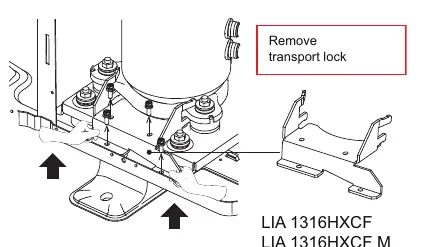
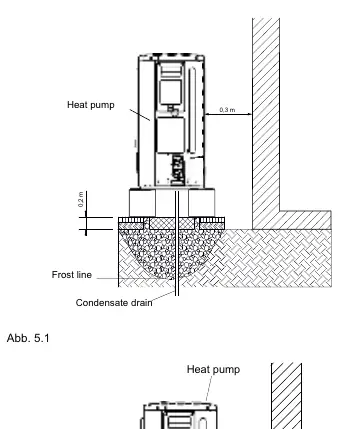
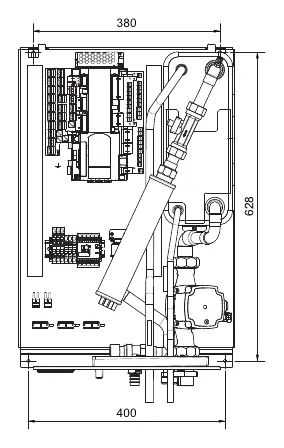
The indoor unit should be mounted on a level, smooth wall in a frost-proof room. The outdoor unit requires a foundation separate from the building with minimum clearances of 0.3 m on the intake side. When installing in coastal areas, avoid direct sea wind or use a wind guard. Ensure all pipework is deburred and correctly flanged. Use a multi-way valve for leak testing with dry nitrogen and evacuate the system before operation.
Commissioning
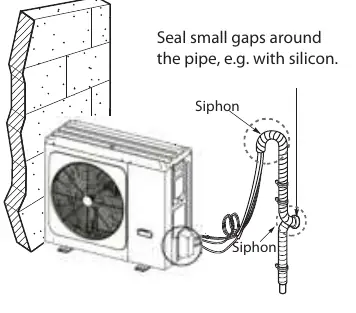
Commissioning must be performed by an authorised technician. Ensure all heating circuits are open, the system is filled and purged, and the condensate drain is functional. Adjust the on-site overflow valve to achieve the required temperature spread between flow and return. Follow the specific commissioning program via the heat pump manager.
Maintenance
Regular maintenance is required at least once a year. This includes checking water pressure (2.0 to 2.3 bar), cleaning dirt traps, and inspecting electrical connections. If the system is heavily contaminated, flush the heat exchanger with a 5% phosphoric or formic acid solution, ensuring the system is thoroughly flushed with neutralising agents afterwards.
Troubleshooting
If the heat pump fails, check the heat pump manager display for fault codes. Common issues include insufficient heating/cooling (check heating curve, water filling, dirt trap), noises (check purging), or domestic water not heating (check thermal circuit breaker and manager settings).
Technical data
Refer to the device information section for detailed performance values, including heating/cooling capacities, sound power levels, and electrical requirements for specific models (LIA 0608HXCF M, LIA 0911HXCF M, LIA 1316HXCF M).
Manufacturer information
Dimplex
Practical help
Common problems
Insufficient heating or cooling
Check the heating curve setting on the heat pump manager, ensure water pressure is 2.0-2.3 bar, and clean the dirt trap if soiled.
Noises from the water pump
Ensure the system is fully purged of air and water pressure is sufficient (at least 0.3 bar).
Domestic water is not heated
Check if the thermal circuit breaker of the flange or pipe heater has triggered (press Reset button) and verify settings on the heat pump manager.
Water drained off through the drain hose
Check if too much water was added (drain until 2.0-2.3 bar) or if the equalising tank is damaged.
Before use
- Verify all indoor and outdoor unit connections are installed correctly.
- Ensure all valves impairing water flow are open.
- Confirm air intake and outlet paths are clear.
- Ensure the heating water circuit and buffer tank are filled and purged.
- Check that the condensate drain functions properly.
- Verify the outflow from the pressure relief valve is functional.
- Inspect dirt traps 4-8 weeks after commissioning.
Specs in practice
- R32 Refrigerant
- Flammable refrigerant requiring specific handling and safety measures.
- Safety Valve
- Protects the system with a start-to-leak pressure of 2.5 bar.
Images and diagrams
- Dimension drawings for outdoor and indoor units.
- Foundation plans for outdoor units.
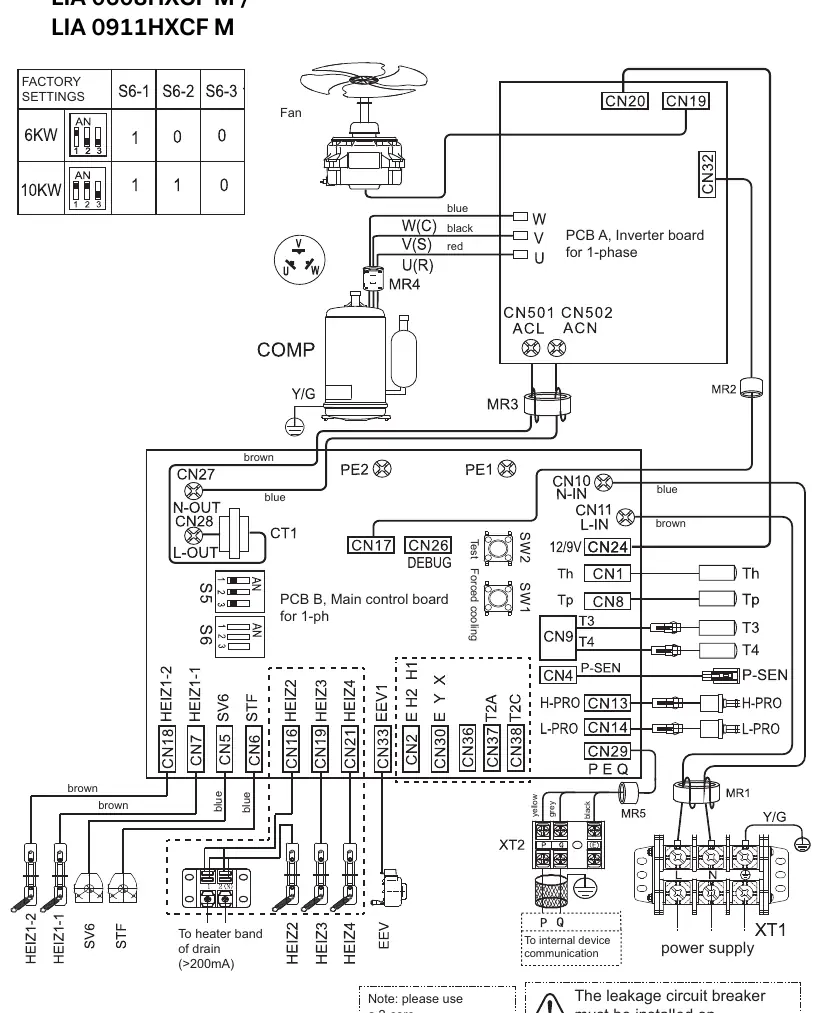
- Circuit diagrams for 1-phase and 3-phase models.
- Hydraulic integration diagrams for mono energy systems.
Model compatibility
- Requires R32-approved tools and components.
- Heating water quality must meet specific hardness, conductivity, and pH (8.2-9.0) standards.
- Hydraulically closed systems are mandatory.

Manual page author
Emily Carter
User documentation editor
Prepares concise manual descriptions and highlights the most useful setup, operation, and maintenance information for readers.