Power / Batteries & Chargers
User Manual for EcoFlow 12V 100Ah Deep Cycle Marine Trolling Motor Battery
Comprehensive user guide for the EcoFlow 12V 100Ah Deep Cycle Marine Trolling Motor Battery (Model EF-PK-B12-1). Includes installation procedures, safety instructions, battery connection guides (series/parallel), maintenance, and...
Table of contents
Manual images
Click an image to enlargeImportant Information from the Manual
This manual provides essential instructions for the EcoFlow 12V 100Ah Deep Cycle Marine Trolling Motor Battery (Model EF-PK-B12-1). Before use, ensure the battery is charged, as it is shipped at 50% state of charge. This battery is designed for energy storage in RVs, marine systems, solar lights, golf carts, and trolling motors. It is not intended for use as a starting battery for electric vehicles.
Overview
The battery utilizes lithium iron phosphate cells and features a built-in high-precision Battery Management System (BMS) to monitor voltage, current, and temperature. It includes a passive balance feature to optimize performance.
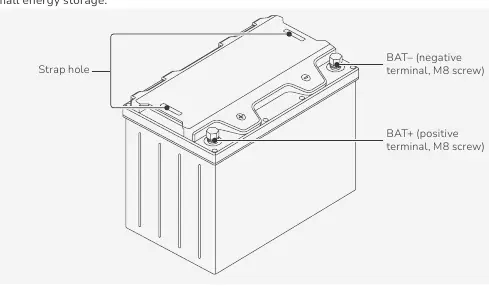
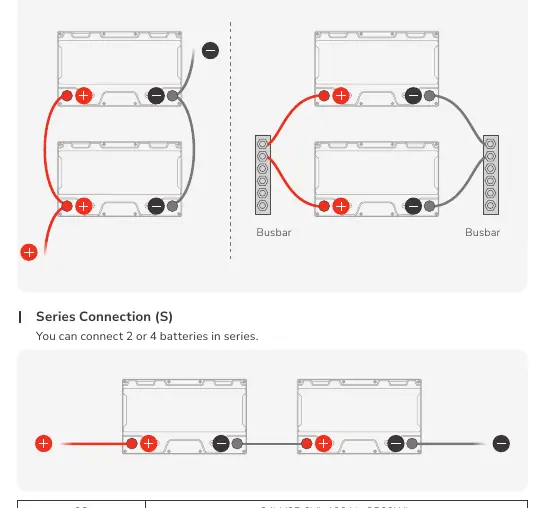
Installation
Requirements: Install in a tidy, dry, and well-ventilated environment. Avoid accumulation of water, oil, or dirt. Ensure sufficient airflow to prevent heat buildup. Upright battery placement is recommended.
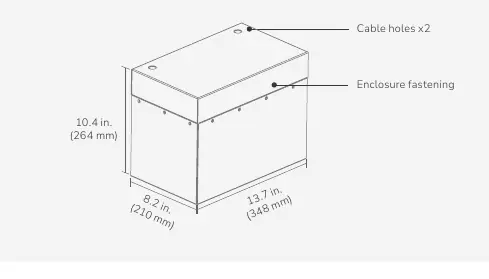
Procedure:
- Fix the battery using a Group 27 compatible battery tray (optional).
- Remove dust covers and terminals.
- Run connection cables through the provided insulating sleeves.
- Install battery terminals using an M8 bolt. Do not place washers between the terminal bolt and the cable lug to prevent high resistance and heating.
- Install insulating sleeves.
- Connect to devices like shunts, inverters, or MPPT charge controllers.
- Secure the lifting strap.
Connecting Batteries in Series or Parallel
Before connecting multiple batteries, you must balance them:
- Use a qualified battery balancer.
- Ensure voltage difference between batteries is less than 0.1V.
- Connect all batteries in parallel and let them rest for 12 to 24 hours before final configuration.
You can connect batteries directly or use busbars. The system supports various configurations, including series (up to 4S) and parallel (up to 8P) connections to increase voltage or capacity.
Maintenance
Regular maintenance is required to ensure longevity:
- Power Cables: Check for mechanical damage, loose screws, or bus bar discoloration every 6 months.
- Cleanliness: Clean with a dry cloth every 6-12 months.
- System Check: Verify parameters (voltage, current, temperature) and air duct status every 6 months.
- Charging/Discharging: Perform shallow charging/discharging cycles every 6 months to verify health.
Troubleshooting
If you encounter issues, refer to these common solutions:
- Interruptions during high power use: Overtemperature protection. Disconnect and let the battery rest.
- No DC output: Low voltage. Charge the battery.
- Power supply time too short: Battery capacity lack or cell failure. Replace the battery.
- Battery won't charge fully: DC output voltage in the system is too low. Adjust system voltage.
Specifications
General: 1280Wh, 100Ah, 12.8V nominal. Weight approx. 12kg. IP65 rating.
Operation: Voltage range 10V-14.6V. Max charging/discharging current 100A. Peak discharging current 300A (30s).
Compliance: UL1973, IEC62619, UN38.3, FCC Part 15B.
Manufacturer information
EcoFlow
Practical help
Common problems
Interruptions during continuous high power charging or discharging
Overtemperature protection triggered. Disconnect input/output and allow the battery to rest until the temperature drops.
No DC output
Battery voltage is too low. Charge the battery.
Power supply time is too short
Battery capacity lack or cell failure. Replace the battery.
Battery cannot be charged fully
DC output voltage in the power system is below the minimum charge voltage. Adjust the system voltage.
Before use
- Charge the battery before first use (shipped at 50% SOC).
- Ensure you have a 14mm wrench, screwdriver, and battery connection cables with M8 OT terminals.
- Use a battery balancer to balance batteries before connecting in series or parallel.
- Verify the battery is not hot, bulging, or leaking.
- Prepare a battery tray (Group 27 compatible) for secure installation.
Specs in practice
- Max Charging Current
- 100A (Recommended ≤50A).
- Max Discharging Current
- 100A (Peak 300A for 30s).
Images and diagrams
- Installation Procedure: Shows fixing the battery, removing dust covers, installing terminals, and connecting to devices.
- Series/Parallel Connections: Diagrams showing how to connect multiple batteries for higher voltage (Series) or capacity (Parallel).
Model compatibility
- Compatible with RV, marine systems, solar lights, golf carts, and trolling motors.
- Do not use as a starting battery for electric vehicles.
- Requires enclosure if used in vehicle or marine systems (UL1973 compliance).

Manual page author
David Miller
Documentation analyst
Organizes user manual content into clear summaries, with attention to model details, product context, and everyday usability.