Power / Batteries Chargers
User Manual for EnerSys ZeMaRail™ DS 12V Battery
Quick guide for the EnerSys ZeMaRail™ DS 12V battery, covering safety precautions, installation, charging, maintenance, and storage procedures for optimal performance.
Table of contents
Manual images
Jump to the sectionQuick guide from the manual
This document provides essential instructions for the safe handling and operation of ZeMaRail™ DS 12V batteries, which utilize Thin Plate Pure Lead (TPPL) technology. These are maintenance-free batteries that do not require water refilling. Users must ensure all applications are safe and comply with local regulations.
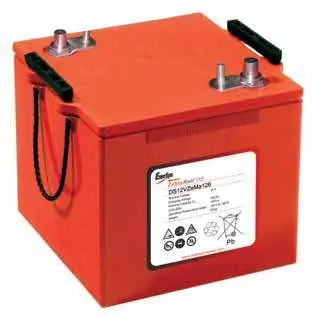
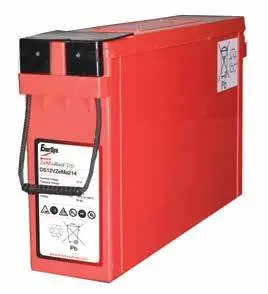
Safety precautions
- Only qualified personnel should perform work on batteries.
- Wear protective clothing and safety goggles.
- No smoking, open flames, or sparks near the battery; avoid electrostatic discharge.
- If acid contacts skin or eyes, rinse immediately with plenty of water and seek medical attention.
- Avoid short circuits: do not use uninsulated tools or place metal objects on the battery.
- Batteries are heavy; use appropriate handling equipment.
Installation and commissioning
Batteries are delivered in a charged state. Before installation, ensure the battery compartment is clean. Verify that terminal cables have good contact and correct polarity. Never connect electrical appliances directly to individual battery parts, as this causes cell imbalance.
Operation and charging
The optimal operating temperature is 30°C. Performance and lifespan are best maintained at a depth of discharge (DoD) of 60% or lower. Maximum discharge is 80% of nominal capacity. Batteries must be recharged immediately after discharge. The specific charging profile allows for rapid charging in under 4 hours from 60% DoD. Ensure proper ventilation during charging and keep battery covers open or removed.
Maintenance and storage
Annual maintenance includes removing internal dust and checking all electrical connections. A qualified electrician must check the insulation resistance of the vehicle and battery annually. Store batteries in a cool, dry place (ideally below 20°C). If stored for long periods, perform an open-circuit voltage (OCV) check every 12 months and recharge if OCV is below 2.10 Vpc.
Disposal
ZeMaRail™ DS batteries are recyclable. They must be handled as hazardous waste if not returned for recycling and must be disposed of in accordance with local and national laws by authorized facilities.
Manufacturer information
EnerSys
Practical help
Common problems
Battery discharge exceeds 80% capacity
This is considered deep discharge and significantly reduces battery life. Recharge immediately.
Cell imbalance or loss of capacity
Ensure no electrical appliances are connected directly to individual battery parts.
Low voltage alarm (LVA) triggered
Respect visual and audible signals; the battery has reached maximum discharge and must be recharged immediately.
Insulation resistance below requirements
Ensure annual checks by a qualified electrician; minimum value is 50 Ω per volt of nominal voltage (1000 Ω for batteries under 20V).
Before use
- Verify the battery is clean and the compartment is prepared.
- Check that terminal cables have good contact.
- Confirm correct polarity (plus to plus, minus to minus).
- Ensure the battery is fully charged before initial use.
- Check that the battery is not stored in a freezing zone if discharged.
Specs in practice
- Nominal Capacity
- Rated at C20.
- Nominal Temperature
- 30°C is the standard operating temperature.
- Depth of Discharge (DoD)
- Optimal life is achieved at 60% DoD or lower; maximum limit is 80%.
- OCV (Open Circuit Voltage)
- Voltage level used to determine if a stored battery requires a refresh charge (threshold 2.10 Vpc).
Model compatibility
- Designed for diesel locomotive starter applications.
- Complies with EN 62485-3 for traction batteries.
- Requires specific charging profiles for rapid charging.

Manual page author
Emily Carter
User documentation editor
Prepares concise manual descriptions and highlights the most useful setup, operation, and maintenance information for readers.