General / Other Manuals
FMS 1400MM T-28 Trojan V4 RC Airplane User Manual
Quick guide for the FMS 1400MM T-28 Trojan V4 RC airplane, covering assembly, transmitter setup, center of gravity balancing, flight preparation, and ESC programming.
Table of contents
Manual images
Jump to the sectionQuick guide from the manual
This manual provides essential instructions for the assembly, setup, and safe operation of the FMS 1400MM T-28 Trojan V4 RC airplane. Before your first flight, ensure all components are correctly installed, the center of gravity is balanced, and the transmitter is properly configured. Always perform a range check before flying.
Safety precautions
- This is a sophisticated hobby product, not a toy. Not for children under 14.
- Always operate in an open area away from people, cars, and buildings.
- Handle Li-Po batteries with extreme caution; never leave them unattended while charging.
- Moisture can damage electronics; avoid flying in wet conditions.
Model assembly
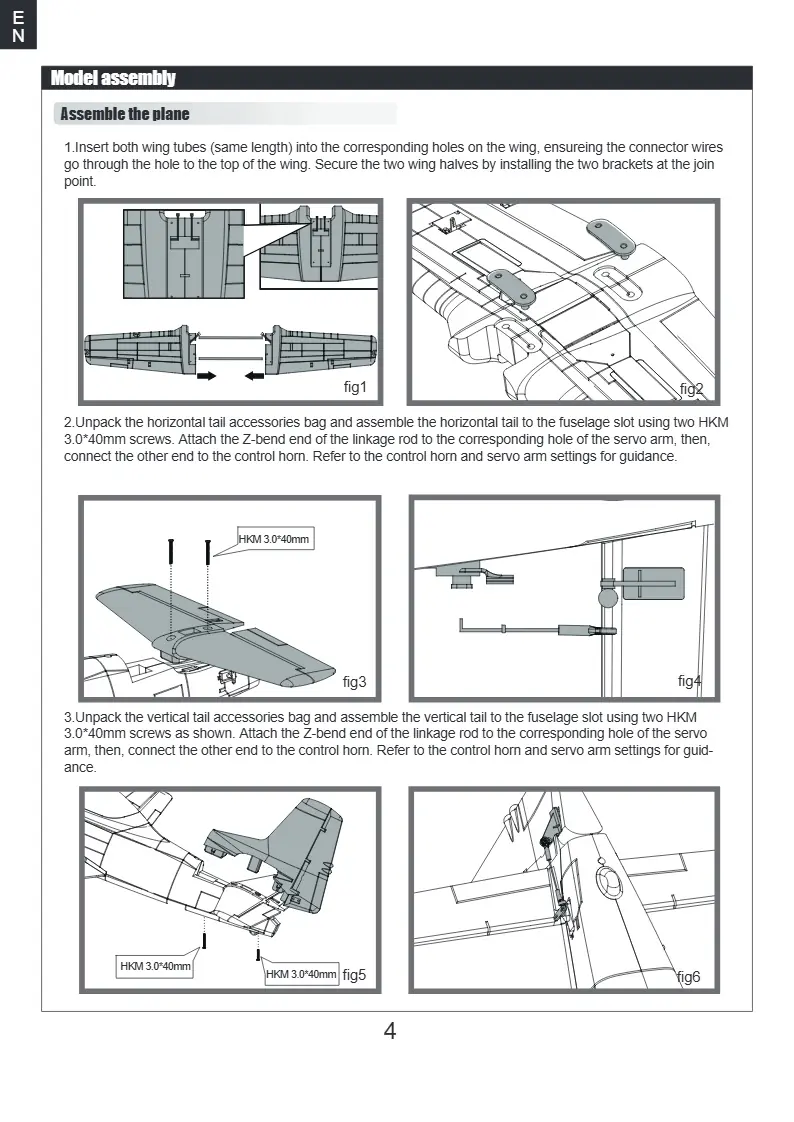
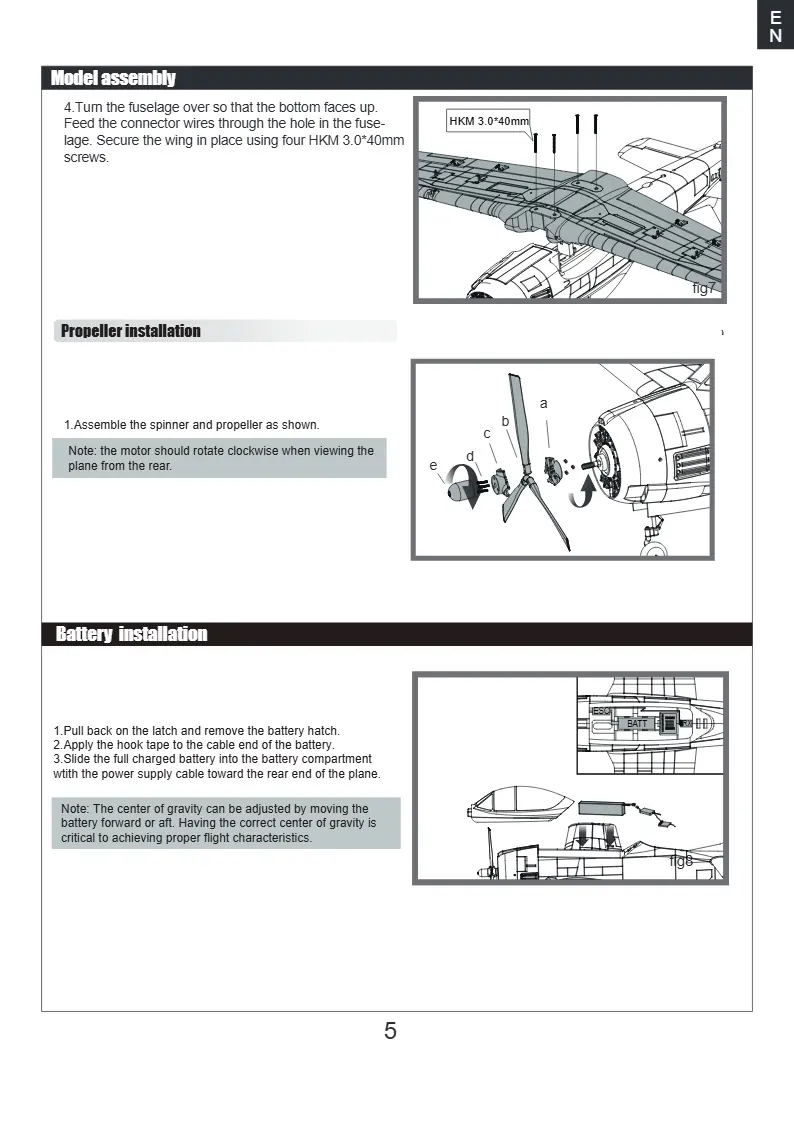
The assembly process involves attaching the main wings, horizontal tail, and vertical tail to the fuselage using the provided screws. Ensure all connector wires are routed correctly through the fuselage. The linkage rods for control surfaces must be installed and adjusted to ensure neutral servo positions before flight.
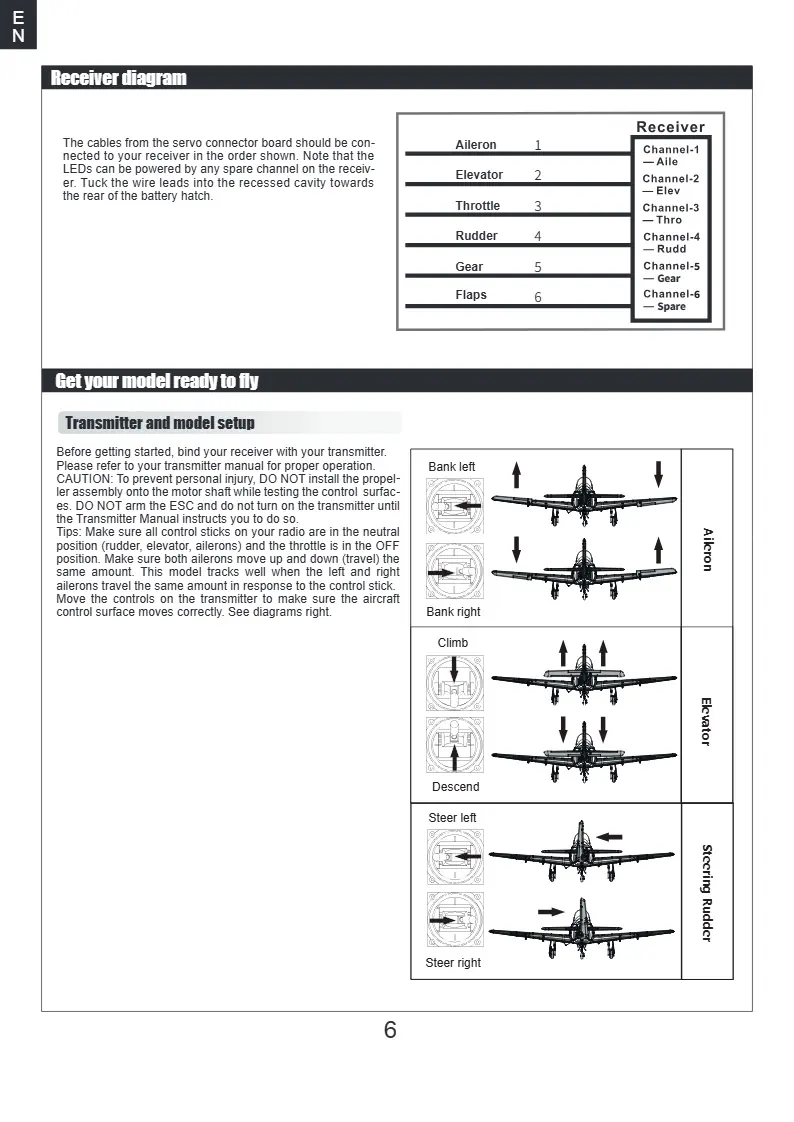
Transmitter and model setup
Bind your receiver to your transmitter before installing the propeller. Ensure all control sticks are in the neutral position and the throttle is in the OFF position. Verify that all control surfaces (ailerons, elevator, rudder) move in the correct direction in response to transmitter inputs.
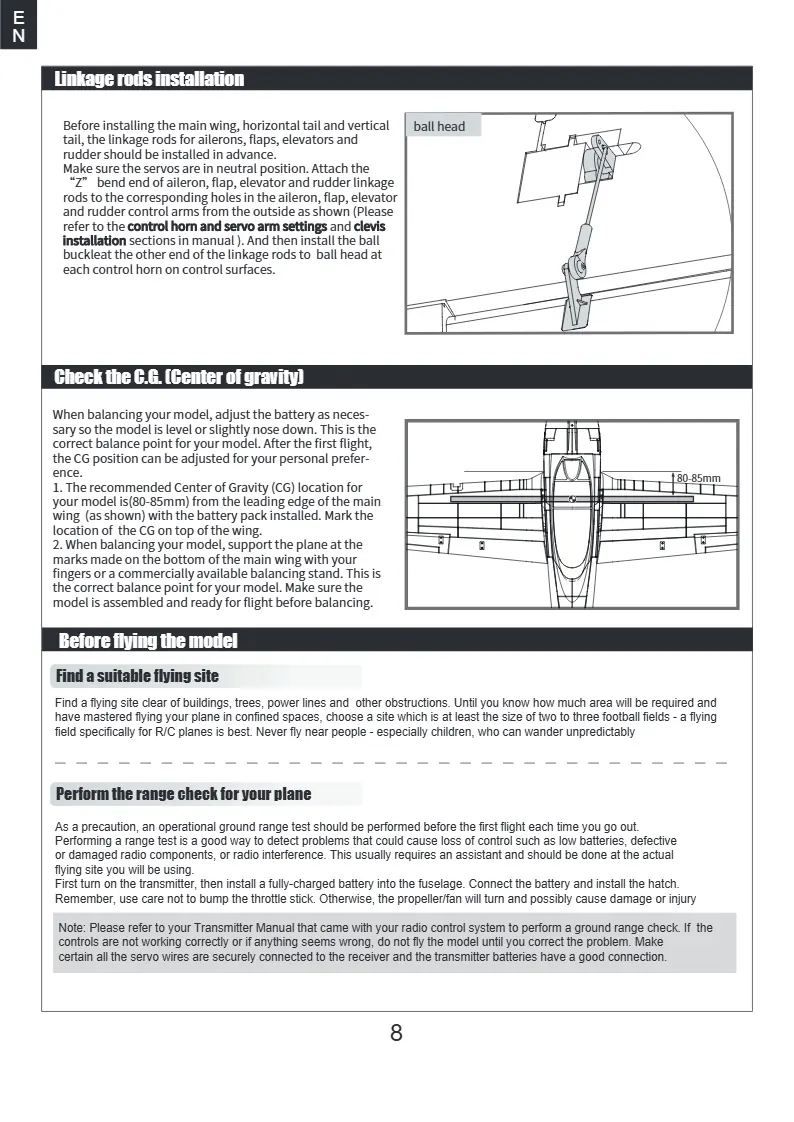
Center of gravity (C.G.)
The recommended C.G. location is 80-85mm from the leading edge of the main wing. Adjust the battery position forward or aft to achieve this balance point, which is critical for stable flight characteristics.
ESC and flight preparation
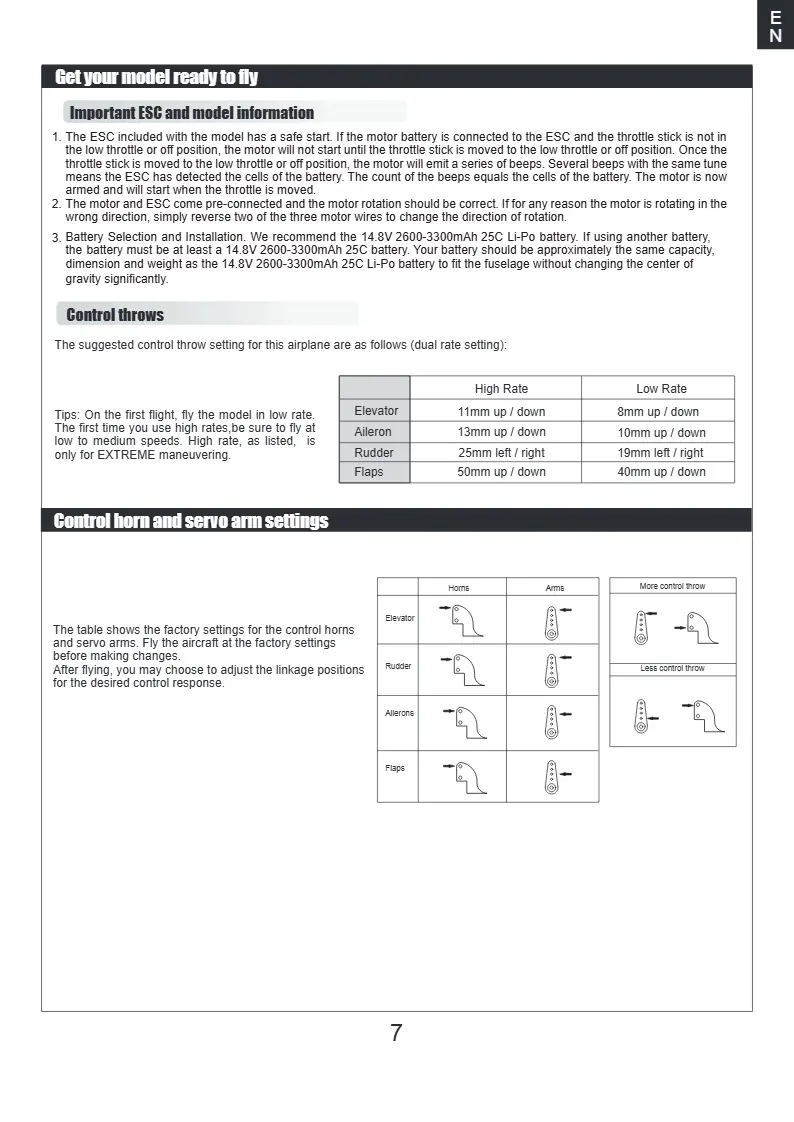
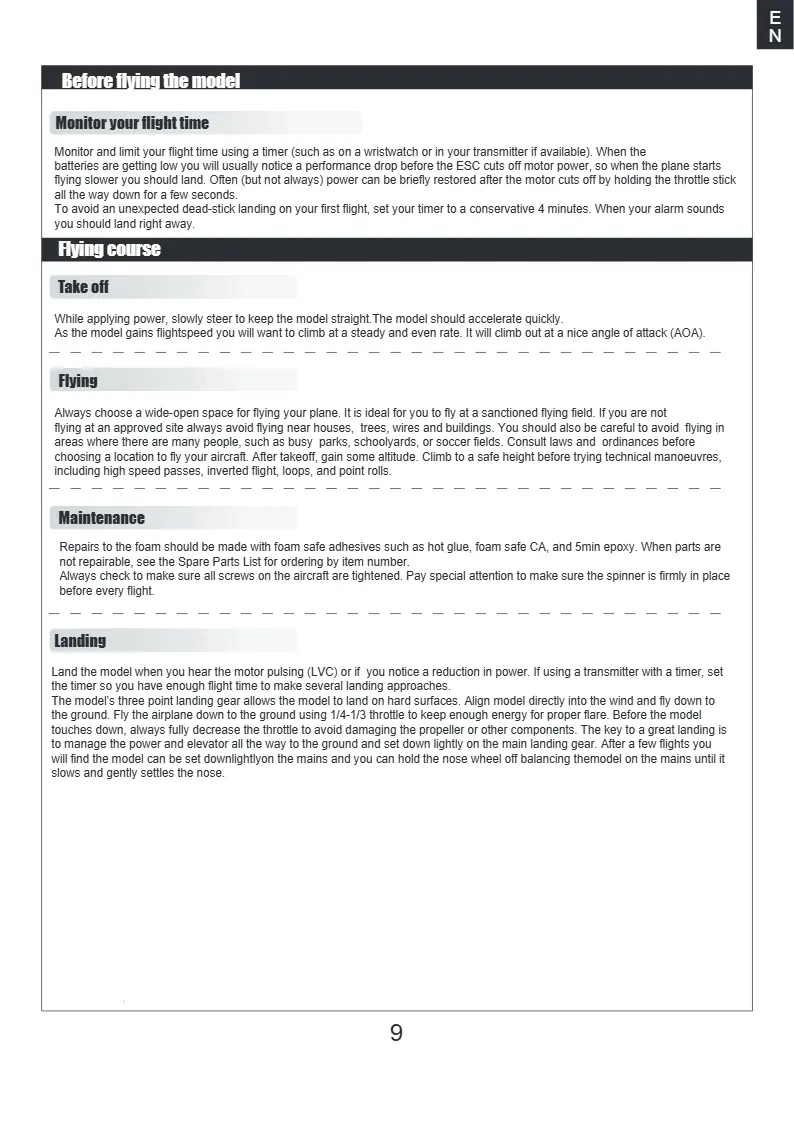
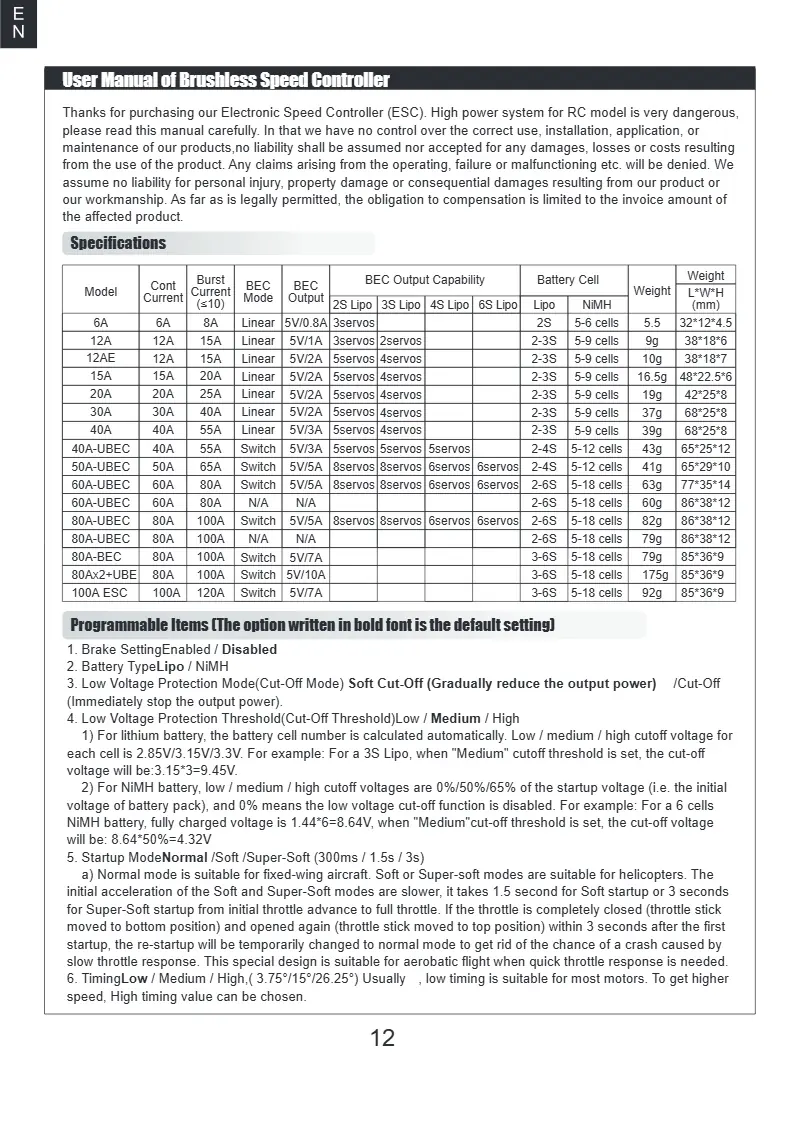
The included 80A ESC features a safe start function; the motor will not arm until the throttle is moved to the low position. Use a 14.8V 2600-3300mAh 25C Li-Po battery. Always monitor your flight time using a timer to avoid unexpected power loss.
Troubleshooting
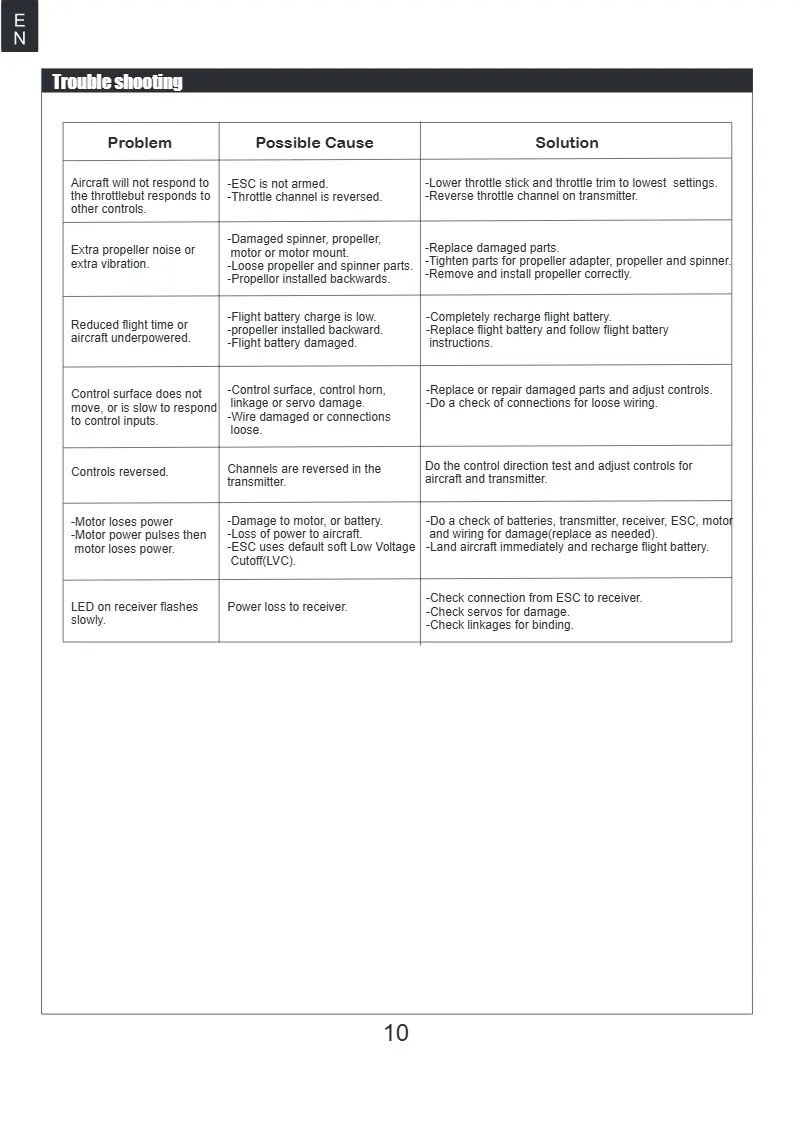
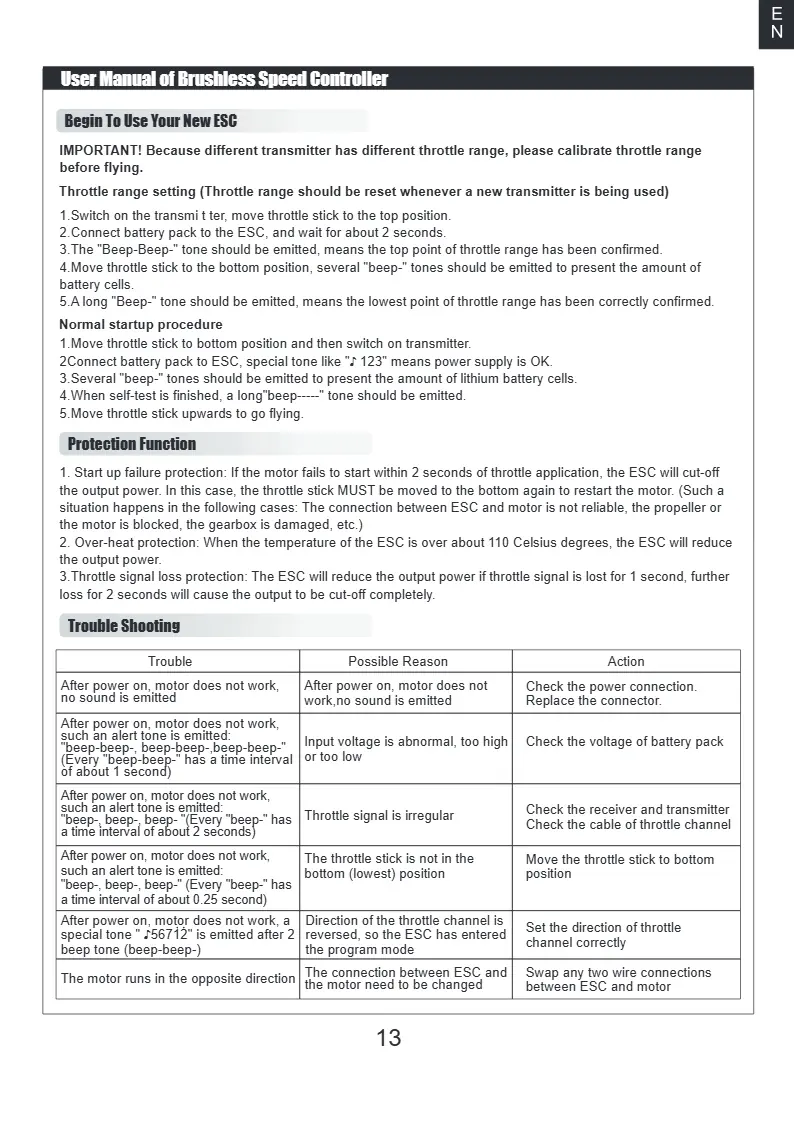
If the aircraft does not respond, check that the ESC is armed and the throttle channel is not reversed. If the motor pulses or loses power, check battery charge and connections. Ensure all screws are tightened and the propeller is installed correctly before every flight.
Manufacturer information
FMS Model
Practical help
Common problems
Aircraft will not respond to throttle
Ensure ESC is armed, lower throttle stick, and check if throttle channel is reversed on the transmitter.
Extra propeller noise or vibration
Check for damaged propeller/spinner, ensure parts are tightened, and verify the propeller is installed in the correct direction.
Reduced flight time or underpowered
Recharge flight battery and check for damage to the battery pack.
Motor loses power or pulses
Check battery and connections; the ESC may have triggered Low Voltage Cutoff (LVC).
Before use
- Ensure all screws are tightened.
- Verify control surfaces move in the correct direction.
- Check that the propeller is securely installed.
- Balance the center of gravity at 80-85mm from the wing leading edge.
- Perform a ground range check before the first flight.
- Ensure the battery is fully charged and securely mounted.
Specs in practice
- Flying weight
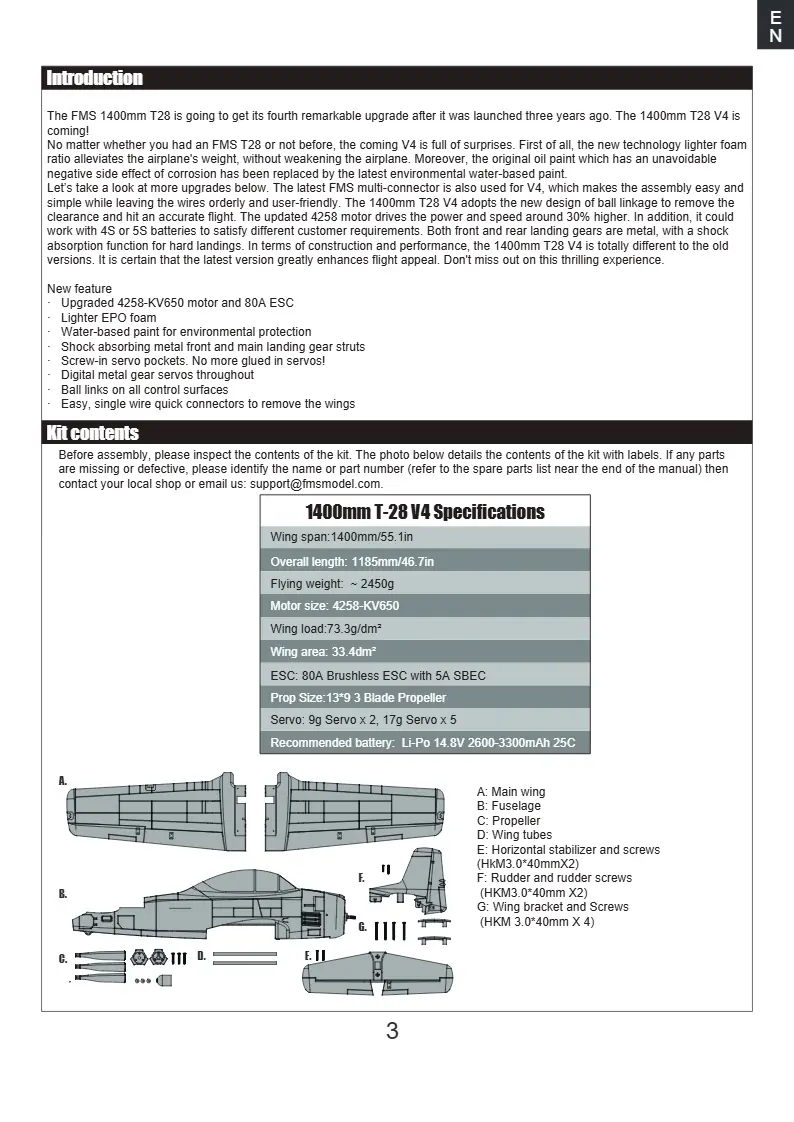
- ~2450g
- Recommended battery
- Li-Po 14.8V 2600-3300mAh 25C
Images and diagrams
- Receiver diagram shows channel assignments for aileron, elevator, throttle, rudder, gear, and flaps.
- Transmitter setup diagrams illustrate correct stick movements for bank, climb, and steer.
- Control throw table provides high and low rate settings for all surfaces.
- C.G. diagram indicates the 80-85mm balance point from the wing leading edge.
Model compatibility
- Compatible with 4S or 5S Li-Po batteries.
- Requires a transmitter with at least 6 channels.

Manual page author
Michael Turner
Technical manual editor
Reviews PDF manuals for structure, safety notes, and practical product details so readers can find the right information quickly.