General / Other Manuals
Operating Manual for FMS Yak 54 1300mm Aerobatic Airplane
Quick guide for the FMS Yak 54 1300mm aerobatic airplane. Includes assembly steps, control setup, center of gravity (CG) balancing, flight safety, and troubleshooting.
Table of contents
Manual images
Jump to the sectionQuick guide from the manual
This document provides essential instructions for the assembly, setup, and safe operation of the FMS Yak 54 1300mm aerobatic airplane. Before your first flight, ensure the model is correctly assembled, the center of gravity is balanced, and a range check is performed. Always operate in a wide-open space away from people, buildings, and power lines.
Safety Precautions
- Not intended for children under 14 years.
- Never operate with low transmitter batteries.
- Avoid flying near people, traffic, or in populated areas.
- Keep all chemicals and small parts out of reach of children.
- Avoid moisture exposure to electronics.
Assembly
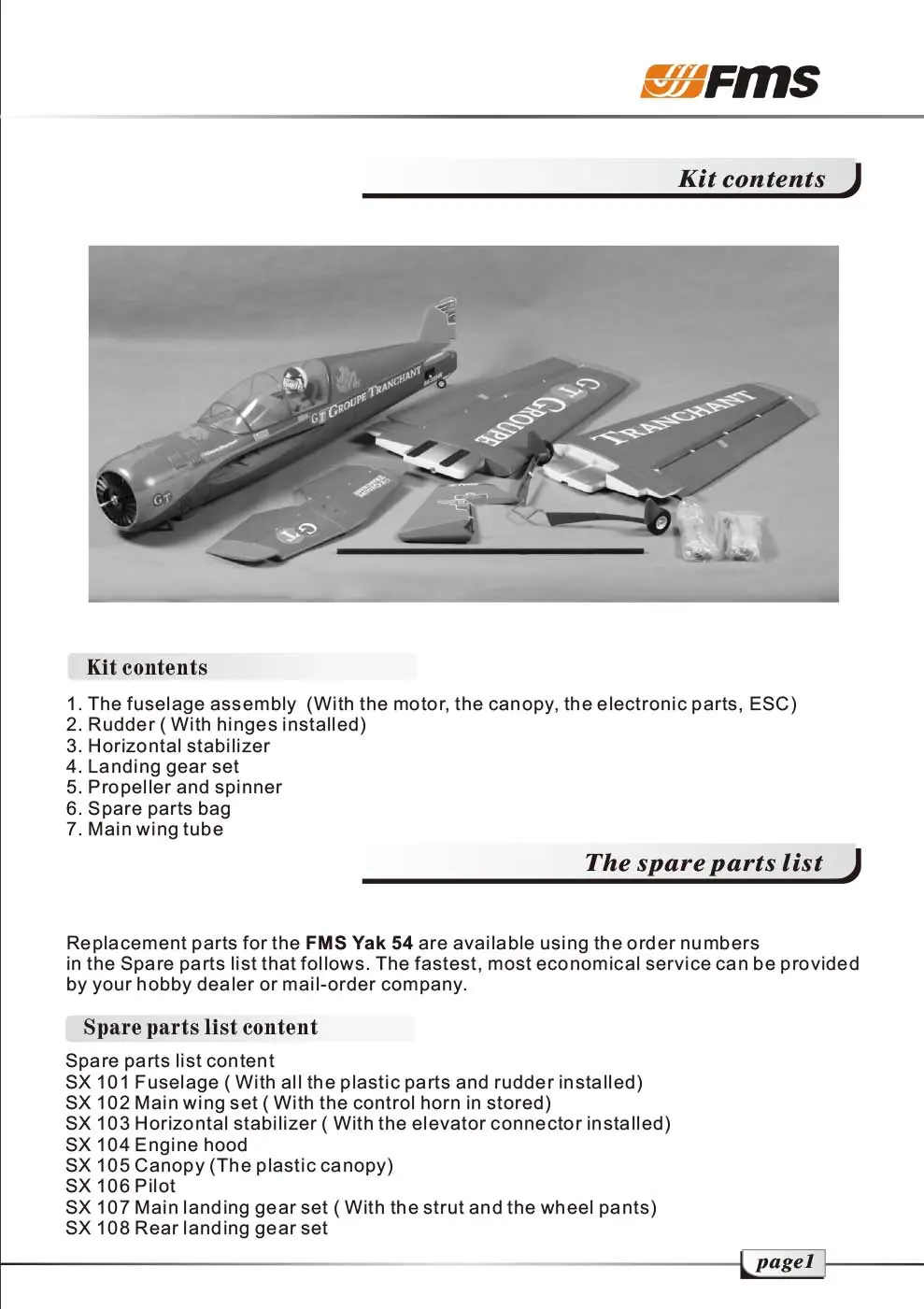
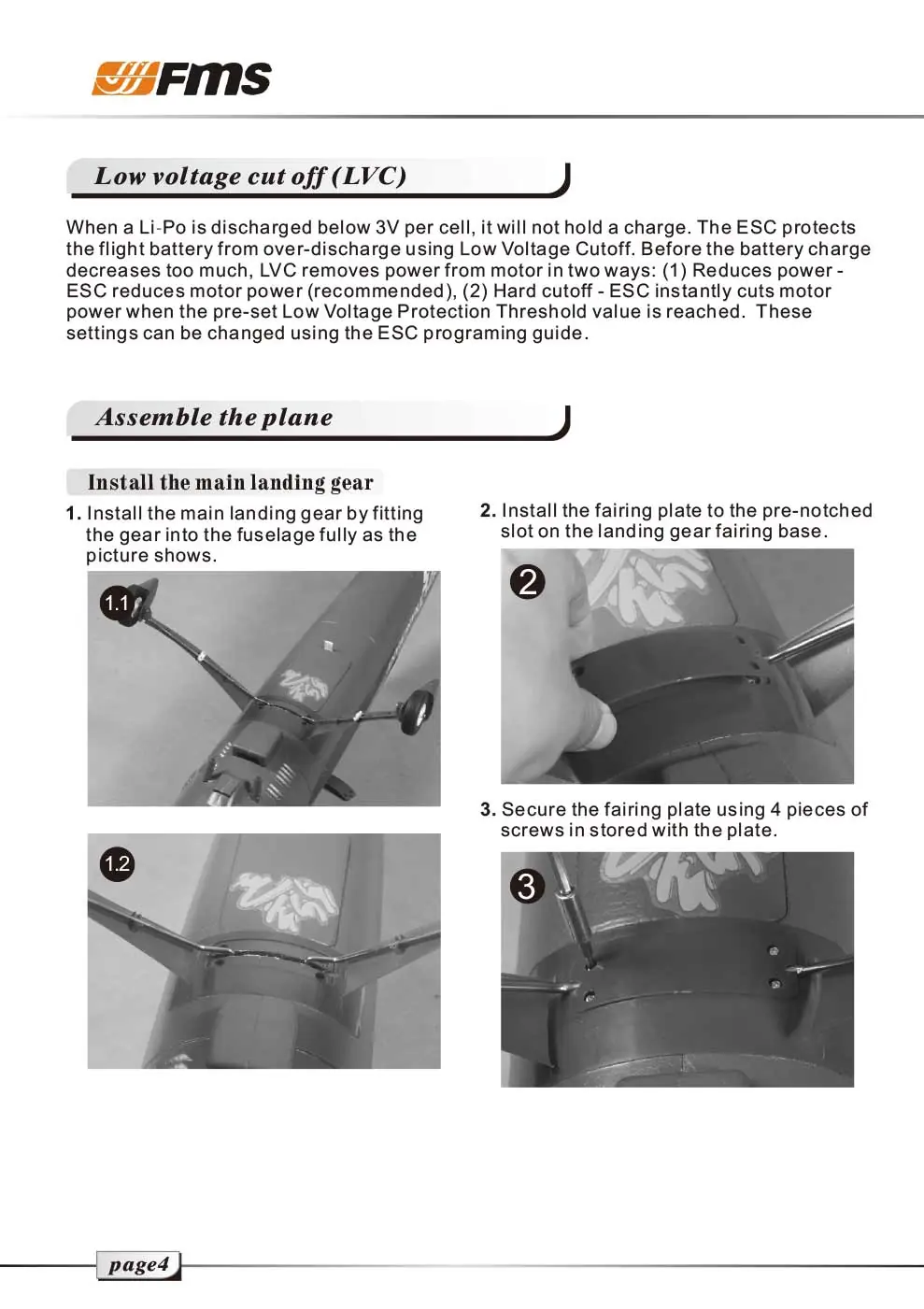
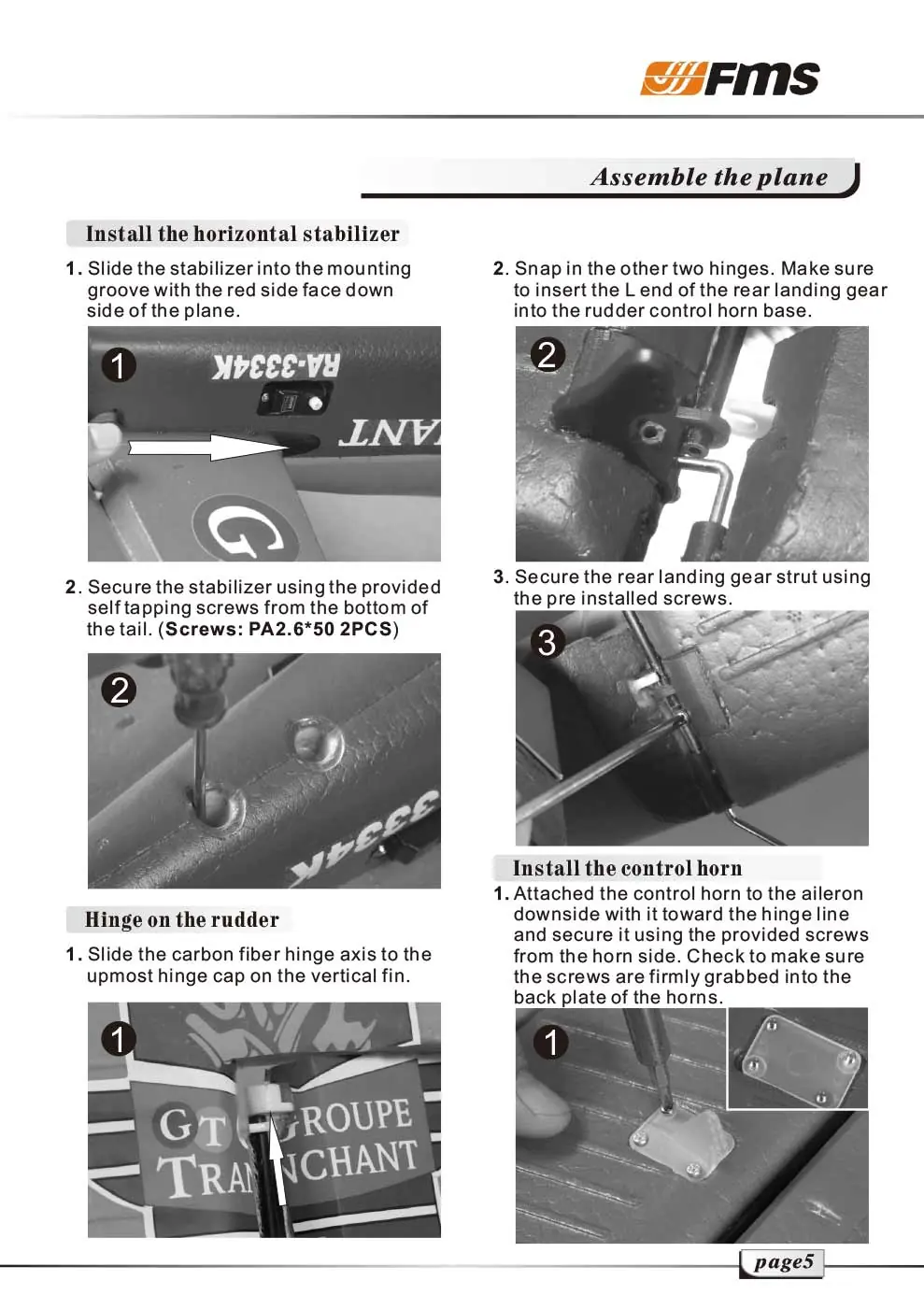
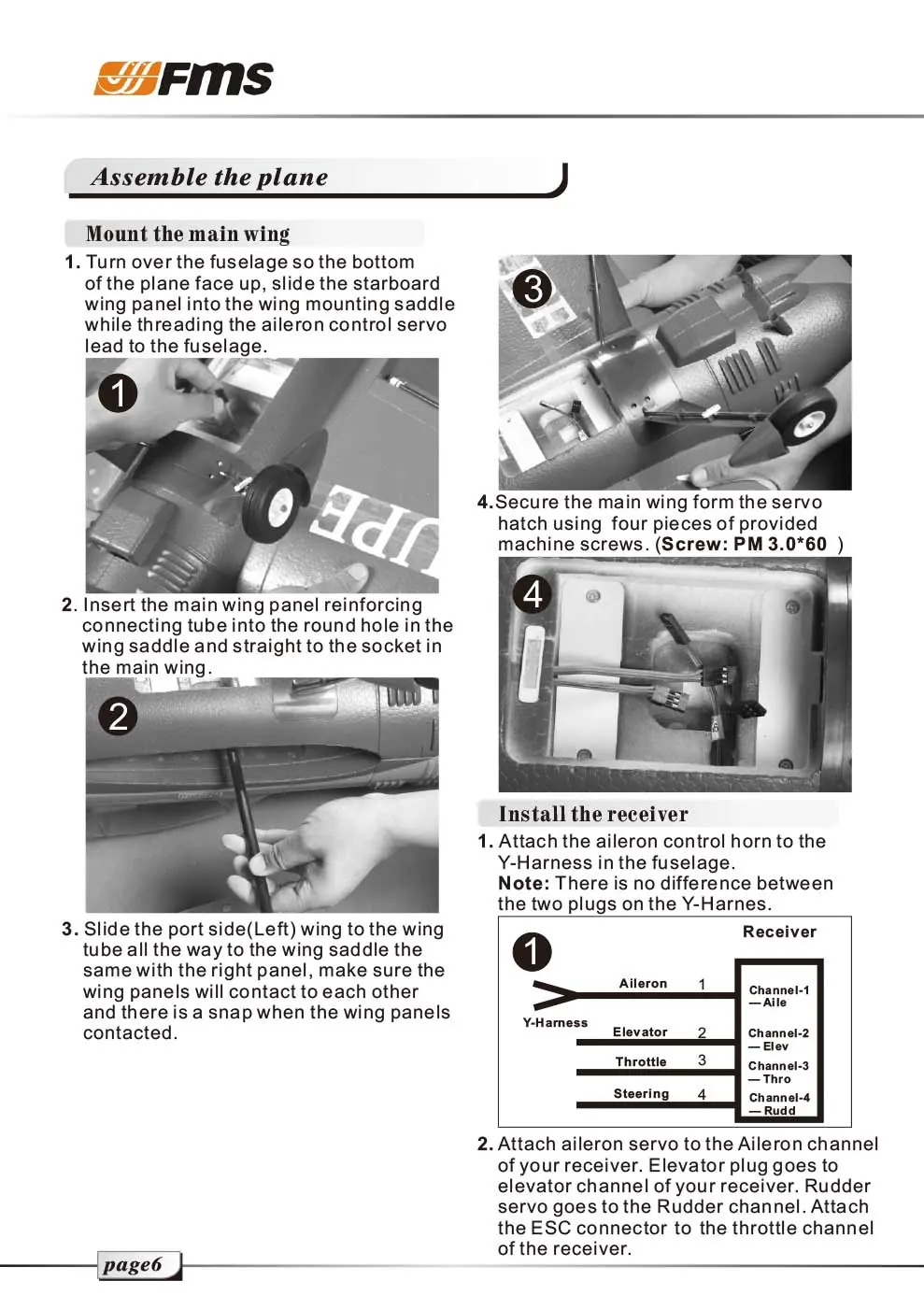
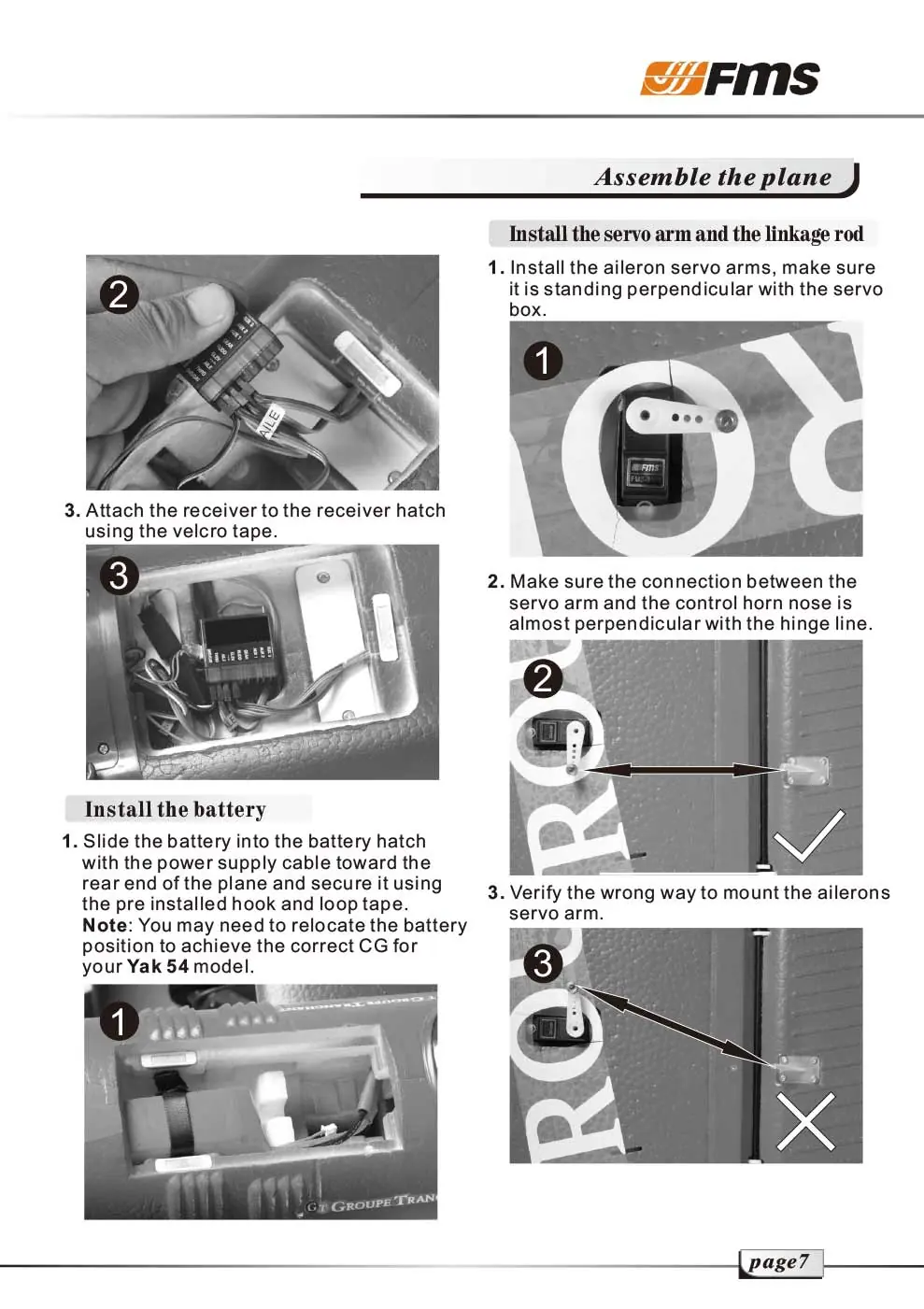
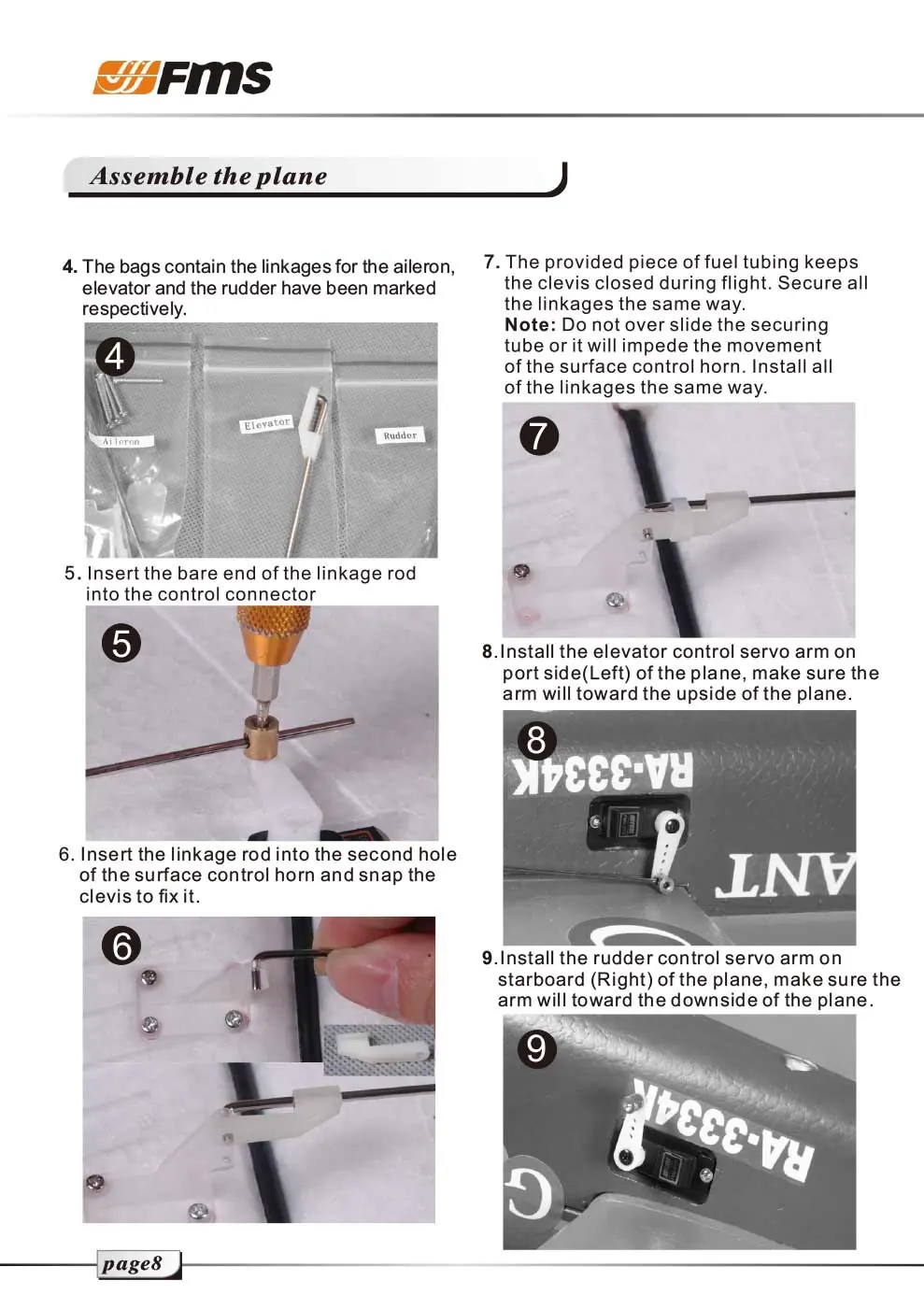
The model requires assembly of the landing gear, horizontal stabilizer, rudder, main wing, and control linkages. Ensure all screws are tightened and linkages are secure. Use foam-safe adhesives for repairs.
Center of Gravity (CG)
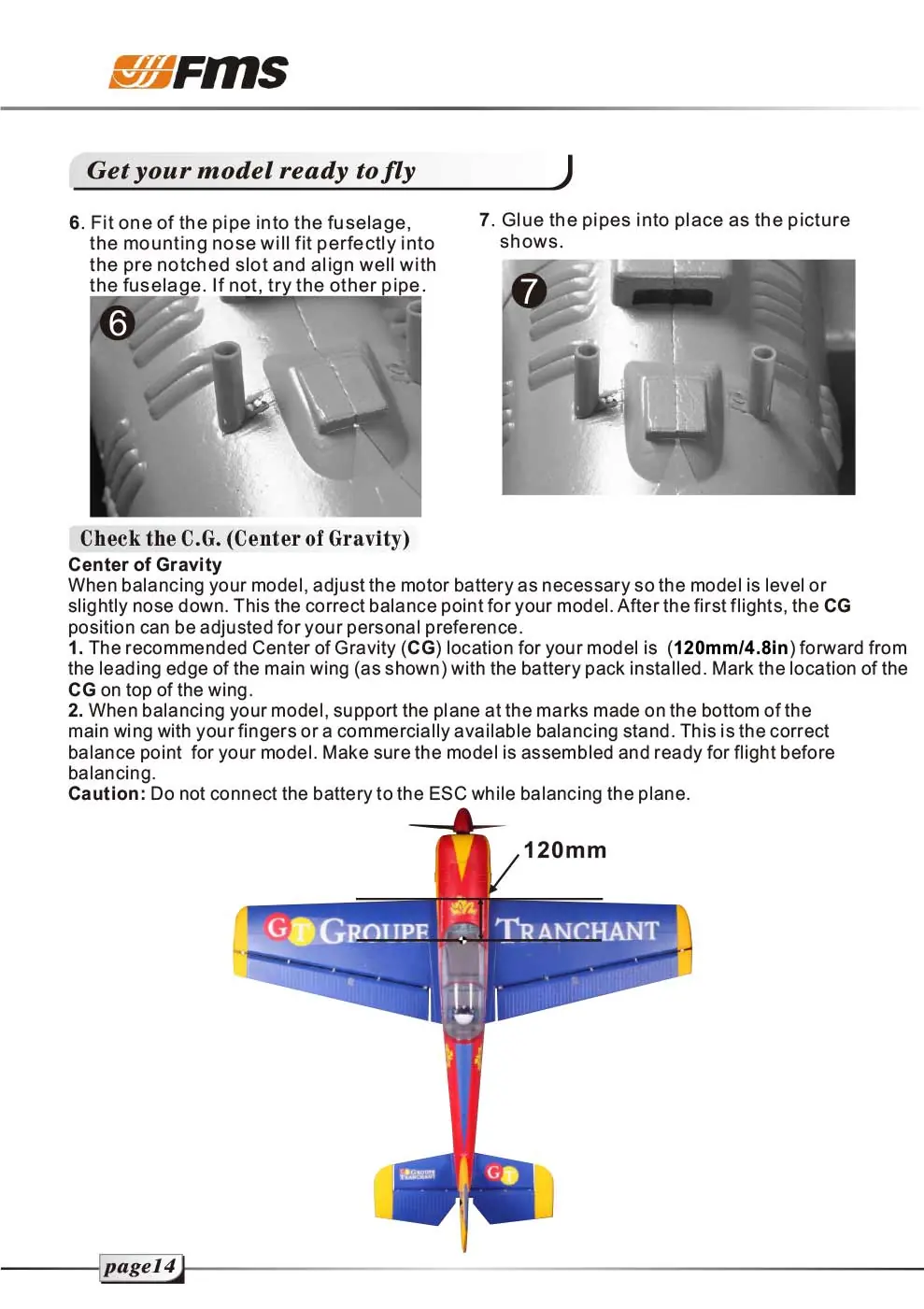
The recommended CG location is 120mm (4.8in) forward from the leading edge of the main wing with the battery installed. Adjust the battery position to achieve this balance point.
Transmitter and Model Setup
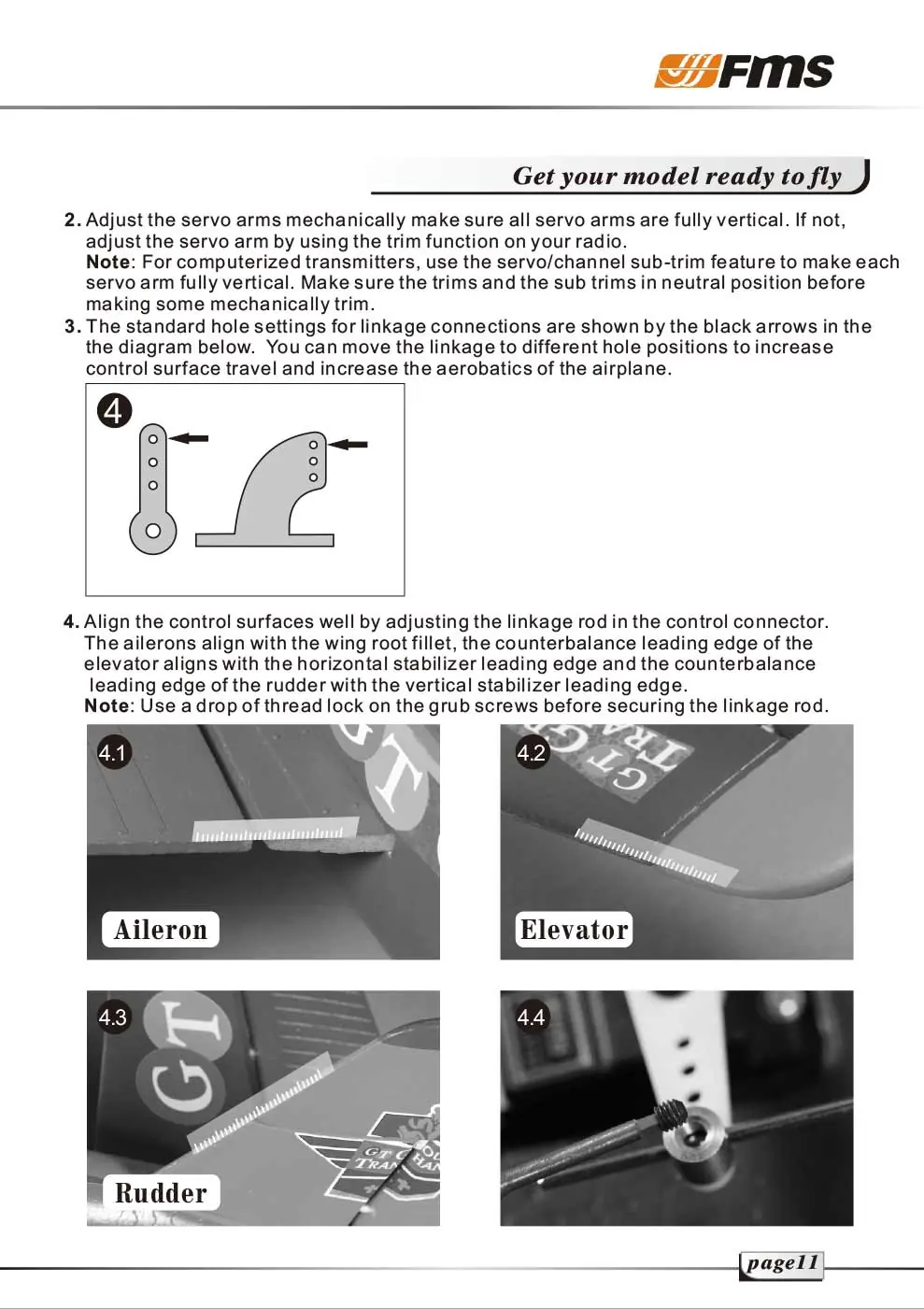
Bind your receiver to your transmitter before starting. Ensure all control sticks are in the neutral position and the throttle is OFF. Verify that control surfaces move in the correct direction. Adjust control throws as specified: Ailerons (60-70mm), Elevator (48-50mm), and Rudder (60-65mm).
Flight Preparation
- Find a suitable flying site clear of obstructions.
- Perform a ground range check before every flight.
- Monitor flight time using a timer (recommended 4 minutes for the first flight).
- Land immediately if you notice a performance drop or hear the motor pulsing (LVC).
Troubleshooting
If the aircraft does not respond to the throttle, ensure the ESC is armed and the throttle channel is not reversed. If controls are reversed, adjust them in the transmitter. For reduced flight time, check the battery charge and ensure the propeller is installed correctly.
Technical Specifications
- Wing span: 1300mm (51.2in)
- Length: 1270mm (50.0in)
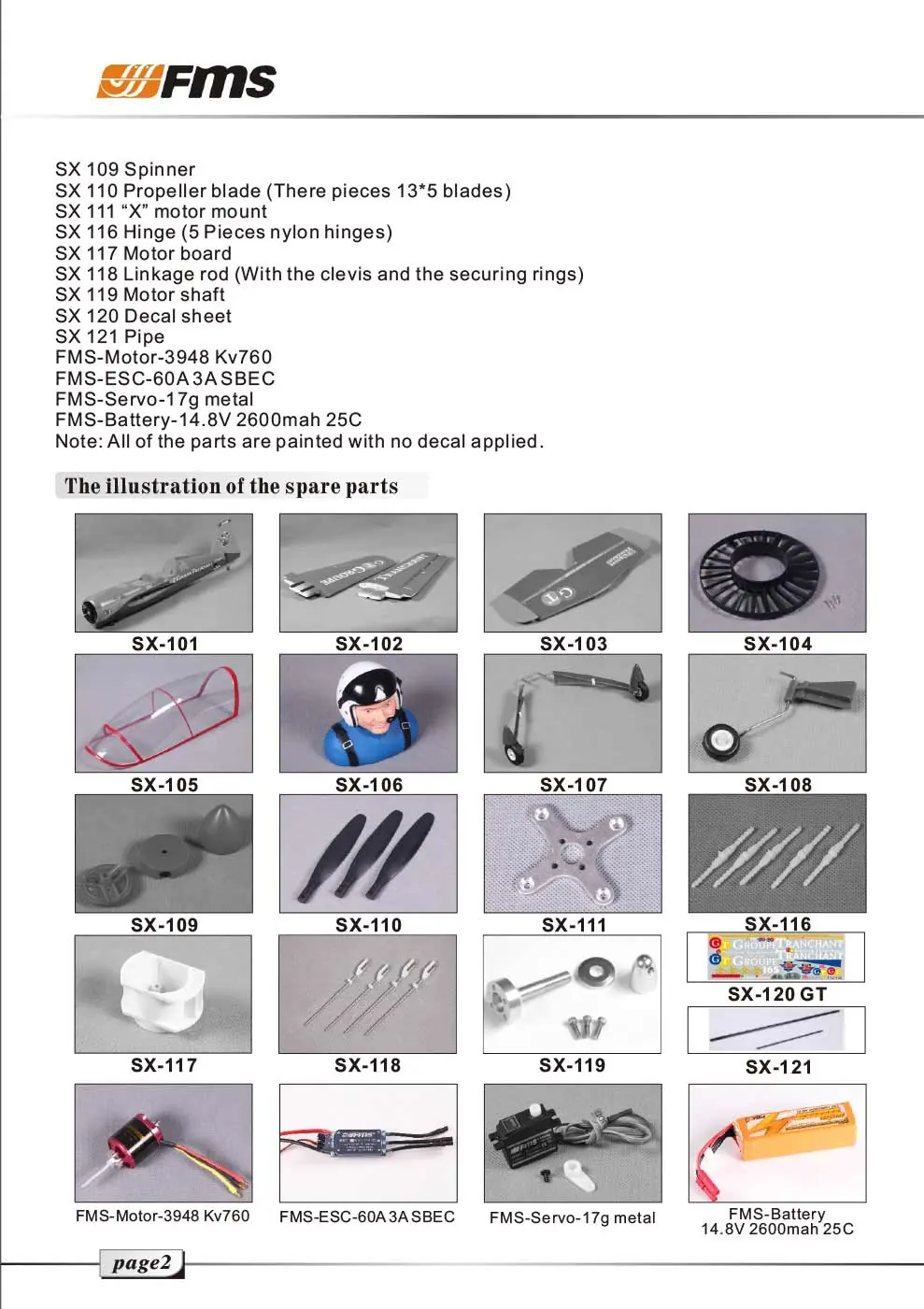
- Motor: 3948-KV760
- ESC: 60A with integrated 3A BEC
- Battery: 14.8V 2600mAh 25C
- Approx flying weight: 1880g
Manufacturer information
FMS Model
Practical help
Common problems
Aircraft will not respond to throttle
Ensure ESC is armed, lower throttle stick and trim to lowest settings, or reverse throttle channel on transmitter.
Extra propeller noise or vibration
Replace damaged parts, tighten propeller adapter/spinner, or check if propeller is installed backwards.
Reduced flight time or underpowered
Check battery charge, ensure propeller is installed correctly, or replace damaged flight battery.
LED on receiver flashes slowly
Check connection from ESC to receiver, inspect servos for damage, and check linkages for binding.
Before use
- Inspect all parts for damage or defects.
- Ensure the flight battery is fully charged.
- Perform a ground range check at the flying site.
- Verify all control surfaces move in the correct direction.
- Check that all screws are tightened.
- Verify the center of gravity (CG) is at 120mm.
Specs in practice
- Center of Gravity (CG)
- 120mm forward from the leading edge of the main wing; crucial for stable flight.
- Low Voltage Cutoff (LVC)
- ESC feature that reduces or cuts motor power when battery voltage drops below 3V per cell to protect the battery.
- High/Low Rates
- Settings for control surface travel; use low rates for initial flights and high rates for extreme aerobatics.
Images and diagrams
- The manual includes diagrams for landing gear installation, stabilizer mounting, and control horn attachment.
- Transmitter setup diagrams show correct control stick movements for aileron, elevator, and rudder.
- CG balancing diagram illustrates the 120mm measurement point on the wing.
Model compatibility
- Recommended battery: 14.8V 2600mAh 25C Li-Po.
- Use foam-safe adhesives for repairs (hot glue, foam-safe CA, 5 min epoxy).

Manual page author
Michael Turner
Technical manual editor
Reviews PDF manuals for structure, safety notes, and practical product details so readers can find the right information quickly.