Sports / Bicycle Components
User Manual for Giant Residential Electric Water Heaters
Comprehensive user guide for Giant residential electric water heaters, including Standard, Cascade, Super Cascade, and EcoPeak models. Learn about installation, features, specifications, and warranty details.
Table of contents
Manual images
Click an image to enlargeQuick Guide from the Manual
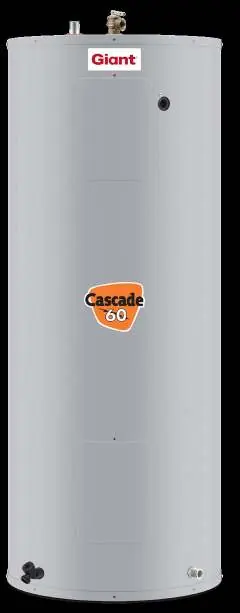
This manual provides essential information for Giant residential electric water heaters, covering Standard, Cascade, Super Cascade, and EcoPeak technology models. It outlines the key features, technical specifications, and warranty terms for various tank capacities (30, 40, 60 gallons). Users should refer to this document to understand the differences between models and to ensure proper installation and maintenance.
Product Features and Benefits
Giant residential electric water heaters are equipped with several key components designed for durability and efficiency:
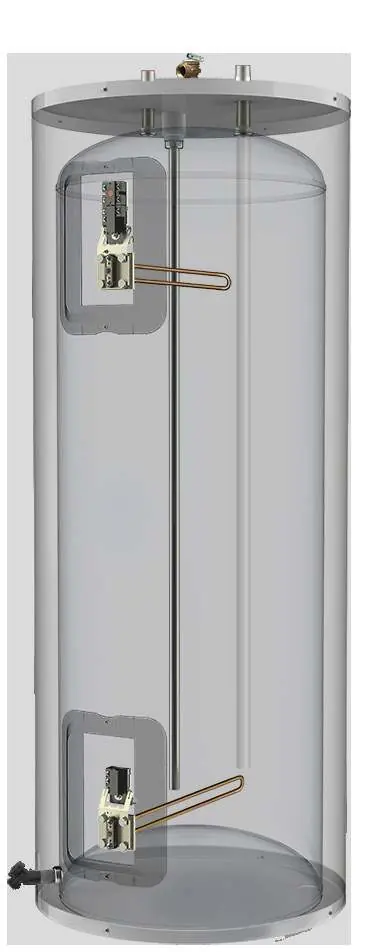
- Temperature & Pressure-Relief Valve: Factory-installed to protect the tank from excessive temperature and pressure.
- Di-Electric Nipples: Factory-installed 3/4 inch NPT nipples provide corrosion protection.
- Heat Traps: Reduce heat loss through inlet and outlet fittings.
- Automatic Temperature Control: Adjustable thermostats with a safety cut-off for abnormal conditions.
- Insulation: Eco-friendly, thick insulation to reduce stand-by losses and energy costs.
- Electric Elements: CSA approved bolt-on immersion elements for easy replacement.
- Glass-Lined Inner Tank: Blue cobalt glass enriched with zircon for corrosion resistance.
- Magnesium Anode: High-quality anode to extend tank life.
- Drain Valve: Tamper-resistant, one-piece valve for easy drainage.
- Overflow System: Includes a 90 degree elbow overflow tube.
EcoPeak Technology
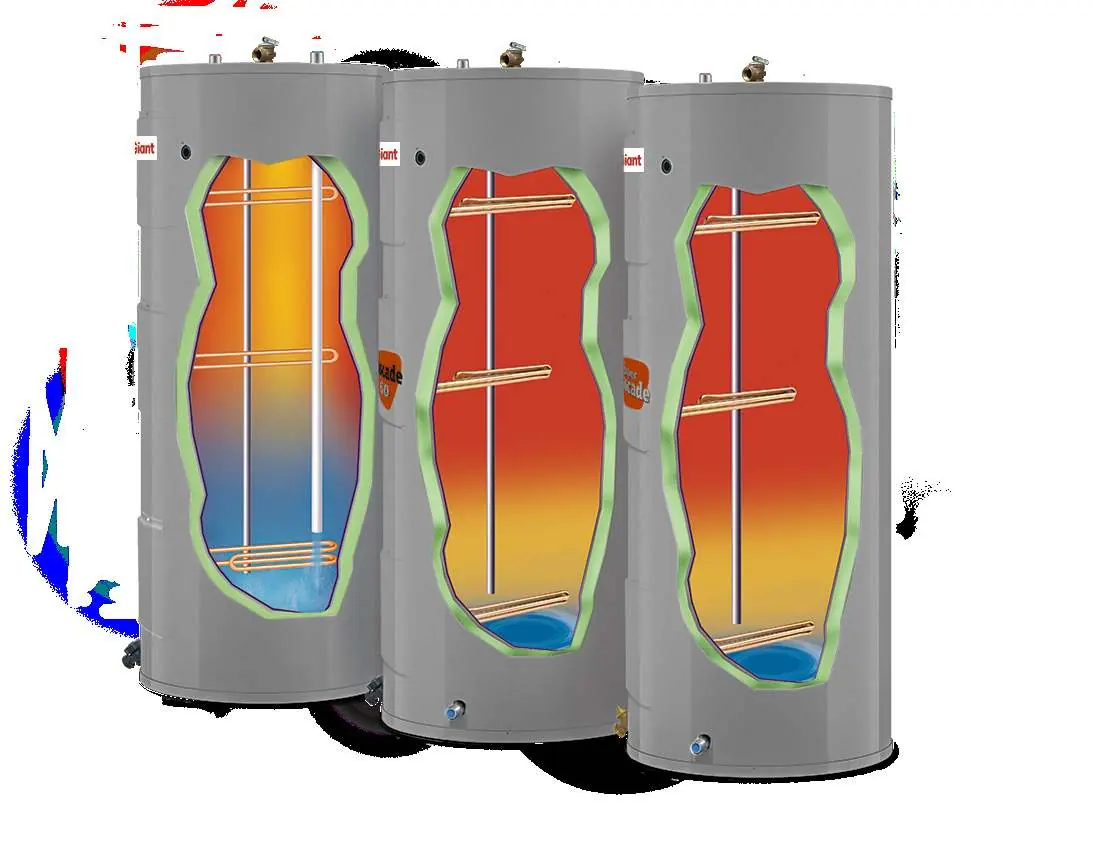
Models equipped with EcoPeak technology utilize a three-element system designed to spread energy consumption throughout the day rather than concentrating demand during peak periods. The top element (3,800 Watts) heats the upper part of the tank, the middle element (3,000 Watts) heats over short periods, and the bottom element (800 Watts) operates almost continuously at low wattage. This design reduces stress on electrical components and increases reliability.
Cold Water Intake
The manual highlights the difference between intake methods:
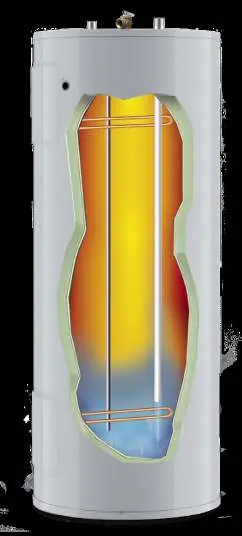
- Top Entry (Standard): Cold water enters and may cool the hot water at the bottom of the tank.
- Bottom Entry (Cascade/Super Cascade): Cold water stays at the bottom of the tank until it heats up, allowing for 10 percent more hot water availability.
Warranty Information
Warranty coverage varies by model series:
- Standard: 6 years against inner tank leakage, 1 year on component parts.
- Cascade: 8 years against inner tank leakage, 5 years on component parts.
- Super Cascade: 10 years against inner tank leakage, 5 years on component parts.
Safety and Maintenance
Important: Toxic chemicals, such as those used for boiler treatment, must NEVER be introduced into this system. These units must NEVER be connected to any existing heating system or component(s) previously used with a non-potable water heating appliance.
Practical help
Common problems
System contamination
Never introduce toxic chemicals (e.g., boiler treatment) into the water heater system.
Incompatible system connection
Do not connect the unit to any existing heating system or components previously used with non-potable water heating appliances.
Before use
- Verify the specific model requirements (Standard, Cascade, Super Cascade, or EcoPeak).
- Ensure the electrical supply matches the unit specifications (120V, 208V, or 240V).
- Confirm the installation location allows for proper drainage and maintenance access.
- Check that the temperature and pressure-relief valve is correctly installed.
Specs in practice
- Storage Capacity
- Available in 30, 40, and 60 US gallon sizes depending on the model.
- Standby Loss
- Energy loss measured in watts; lower values indicate better insulation efficiency.
- Element Wattage
- Power rating of heating elements; EcoPeak models use a 3-element configuration (3800W/3000W/800W).
Images and diagrams
- The component diagram identifies the T&P valve, thermostats, heating elements, anode, and drain valve locations.
- The cold water intake diagram illustrates the difference between top entry (Standard) and bottom entry (Cascade/Super Cascade) flow patterns.
Model compatibility
- Units must not be connected to existing non-potable water heating systems.
- EcoPeak technology models are designed to lower collective electricity demand during peak periods.

Manual page author
Emily Carter
User documentation editor
Prepares concise manual descriptions and highlights the most useful setup, operation, and maintenance information for readers.