Garden / Log Splitters
Güde 405/10/50 Air Compressor User Manual
Quick guide for the Güde 405/10/50 air compressor. Includes assembly, operation, maintenance, troubleshooting, and safety instructions.
Table of contents
Manual images
Click an image to enlargeImportant information
This manual provides essential instructions for the safe operation and maintenance of the Güde 405/10/50 air compressor. Always read the full manual before use. The compressor is designed for home and hobby use to produce compressed air. It is not suitable for pharmaceutical, food, or medical applications, nor for filling scuba tanks.
Assembly
Before using the compressor, ensure all parts are assembled correctly:
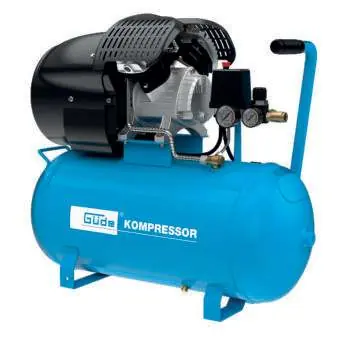
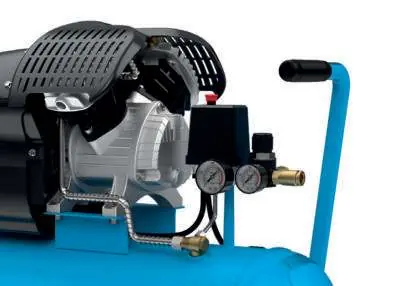
- Install the wheels and rubber feet as shown in the assembly diagrams.
- Ensure the air filter is properly installed.
- Check that all bolts and nuts are tightened securely.
Starting-up
Follow these steps to prepare the compressor for operation:
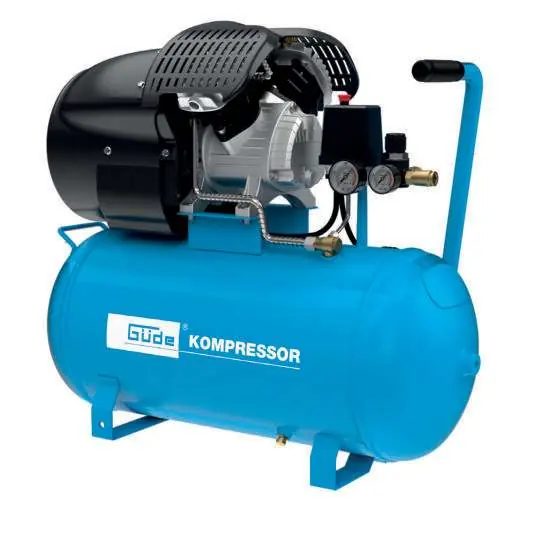
- Check the oil level (use 5W-40 oil).
- Ensure the compressor is placed on a stable, vertical surface.
- Check that the drain valve is closed.
- Connect the air hose to the quick-acting coupling.
- Ensure the power supply matches the voltage on the type label.
Operation
To operate the compressor:
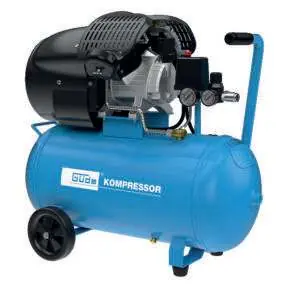
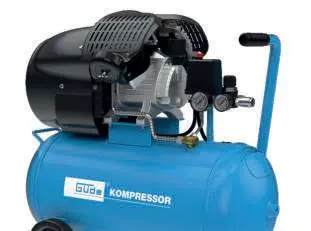
- Use the ON/OFF switch to start and stop the machine. Never use the plug to switch the compressor on or off.
- The compressor will automatically stop when the maximum pressure is reached and restart when the pressure drops.
- Always maintain a safety distance of at least 4 meters between the compressor and the work area.
- At the end of the workday, switch off the compressor, drain the air from the tank, and unplug it.
Maintenance
Regular maintenance is crucial for safety and performance:
- Drain Condensate: Every 2-4 hours of use, drain the condensate from the tank. Ensure the pressure is low (max 1 bar) before opening the drain valve.
- Air Filter: Regularly clean or replace the air filter if it becomes dirty.
- Check Valve: Periodically inspect the check valve for leaks or damage.
- General: Keep the compressor clean and free of dust. Use only original spare parts.
Troubleshooting
If you encounter issues, refer to the following:
- Compressor not starting: Check power supply, pressure switch, or if the tank pressure is too high.
- Compressor runs continuously: Check for leaks, dirty air filter, or excessive air consumption by tools.
- Air leaks from discharge valve: Clean or replace the discharge valve.
- Compressor overheats: Ensure proper ventilation (min 40cm from wall) and clean cooling fins.
Safety
Always wear safety goggles and ear protection. Never direct the air jet at people, animals, or yourself. Do not operate the compressor in the rain or in the presence of explosive gases.
Practical help
Common problems
Compressor does not start
Check power supply, pressure switch, or if tank pressure is too high. Drain tank pressure to allow automatic restart.
Compressor runs continuously
Check for leaks, clean or replace the air filter, or check if pneumatic tools have too high air consumption.
Air leaks from discharge valve
Clean or replace the discharge valve.
Compressor overheats
Ensure sufficient ventilation (min 40cm from wall) and clean cooling fins on the cylinder.
Before use
- Check power cable and plug for damage.
- Ensure the compressor is on a stable, vertical surface.
- Check oil level (5W-40).
- Ensure the air filter is clean.
- Check that the drain valve is closed.
Specs in practice
- Motor output
- 2.2 kW
- Max. working pressure
- 10 bar
- Tank capacity
- 50 l
- Suction capacity
- 320 l/min
Images and diagrams
- Assembly diagrams show wheel and rubber foot installation.
- Starting-up diagrams show oil level check and air hose connection.
- Maintenance diagrams show condensate draining and air filter cleaning.
Model compatibility
- Not for pharmaceutical, food, or medical use.
- Not for filling scuba tanks.
- Use only in well-ventilated areas (+5°C to +35°C).

Manual page author
Emily Carter
User documentation editor
Prepares concise manual descriptions and highlights the most useful setup, operation, and maintenance information for readers.