Electronics / Routers
Hitachi Job Management Partner 1/Base Function Reference
Technical reference manual for Hitachi Job Management Partner 1/Base, covering event issuing and acquisition functions, API usage, and system integration.
Table of contents
Manual images
Jump to the sectionOverview of JP1/Base Functionality
Hitachi Job Management Partner 1/Base (JP1/Base) provides a robust framework for system management, specifically focusing on the issuance and acquisition of JP1 events. This manual serves as a comprehensive reference for developers looking to extend the functionality of JP1/Base by integrating their own applications. By utilizing the provided C/C++ APIs, developers can create custom applications that interact directly with the JP1 event database, enabling advanced monitoring and automated system responses.
Issuing and Acquiring JP1 Events
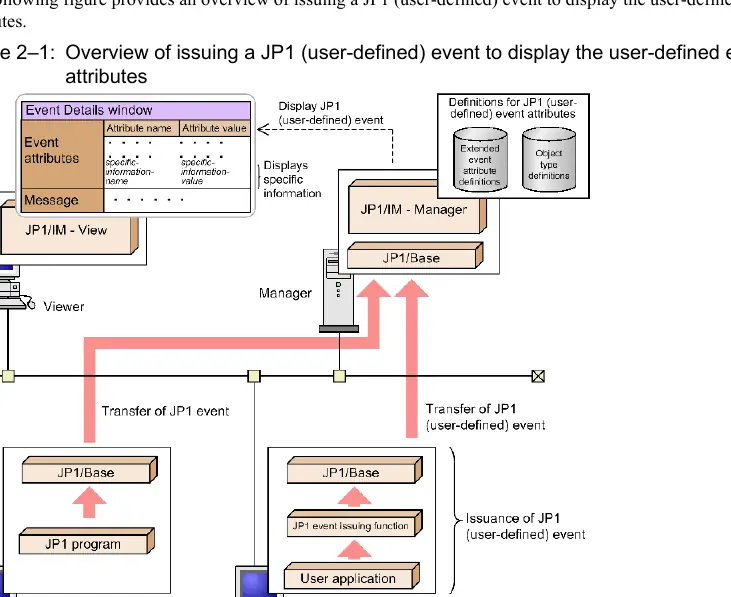
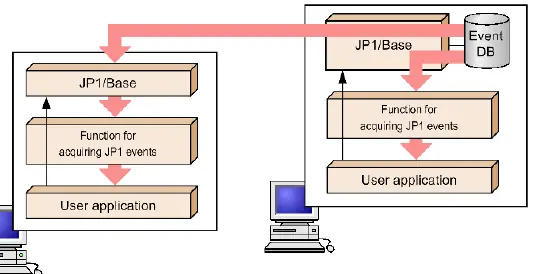
The core functionality described in this manual revolves around two primary operations: issuing user-defined events and acquiring existing events from the database. Issuing events allows applications to report status changes, errors, or custom information to the JP1/IM management console. Conversely, the event acquisition function allows applications to monitor the system by retrieving specific events based on defined filters. This bidirectional communication is essential for creating a cohesive management environment where disparate applications can share status information.
Development and Integration
To integrate with JP1/Base, developers must follow specific procedures for compiling and linking their source code. The manual details the necessary header files, such as JevApi.h, and the required libraries for various operating systems, including Windows, HP-UX, Solaris, AIX, and Linux. It is crucial to ensure that the development environment matches the target execution environment to maintain binary compatibility. The manual also provides sample source files, sender.c and receiver.c, which serve as practical templates for implementing event issuance and acquisition logic.
Event Attributes and Filtering
Effective event management relies on the proper definition of event attributes. JP1 events consist of basic attributes, such as Event ID and Message, and extended attributes that provide context-specific information. Developers can define custom extended attributes to suit their application's needs. When acquiring events, defining precise filters is critical to ensure that applications only process relevant data. The manual outlines the criteria for setting these attributes and provides guidance on filter syntax to optimize event retrieval performance.
Best Practices and Troubleshooting
When implementing JP1/Base functions, developers should adhere to best practices, such as properly closing event acquisition handles using JevGetClose to prevent system resource leaks. The manual also includes detailed information on return codes and error handling, which are essential for debugging applications that interact with the JP1 event service. By following the guidelines provided, developers can ensure stable and reliable integration with the JP1/Base environment.
Manufacturer information
Hitachi, Ltd.
Practical help
Common problems
JEV_NO_LIBRARY error during execution
Ensure necessary files are present and check that correct compile options were used. Reinstall JP1/Base if files are missing.
System-resource leak error in Windows
Ensure the JevGetClose() function is called to close the JP1-event acquisition handle when the process terminates.
Events not acquired due to locale mismatch
Ensure the character set for the string specified in the event acquisition filter matches the locale information (e.g., LANG environment variable).
Error JEV_S_FILTER_ERROR when using exclusion conditions
Ensure you are connecting to an event server of version 09-00 or later.
Before use
- Install JP1/Base on the machine where compiling and execution will occur.
- Install a supported compiler for your specific OS.
- Decide on the types and attributes of the JP1 events to be issued or acquired.
- Create necessary definition files for extended event attributes and object types if using JP1/IM.
- Verify the path to the JevApi.h header file.
- Identify the correct library for your OS and compiler architecture (32-bit/64-bit).
- Configure the users parameter in the event server settings (conf) file for connection authority.
Specs in practice
- PRODUCT_NAME
- A common extended attribute identifying the product, formatted as /company-name/series-name/product-name.
Images and diagrams
- Figure 2-1 illustrates the flow of event information from a user application to the JP1/Base event service and subsequently to the JP1/IM Manager for display in the Event Details window.
- Figure 2-2 shows the architecture for JP1 event acquisition, where a user application connects to the JP1/Base event database via the event acquisition function to retrieve events.
Model compatibility
- Binary compatibility is assured if the JP1/Base execution environment version is the same or later than the development environment version.
- User applications generated with older compilers may not run on newer OS versions supported by later JP1/Base releases.
- For Linux x64 environments, add -m32 to compile and link options.
- The -Aa option for HP-UX is required only when using the C compiler (cc).

Manual page author
Emily Carter
User documentation editor
Prepares concise manual descriptions and highlights the most useful setup, operation, and maintenance information for readers.