Automotive / Electrical Accessories
Operating Instructions for MRS Voltage Monitor 1.008 Series
Quick guide for the MRS Voltage Monitor 1.008 series. Learn about installation, wiring, safety precautions, maintenance, and troubleshooting for these automotive voltage monitoring devices.
Table of contents
Manual images
Click an image to enlargeImportant Information from the Manual
This manual provides operating instructions for the MRS Voltage Monitor 1.008 series. It is intended for trained experts familiar with electronic assemblies. The device is designed to switch connected loads when voltage exceeds or falls below a predefined threshold. It is strictly for use in vehicles and self-propelled work machines and must not be used in safety-relevant systems or explosive areas.
Product Description
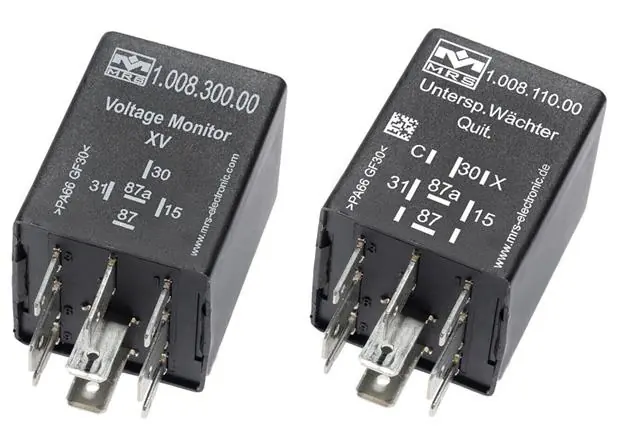
The MRS Voltage Monitor is an electromechanical switch. The series includes various models with different operating voltages (12V, 24V, and 9-30V) and features, such as undervoltage monitoring with reset functions.
Safety Guidelines
Safety is paramount when working with these devices. Key safety points include:
- Qualified Staff Only: Installation, maintenance, and disassembly must be performed by trained experts.
- No Unauthorized Modifications: The device must not be opened, modified, or repaired.
- Handling: If the device falls, it must be returned to MRS for inspection and cannot be used.
- Temperature: The casing may become hot; allow it to cool before handling.
- Electrical Safety: Always use an external fuse in the power supply line to protect against overvoltage.
Assembly and Installation
Proper installation is critical for the longevity and safety of the device:
- Mounting Location: Choose a location with minimal mechanical and thermal load, protected from chemicals.
- Mounting Position: Mount the device so that the connectors point downwards. This allows condensation water to drain away.
- Fastening: Use the provided flat plugs (ISO 7588-1). Ensure the slot is free of dirt, moisture, and damage.
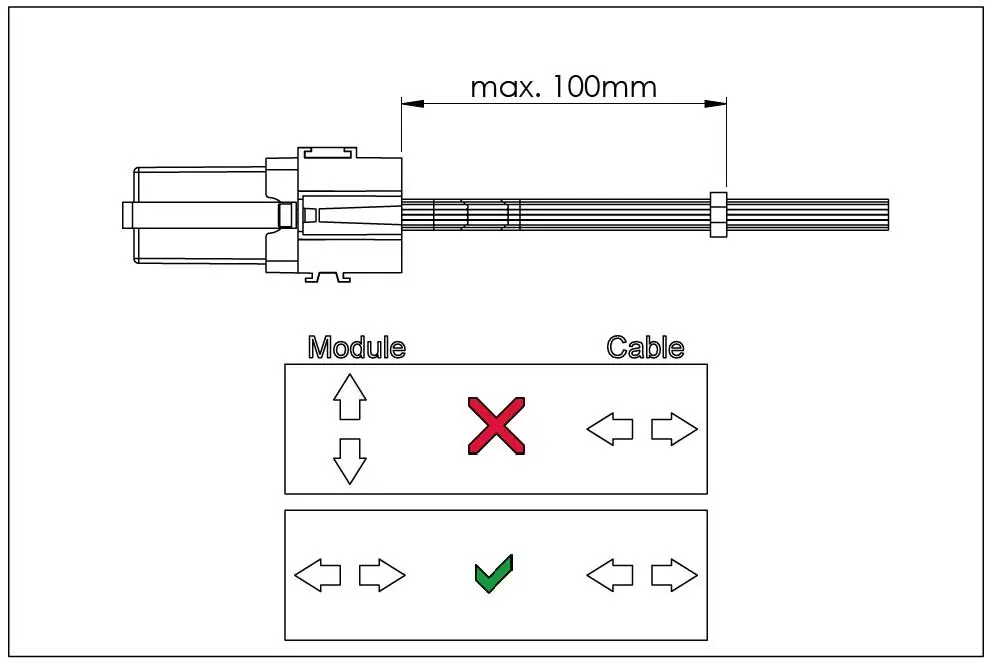
- Strain Relief: Cables must be strain-relieved and friction-free. The cable harness must move identically to the controller/plug, with a maximum distance of 100mm for strain relief.
Commissioning
Before commissioning, ensure the complete system is in a safe state, no persons are in the vicinity, and the correct software is embedded (if applicable). MRS recommends a functional test on-site.
Maintenance and Cleaning
The voltage monitor is maintenance-free. If cleaning is required:
- De-energize the complete system first.
- Do not use high-pressure cleaners or steam jets.
- Do not use aggressive solvents or scouring agents.
- Clean only in a dust-free environment.
- If the device or contacts are damaged or corroded, the unit must be replaced and disposed of according to national regulations.
Disassembly and Disposal
Disassembly must be performed in an idle, de-energized state. Dispose of the product in accordance with national environmental regulations for vehicles and work machines.
Practical help
Common problems
Device not working or faulty operation
Check the software, circuitry, and parameter settings. Ensure the device is not damaged.
Corroded or damaged contacts/casing
Do not attempt repair. Remove the unit and dispose of it according to national environmental regulations.
Device fell down
The device may no longer be used. It must be returned to MRS for inspection.
Before use
- Verify the voltage monitor model is compatible with your system voltage (12V, 24V, or 9-30V).
- Ensure the mounting location is free from excessive mechanical and thermal loads.
- Confirm the mounting position allows connectors to point downwards.
- Check that all flat plugs and sockets are free of dirt and moisture.
- Ensure an external fuse is installed in the power supply line.
- Verify the cable harness has proper strain relief (max 100mm).
Specs in practice
- 1.008.1x / 1.008.11x
- 12V Voltage Monitor (11x includes Reset function)
- 1.008.2x / 1.008.21x
- 24V Voltage Monitor (21x includes Reset function)
Images and diagrams
- Figure 1 illustrates the mandatory strain relief for the cable harness, requiring a maximum distance of 100mm between the module and the cable tie.
Model compatibility
- Intended for use in vehicles and self-propelled work machines only.
- Not permitted for use in safety-relevant system parts for functional safety.
- Do not use in explosive areas.

Manual page author
Emily Carter
User documentation editor
Prepares concise manual descriptions and highlights the most useful setup, operation, and maintenance information for readers.