Industrial / Energy Monitoring
Operating Instructions for MRS Toggle Relays
Comprehensive operating instructions for MRS Toggle Relays. Includes safety guidelines, installation procedures, wiring requirements, maintenance, and troubleshooting steps for M3 and M1 Compact models.
Table of contents
Manual images
Click an image to enlargeQuick guide from the manual
This document provides essential operating instructions for MRS Toggle Relays. These devices are intended for use in vehicles and self-propelled work machines. Installation, maintenance, and disassembly must only be performed by qualified staff. Always ensure the system is de-energized before working on the relay. The relay must be mounted with connectors pointing downwards to prevent water ingress.
Product Description
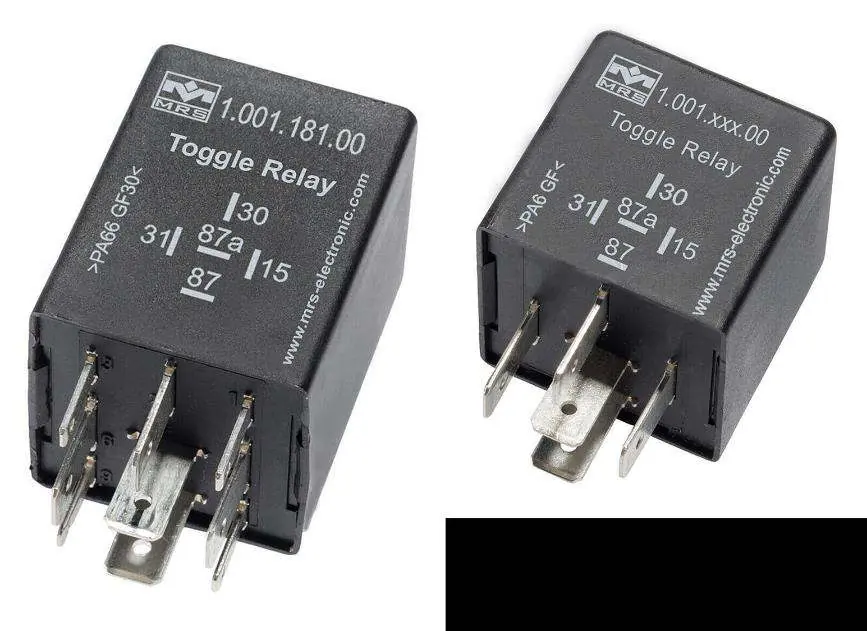
MRS Toggle Relays function as electromechanical switches. Applying a positive or negative pulse to terminal 15 causes the relay to switch and latch. A subsequent pulse switches it again. Certain models support graphic programming via the MRS Realizer and Z-graph, while standard 12V and 24V models are not programmable and switch based on the signal at input KL15.
Safety
General Safety: The relay must not be opened. Any damage to the casing, locking catch, seals, or flat plugs requires immediate shutdown. Do not use the relay if it has been dropped; return it to MRS for inspection. The manufacturer of the complete system is responsible for ensuring that the relay circuitry and programming do not cause safety-relevant malfunctions.
Staff Qualifications: Only specialists, experts, or authorized persons familiar with electronic assemblies and relevant safety regulations should perform installation and maintenance.
Assembly
Mounting Location: Select a location with minimal mechanical and thermal load. Avoid exposure to chemicals.
Mounting Position: Mount the relay with connectors pointing downwards. This allows condensation to drain and prevents water from entering the unit. Ensure compliance with IP protection class requirements by using appropriate accessories.
Fastening: For relays with flat plugs (ISO 7588-1), plug the unit vertically into the slot provided by the system manufacturer. If used in a vibrating environment, secure the relay with a latch.
Electric Installation and Wiring
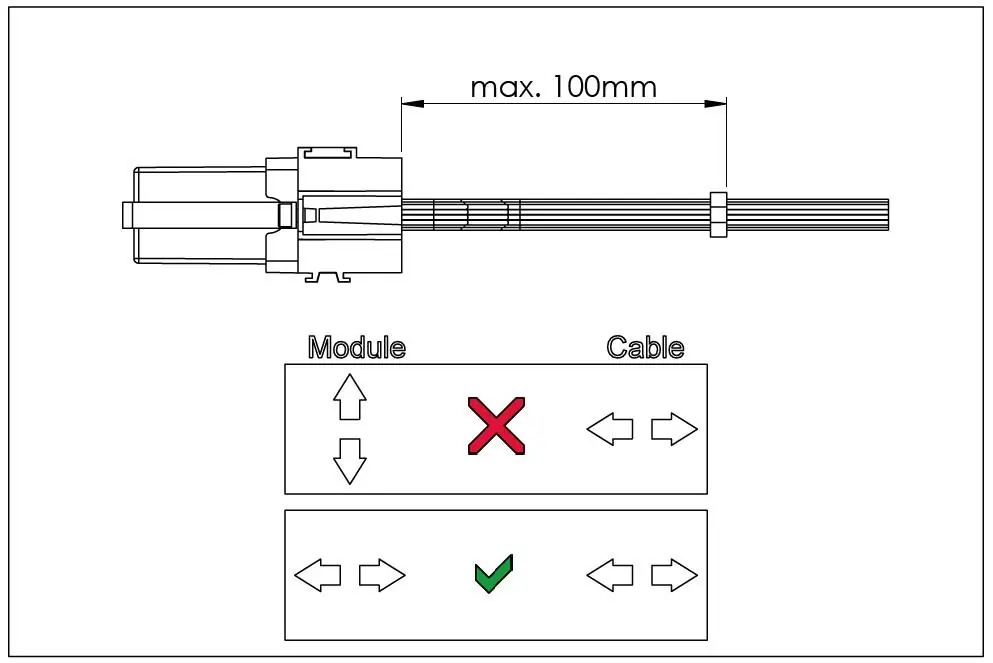
Wiring: Always use an external fuse in the power supply line to protect against overvoltage. Cables must be strain-relieved and friction-free. The cable harness must move identically to the controller/plug. A strain relief is mandatory, with a maximum distance of 100 mm from the relay.
Commissioning
Before commissioning, ensure the complete system is in a safe state and that no persons are in the vicinity. Verify that the correct software is embedded and that the environment is safe (horizontal, solid ground, no weather impact). A functional test on-site is recommended.
Maintenance and Cleaning
The relay is maintenance-free. Do not use high-pressure cleaners or steam jets, as these can damage the unit. Do not use aggressive solvents or scouring agents. Clean only in a dust-free environment. If the relay is damaged or contacts are corroded, it must be removed and disposed of according to national environmental regulations.
Fault Removal
In case of faulty operations, check the software, circuitry, and parameter settings. Ensure the system is de-energized before removing the relay for inspection. Check all flat plugs and pins for signs of overheating, insulation damage, or corrosion.
Practical help
Common problems
Faulty operations
Check the software, circuitry, and parameter settings.
Damaged casing, seals, or flat plugs
Shut down the system immediately and return the relay to MRS for inspection.
Corroded contacts
Clean the contacts if possible. If damage is severe, replace the relay and dispose of the old unit according to environmental regulations.
Before use
- Verify that the relay is suitable for the specific vehicle or work machine.
- Ensure installation is performed by qualified staff.
- Check that the relay casing, seals, and plugs are free of damage.
- Confirm the correct voltage (12V or 24V) for your system.
- Ensure the mounting location is free of chemicals and excessive heat.
- Verify that an external fuse is installed in the power supply line.
Images and diagrams
- Strain relief: Ensure the cable harness is secured. The distance between the relay and the strain relief must not exceed 100 mm.
Model compatibility
- Intended for use in vehicles and self-propelled work machines only.
- Not permitted for use in safety-relevant system parts for functional safety.
- Do not use in explosive areas.

Manual page author
David Miller
Documentation analyst
Organizes user manual content into clear summaries, with attention to model details, product context, and everyday usability.