Tools / Power Tools
Instruction Manual for OFITE 171-181-N HTHP Filter Press
Quick guide for the OFITE 171-181-N HTHP Filter Press. Includes setup, operation, safety procedures, maintenance, and technical specifications for drilling fluid testing.
Table of contents
Manual images
Click an image to enlargeQuick guide from the manual
The OFITE 171-181-N HTHP Filter Press is designed to evaluate the filtration characteristics of drilling fluids, cement slurries, fracturing fluids, and completion fluids under elevated temperatures and pressures. This manual provides essential procedures for assembly, operation, and maintenance. Safety is paramount: always use safety pins with lanyards, adhere to temperature and pressure limits, and replace O-rings after tests exceeding 350°F (176°C).
Device Description
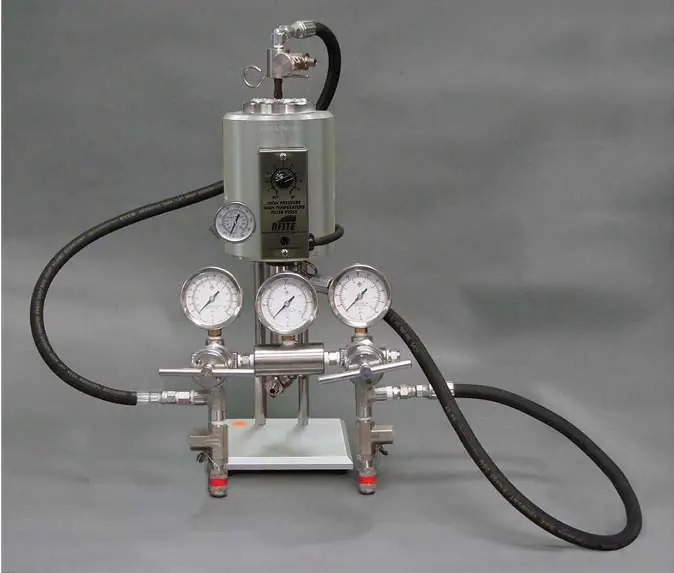
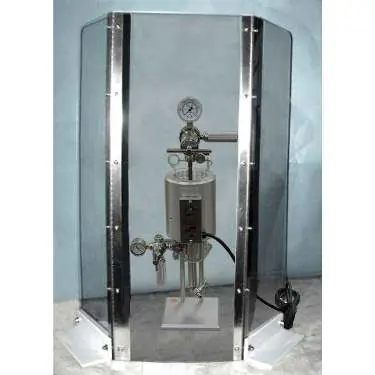
The HTHP Filter Press consists of a controlled pressure source (typically Nitrogen), top and bottom pressure manifolds, a test cell, and an adjustable heating jacket. It simulates down-hole conditions to prevent fluid evaporation and evaluate filtration behavior.
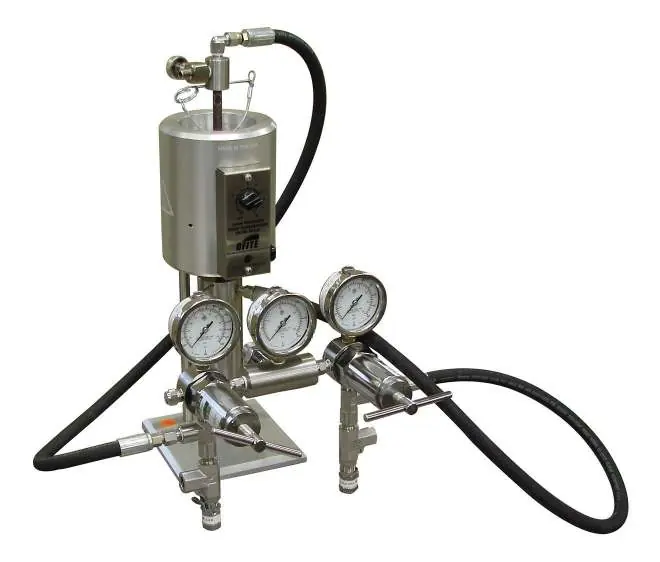
Specifications
- Maximum Temperature (Heating Jacket): 400°F (204°C)
- Maximum Temperature (Cell): 500°F (260°C)
- Maximum Pressure (Cell): 5,000 psi
- Test Cell Capacity: 175 mL
- Power Requirement: 115 VAC, 5 Amps or 230 VAC, 3 Amps (50/60 Hz)
Safety
Operating at high temperatures and pressures requires strict adherence to safety protocols:
- Pressure: Never exceed the stamped pressure limits on the cell assembly.
- O-rings: Use Viton 75D for tests up to 400°F. Use Viton 90D for temperatures above 400°F. Replace all O-rings after every test above 350°F.
- Safety Pins: Always secure pressure manifolds to the cell using the provided safety pins with lanyards.
- Heating Jacket: The jacket becomes extremely hot; avoid contact during operation.
Operation
Follow these steps for testing:
- Preheat the heating jacket to 10°F above the target test temperature.
- Assemble the cell with appropriate O-rings and filter media.
- Pour the test fluid into the cell, leaving adequate space for thermal expansion.
- Invert the cell and place it in the heating jacket, ensuring it seats properly.
- Connect the manifold block and back pressure receiver, securing them with safety pins.
- Adjust regulators to the recommended back pressure.
- After the one-hour heat-up time, increase top pressure to 500 psi above back pressure to initiate filtration.
- Collect filtrate at 1, 7.5, and 30 minutes.
- After the test, cool the cell to room temperature before disassembly.
Cell Cap Assembly
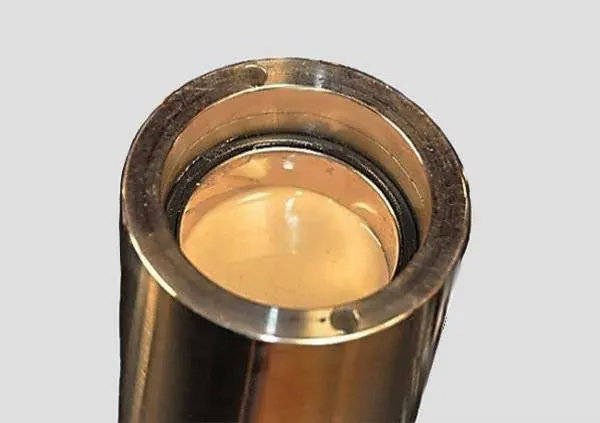
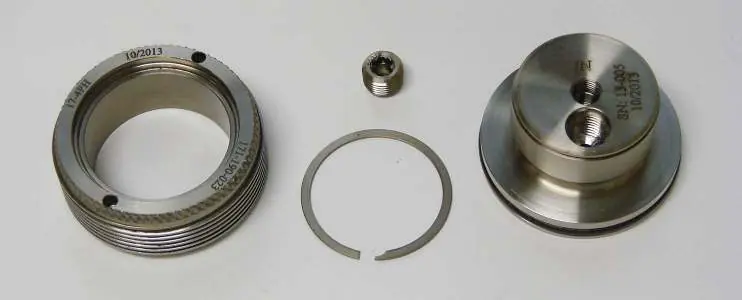
Choose the appropriate cap based on your test requirements (Inlet, Outlet with screen, or Outlet scribed for ceramic disks). Ensure the locking ring and retaining ring are correctly installed. Wrap the rupture disk with nickel anti-seize tape before screwing it into the port.
Maintenance
- Cleaning: Thoroughly clean and dry all components with water and soap or an appropriate solvent after each use.
- Leak Checks: Periodically pressurize the cell and immerse it in water to check for bubbles.
- Power Cord: Inspect for insulation wear and keep away from the hot heating jacket.
Manufacturer information
OFI Testing Equipment, Inc.
Practical help
Common problems
Gas leak at regulator outlet when adjusting screw is loosened
Seat leak or creep; repair the regulator.
Outlet pressure increases while downstream valves are closed
Seat leak or creep; repair the regulator.
Gas leak from pipe thread joint
Remove connection, clean surfaces, reapply Teflon tape, and tighten.
Inconsistent repeat readings
Seat sticking (repair regulator) or bad pressure gauge (replace gauge).
Before use
- Inspect all O-rings for damage, nicks, or brittleness.
- Apply a thin film of silicone grease to all O-rings.
- Preheat the heating jacket to 10°F above the target test temperature.
- Verify test fluid volume allows for thermal expansion.
- Ensure safety pins are secured with lanyards.
- Check that all ball valves and bleeder valves are closed before pressurizing.
Specs in practice
- Maximum Temperature (Cell)
- 500°F (260°C) - The absolute limit for the cell body.
- Maximum Pressure (Cell)
- 5,000 psi - Do not exceed this pressure under any condition.
- Heating Time
- Allow one hour of heating time after the cell is inserted into the jacket.
Images and diagrams
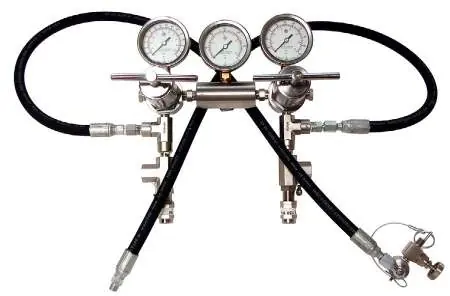
- Nitrogen Manifold: Displays primary, source, and back pressure gauges.
- Test Cell Assembly: Shows the arrangement of cell body, caps, and O-rings.
- Safety Pin: Illustrates the correct use of the safety pin with lanyard to secure manifolds.
Model compatibility
- Viton 75D O-rings are for tests up to 400°F.
- Viton 90D O-rings are required for temperatures above 400°F.
- Replace all O-rings after every test above 350°F (176°C).

Manual page author
Emily Carter
User documentation editor
Prepares concise manual descriptions and highlights the most useful setup, operation, and maintenance information for readers.